

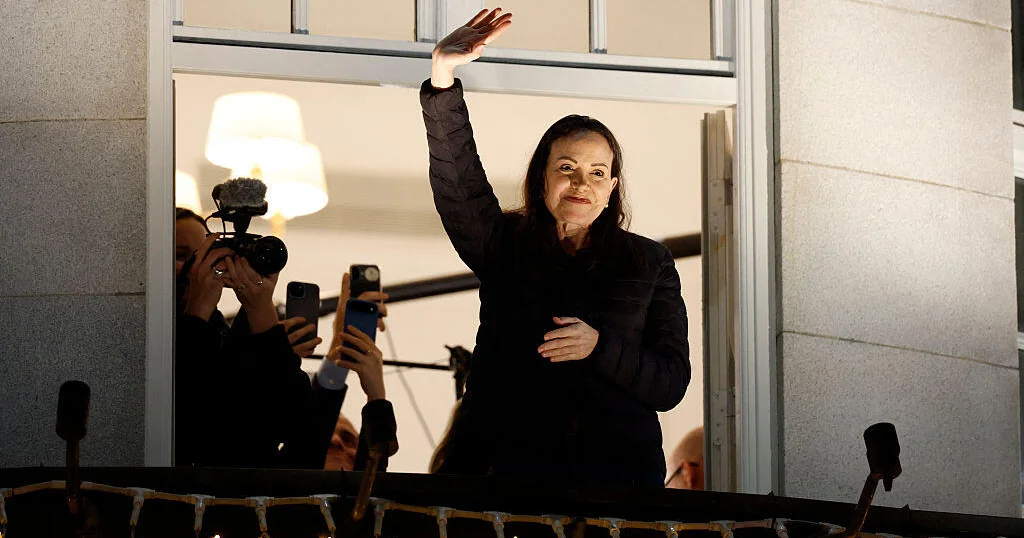

In a significant moment for Venezuelan politics, opposition leader María Corina Machado made her first public appearance in 11 months, waving to supporters from a hotel in Oslo, Norway. This unexpected return came shortly after her daughter, Ana Corina Sosa, accepted the Nobel Peace Prize on her behalf. Machado, who had been in hiding following her brief detention during a protest in Caracas, emphasized her commitment to a free Venezuela in a recent communication with supporters, asserting that many had risked their lives for her to be recognized internationally.
| Article Subheadings |
|---|
| 1) Background on María Corina Machado |
| 2) Significance of the Nobel Peace Prize |
| 3) Recent Developments and Calls to Action |
| 4) Implications for Venezuelan Politics |
| 5) Future of María Corina Machado |
Background on María Corina Machado
María Corina Machado, a prominent leader in the Venezuelan opposition, has long been an outspoken critic of the government led by Nicolás Maduro. Her political journey has seen her endure significant challenges, including periods of exile and repression. Machado first gained international recognition for her staunch advocacy for democratic reforms and her unwavering stance against the dictatorship that has gripped Venezuela for years.
Her activism led to her being recognized globally, culminating in her recent Nobel Peace Prize award. This recognition not only highlights her personal sacrifices but also speaks volumes about the struggle of the Venezuelan people for freedom and democracy. Machado’s resilience in the face of mounting political pressure exemplifies her commitment to the cause, making her a pivotal figure in contemporary Venezuelan history.
Significance of the Nobel Peace Prize
The Nobel Peace Prize awarded to Machado serves multiple purposes beyond personal accolade. It signifies the international community’s recognition of the ongoing battle for democracy in Venezuela and shows solidarity with those fighting against oppressive regimes. The award drew attention to numerous human rights violations that Venezuelans have faced under brutal governmental policies.
In a recorded message, Machado stressed the prize’s significance, stating it reflects that “the world recognizes this huge, epic fight.” Her statement underscores the importance of the award not just to her but to all those in Venezuela advocating for change. This acknowledgment puts pressure on the Maduro administration while rallying the international community behind the Venezuelan people’s cause.
Recent Developments and Calls to Action
Following her announcement of the Nobel award, Machado intended to attend the ceremony in Oslo but refrained from doing so out of fear for her safety. Her effective absence highlights the precarious situation many opposition leaders face in authoritarian regimes. As noted by Venezuela’s attorney general, Machado risks being declared a “fugitive” should she leave the country.
Amid these developments, Ana Corina Sosa‘s acceptance of the prize on her mother’s behalf was a powerful moment meant to emphasize the enduring spirit of resistance against oppression. During the ceremony, she stressed her mother’s resolve, saying, “She wants to live in a free Venezuela, and she will never give up on that purpose.” Through this act of courage, Machado’s family aims to inspire others to continue the fight for democracy despite the hardships that lie ahead.
Implications for Venezuelan Politics
The Nobel Peace Prize has geopolitical ramifications that could shift dynamics within Venezuela. As international support for Machado continues to grow, the Maduro administration may find it increasingly challenging to suppress opposition without drawing international condemnation. This recognition could bolster Machado’s credibility, prompting further engagement from other nations and human rights organizations.
Furthermore, public sentiment may shift in favor of Machado as she continues to rally support locally and globally. Her narrative, built on a foundation of resilience and commitment to democracy, might inspire protests and increased activism among her supporters. The award serves as a rallying cry for those who endure hardships for a chance at a democratic future, potentially revitalizing the opposition movement.
Future of María Corina Machado
Looking forward, the future of María Corina Machado remains uncertain but hopeful. The prospect of returning to Venezuela poses significant risks, as indicated by warnings from officials within the Maduro government. However, her commitment to her cause suggests she may eventually choose to return, empowered by the international recognition she has received.
As Machado continues to engage with domestic and international audiences, her ability to galvanize support will be critical. The upcoming months will likely determine not only her fate but also the future trajectory of Venezuela’s struggle for democracy. Her sustained influence may serve as a potential catalyst for change, inspiring a new generation of activists committed to achieving freedom for their country.
| No. | Key Points |
|---|---|
| 1 | María Corina Machado made a public appearance after 11 months of hiding. |
| 2 | Her daughter accepted the Nobel Peace Prize on her behalf, highlighting a strong familial bond amid political turmoil. |
| 3 | Machado’s award speaks volumes about the struggles faced by the Venezuelan people and their fight for democracy. |
| 4 | The award could alter the political dynamics within Venezuela, providing momentum to the opposition movement. |
| 5 | The future of Machado remains uncertain as she grapples with the risks of returning to Venezuela. |
Summary
María Corina Machado’s public re-emergence and the acceptance of the Nobel Peace Prize by her daughter mark significant developments in Venezuelan politics. This moment highlights the ongoing struggles against dictatorship and could potentially influence the future landscape of Venezuelan activism. The international community’s recognition offers a glimmer of hope, reinforcing the belief that the fight for democratic rights is indeed global and not solitary. The coming months will be crucial in determining the path forward for both Machado and the Venezuelan people in their enduring quest for freedom.
Frequently Asked Questions
Question: Who is María Corina Machado?
María Corina Machado is a Venezuelan opposition leader known for her advocacy of democratic rights and her resistance against the Maduro regime.
Question: What was the significance of the Nobel Peace Prize awarded to Machado?
The Nobel Peace Prize highlights global recognition of the struggles faced by Venezuelans in their fight for democracy and human rights.
Question: What are the implications of Machado’s return to public life?
Machado’s return may energize the opposition movement in Venezuela and increase international pressure on the Maduro government.
