

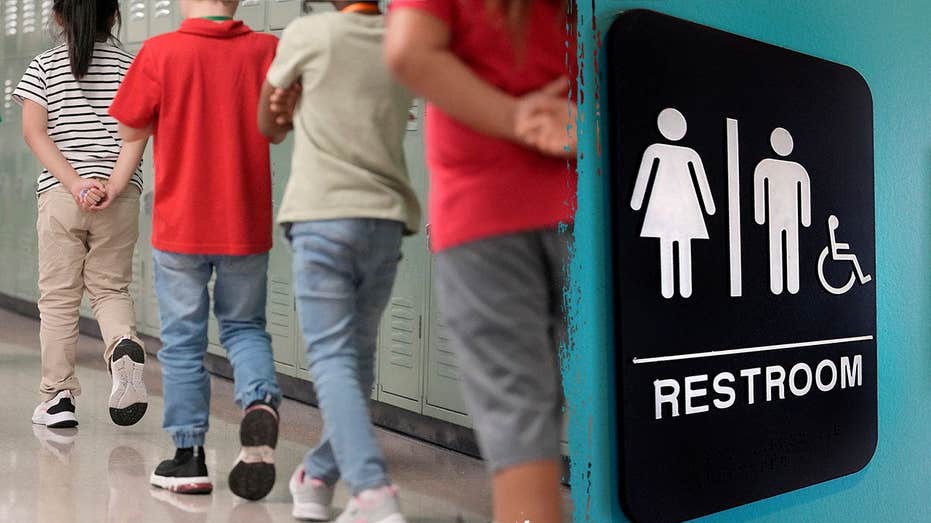

A North Carolina father has sued Cabarrus County Schools, alleging officials declined to explain whether students of the opposite biological sex may use restrooms or locker rooms used by his children. Brandon Matthews is seeking disclosure of district policies and advance notice about facility access. The lawsuit does not claim that a biological male used his daughter’s bathroom. It says the family cannot determine whether such access is permitted or has occurred. A federal court has not yet ruled.
The case involves parental information, religious objections and the district’s handling of sex-separated facilities. Matthews’ attorneys say he requested policy information rather than details identifying any student.
| 1) | Father seeks clarity on school facility policies |
| 2) | School principals cite student confidentiality |
| 3) | Lawsuit raises religious and constitutional claims |
| 4) | Preliminary injunction seeks notice and information |
| 5) | Case could test broader parental rights arguments |
Father seeks clarity on school facility policies
Brandon Matthews, whose daughter attends Mount Pleasant Elementary School and whose son is entering his senior year at Mount Pleasant High School, contacted both principals in May. He asked to be notified if a biological male was permitted to use female restrooms or locker rooms used by his children, with a comparable request concerning his son’s facilities.
Matthews had raised the issue at a May 11 school board meeting, calling for separate bathrooms for boys and girls or another facility. His daughter also told the board that she would not want a boy following her into a girls’ bathroom. The lawsuit says Matthews did not ask schools to identify any student.
School principals cite student confidentiality
The principals responded on June 8, according to court filings. Both said the schools could not confirm, disclose or provide advance notice about the status, identity or accommodations of a particular student because student matters are confidential.
The elementary principal told Matthews or his daughter to contact the school if they became aware of a specific situation affecting her experience. The lawsuit says this did not address the broader question of district policy or whether opposite-sex access was allowed.
Lawsuit raises religious and constitutional claims
Matthews filed the case in the Middle District of North Carolina against the Cabarrus County Board of Education, Superintendent John Kopicki and the two principals. His legal team includes the America First Legal Foundation and attorney Philip Thomas, with senior counsel Nicholas Barry.
In a sworn declaration, Matthews says his Christian beliefs include the view that sex is immutable and that his children should not be expected to undress or use restrooms in the presence of members of the opposite sex. He alleges violations of the First Amendment’s Free Exercise Clause and the Fourteenth Amendment’s Due Process Clause.
Preliminary injunction seeks notice and information
On Friday, Matthews asked the court for a preliminary injunction while the case proceeds. The request seeks disclosure of district rules for sex-separated restrooms, locker rooms and changing facilities, along with information about whether members of the opposite sex are permitted to access or have accessed facilities used by his children.
The motion also seeks notice when a member of the opposite sex has been authorized or is expected to enter a facility used by one of the children. The attorneys say Matthews seeks information and an opportunity to opt out, not an order barring any particular student.
School Board attorney William Isenhour previously said the district addresses restroom and locker-room issues at each school on a case-by-case basis, seeking to address concerns of students and families.
Case could test broader parental rights arguments
Matthews’ attorneys rely partly on the Supreme Court’s decision in Mahmoud v. Taylor, involving parents who sought notice and an opportunity to opt their children out of certain LGBT-related classroom instruction for religious reasons. They argue that a similar principle should apply when children may share intimate facilities with members of the opposite sex.
The lawsuit is separate from an earlier action involving Cabarrus County Schools, which alleges that female students at Cox Mill High School were required to share restrooms, locker rooms and changing areas with a biological male. That allegation does not establish that a biological male used the restroom at Matthews’ daughter’s elementary school.
Nicholas Barry said a ruling for Matthews could encourage districts elsewhere to disclose policies and provide parents an opportunity to opt out. That remains the plaintiffs’ argument, and the court has not decided whether the requested relief is warranted.
| 1 | The lawsuit seeks policy disclosure and advance notice, not student identification. |
|---|---|
| 2 | School principals cited confidentiality rules in responding to Matthews. |
| 3 | Matthews bases his claims partly on religious beliefs about sex and privacy. |
| 4 | A preliminary injunction request is pending in federal court. |
| 5 | The case could affect debates over parental notice and facility policies. |
Summary
The North Carolina case asks whether parents are entitled to information about school policies governing access to sex-separated restrooms and locker rooms. Matthews says the district’s confidentiality response left him unable to assess how the policies affect his children. The court could clarify the relationship between parental notice, religious objections and school facility decisions, but no final determination has been issued.
Frequently Asked Questions
What is the father asking the court to do?
He is asking the court to require the district to disclose its policies and provide notice about opposite-sex access to facilities used by his children.
Does the lawsuit allege that a biological male used his daughter’s bathroom?
No. The lawsuit says the family does not know whether such access is permitted or has occurred.
Why does Matthews say the issue is constitutionally protected?
He cites his religious beliefs and alleges violations of the First Amendment’s Free Exercise Clause and the Fourteenth Amendment’s Due Process Clause.
