

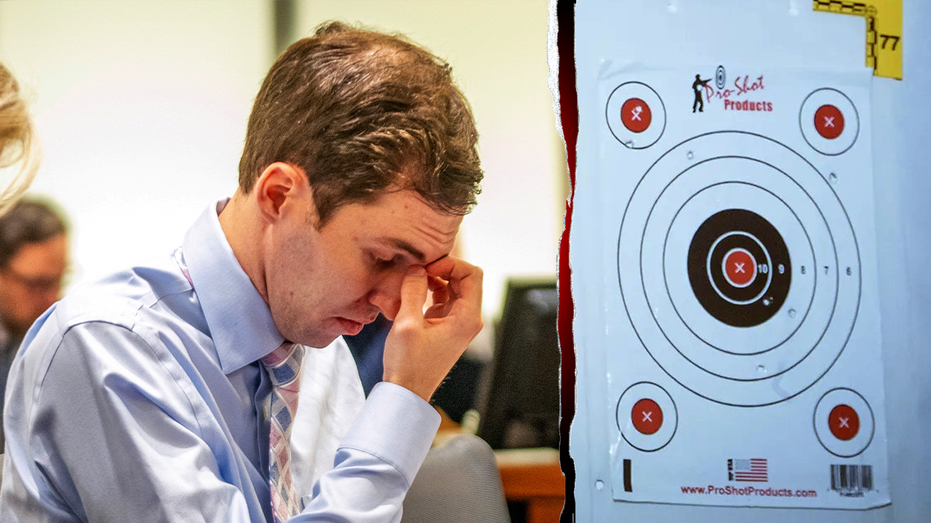

Tyler Robinson rarely hit the bullseye during practice shots with the firearm prosecutors say was used to kill Charlie Kirk, according to a court filing made public Tuesday. Prosecutors argue the alleged poor accuracy supports their claim that the rooftop shooting knowingly created a substantial risk to people in the crowd. The argument was presented as prosecutors opposed the defense’s effort to remove the potential death penalty from the case. Judge Tony Graf Jr. is expected to rule on the matter on Sept. 1.
| 1) | Prosecutors’ argument about practice shots |
| 2) | Defense challenge to the aggravating factor |
| 3) | Preliminary hearing and pending ruling |
| 4) | Allegations surrounding the fatal shooting |
| 5) | Capital punishment and the case status |
Prosecutors’ argument about practice shots
Utah prosecutors told the court that Tyler Robinson “seldom hit the bullseye and sometimes missed the target completely” while practicing with the suspected murder weapon. They cited the shooting performance to argue that firing from a rooftop toward a large gathering was inherently dangerous. In their view, the evidence could support an inference that Tyler Robinson understood other people could be struck or killed even if the intended target was Charlie Kirk.
The alleged shooting occurred at Utah Valley University in Orem during a Turning Point USA event in September 2025. Charlie Kirk was speaking from a small stage in a campus courtyard when he was struck in the neck. Prosecutors maintain that the location of the shooter and the size of the audience are central to the claim that the attack endangered thousands of people.
Defense challenge to the aggravating factor
The defense has asked the court to remove the aggravating factor that could make a death sentence available if Tyler Robinson is convicted. Prosecutors must establish at trial that the alleged killing created a great risk of death to someone other than Charlie Kirk and that the defendant knew about that danger.
In an earlier filing, defense attorneys argued that the fatal shot came from above the crowd rather than traveling through it. They also emphasized that only one shot was fired, that it hit the intended victim, and that no bystanders were wounded. Prosecutors countered that the absence of an additional injury does not eliminate the risk created by firing toward a densely populated area.
Preliminary hearing and pending ruling
The filings followed a week-long preliminary hearing held in early July to determine whether prosecutors presented sufficient probable cause for the case to proceed to trial. The hearing included evidence related to the alleged weapon, surveillance footage and statements attributed to Tyler Robinson.
Prosecutors also argued that the defense had failed to apply the legal standards governing preliminary hearings. They told Judge Tony Graf Jr. that reasonable inferences at this stage must be drawn in the state’s favor. The judge has said he will issue a decision on Sept. 1, including whether the case and the death-penalty aggravator move forward.
Allegations surrounding the fatal shooting
According to the prosecution’s account, Tyler Robinson drove from his home in southern Utah to Orem before the September 2025 event. Investigators say a rifle was recovered near the university and that surveillance video traced the accused across the campus before the fatal rooftop shot.
Prosecutors further allege that Tyler Robinson later confessed to several people before surrendering to authorities in his hometown. The defense has not accepted the prosecution’s characterization of the evidence, and Tyler Robinson has not entered a plea.
Capital punishment and the case status
The dispute over the aggravating factor is significant because striking it before trial would remove the possibility of a death sentence if Tyler Robinson were convicted. Prosecutors are seeking to preserve that option by arguing that the alleged shot was fired despite the foreseeable danger to the crowd.
The court has not yet made a final ruling on the aggravating factor or whether the case will proceed to trial. The allegations remain unproven, and the preliminary proceedings do not determine guilt. Future court action will address the sufficiency of the evidence and the legal consequences of the alleged risk to bystanders.
| Number | Key Point |
|---|---|
| 1 | Prosecutors say practice shots showed Tyler Robinson knew he could endanger people near the target. |
| 2 | The defense argues the shot did not pass through the crowd and no bystanders were hit. |
| 3 | Judge Tony Graf Jr. plans to rule on Sept. 1. |
| 4 | The alleged shooting occurred at Utah Valley University in September 2025. |
| 5 | Tyler Robinson has not entered a plea, and the allegations remain unproven. |
Summary
Utah prosecutors are relying on alleged practice-shooting performance and the crowded setting of the attack to argue that Tyler Robinson knowingly endangered bystanders when Charlie Kirk was shot. The defense disputes the relevance of that risk, pointing to the single shot and the absence of injuries among spectators. Judge Tony Graf Jr. is expected to decide on Sept. 1 whether the case and the potential capital aggravator proceed.
Frequently Asked Questions
What are prosecutors arguing about the practice shots?
They say Tyler Robinson often missed the bullseye, which prosecutors contend shows he knew firing toward a large crowd could put other people at risk.
What does the defense say?
The defense argues that the shot came from above the crowd, struck only Charlie Kirk, and did not injure any bystanders.
What happens next?
Judge Tony Graf Jr. has said he will issue a decision on Sept. 1. Tyler Robinson has not entered a plea, and the allegations have not been proven at trial.
