

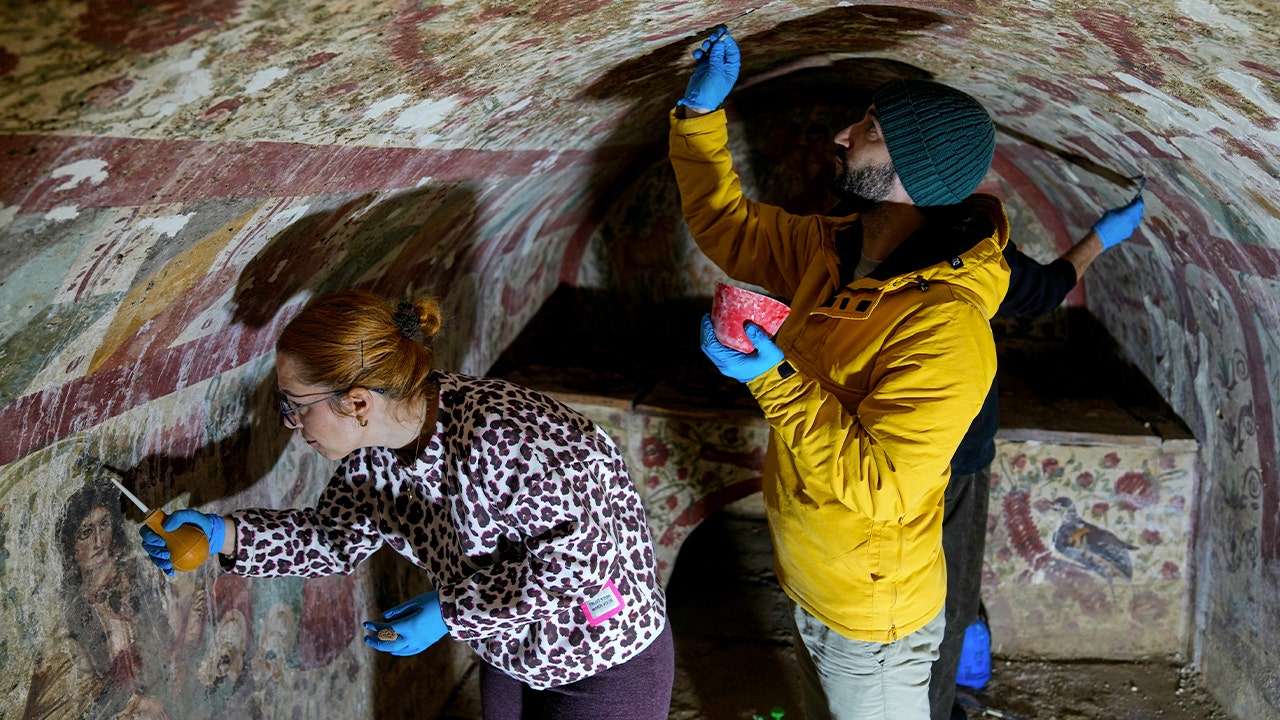

Archaeologists in Turkey have unearthed a significant fresco depicting a Roman-style representation of Jesus as the “Good Shepherd.” This notable discovery—considered a seminal find from Anatolia’s early Christian era—was made in August within an underground tomb near Iznik, a historically rich area where the Nicene Creed was established in A.D. 325. The artwork, believed to originate from the third century, provides a rare glimpse into the early Christian community during a time of Roman persecution.
| Article Subheadings |
|---|
| 1) Context of the Excavation |
| 2) Description of the Fresco |
| 3) Importance of the Discovery |
| 4) Papal Visit and Its Significance |
| 5) Community Reactions and Future Implications |
Context of the Excavation
The fresco was discovered during an archaeological excavation in August, spearheaded by a team led by noted archaeologist in the region. The location of the tomb is significant, as Iznik (formerly known as Nicaea) was where the Nicene Creed was formally adopted in 325 A.D., a foundational document for Christian doctrine. The fresco is thought to date back to a time when Christians in the Roman Empire were facing severe persecution, providing a critical context for understanding its artistic and cultural significance.
Description of the Fresco
The artwork in question portrays a youthful, clean-shaven Jesus adorned in a toga and holding a goat on His shoulders, a visual representation commonly understood as Jesus as the “Good Shepherd.” This depiction stands out not only for its artistic flair but also for the Roman characteristics infused into the imagery, which is notably rare in the region. According to the lead archaeologist, this might be the only known instance of such a portrayal in Anatolia, marking it as a unique artistic expression from a pivotal era in Christian history. The fresco’s intricate detailing and preservation offer invaluable insights into early Christian beliefs and iconography.
Importance of the Discovery
This fresco is being hailed as one of the most critical finds concerning early Christianity in Anatolia. It opens up a dialogue about the religious practices and beliefs of the time, particularly in a community that was facing adversity and persecution. Scholars suggest that the blending of Roman aesthetics within Christian art during this period may have helped to create a more accessible depiction of Jesus for the local populace, bridging cultural gaps. Furthermore, the promotion of this discovery highlights the ongoing relevance and impact of archaeological work in understanding human history and cultural heritage.
Papal Visit and Its Significance
Adding to the significance of the fresco’s discovery is the recent visit by Pope Leo XIV, who traveled to Turkey as part of his first international trip as the head of the Catholic Church. During his visit, he commemorated the 1,700th anniversary of the Council of Nicaea, amplifying the historical importance of both the fresco and the location it was found in. President Recep Tayyip Erdoğan presented the Pope with a tile painting of the “Good Shepherd” discovery, further underlining the relationship between religious heritage and contemporary diplomacy. The pope’s presence and the prayers recited at the tomb site bolster the commemoration of shared Christian heritage, fostering a hopeful message of unity among different Christian denominations.
Community Reactions and Future Implications
The discovery of the fresco has evoked admiration and joy from local historians, archaeologists, and religious scholars alike. Many community members expressed their enthusiasm over the find, seeing it as validation of their cultural and spiritual history. Additionally, the artwork’s discovery heralds potential future archaeological pursuits in the region, with hopes of uncovering more artifacts that further illuminate early Christian life. This initiative could also encourage local tourism, drawing visitors interested in history and spirituality to a site of monumental significance.
| No. | Key Points |
|---|---|
| 1 | The fresco shows Jesus as the “Good Shepherd,” a pioneering representation in early Christian art. |
| 2 | The tomb is located in Iznik, historically significant for the adoption of the Nicene Creed. |
| 3 | The fresco is believed to date back to the third century during a time of Roman persecution. |
| 4 | Pope Leo XIV’s visit added significance to the discovery, tying it to a celebration of Christian unity. |
| 5 | Community reactions reflect excitement and validation of cultural heritage; it holds promise for future archaeological work. |
Summary
The discovery of the fresco depicting Jesus as the “Good Shepherd” in Turkey represents not just an archaeological achievement but also a vital chapter in the narrative of early Christianity. With its historical, artistic, and cultural implications, this find has the potential to deepen our understanding of religious practices during a tumultuous time. Coupled with the significance of the recent papal visit, it serves as a reminder of the importance of preserving and recognizing our shared spiritual heritage.
Frequently Asked Questions
Question: What is the historical significance of the Council of Nicaea?
The Council of Nicaea, convened in A.D. 325, was a significant event in Christian history as it established the Nicene Creed, a foundational statement of Christian faith that is still widely used today. It aimed to address the Arian controversy over the nature of Christ and to unify the Christian doctrine under a single belief system.
Question: What does the term ‘Good Shepherd’ signify in Christian symbolism?
The ‘Good Shepherd’ is a symbolic representation of Jesus as a caring and protective figure who guides and cares for his followers. This metaphor is deeply rooted in Christian scripture, particularly in the Gospel of John, where Jesus describes Himself as the Good Shepherd who lays down His life for His sheep.
Question: Why is the depiction of Jesus with Roman attributes significant?
The portrayal of Jesus with Roman attributes, such as wearing a toga, indicates cultural integration and adaptation of early Christian art. This blending signifies how Christian communities, even in a time of persecution, found ways to connect their faith with the prevailing cultures, thus making their beliefs more relatable to the local populace.
