

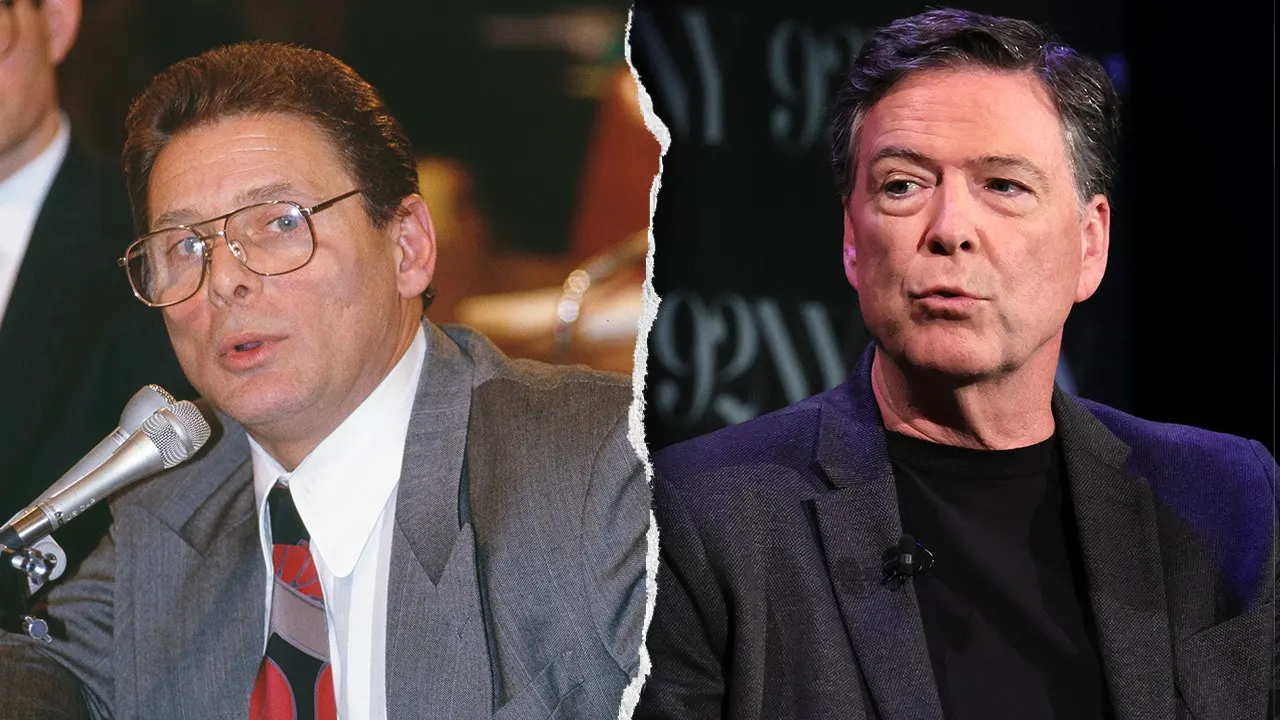

In a complex legal battle involving former FBI Director James Comey, recent developments reveal that the FBI interviewed notorious mob figure Salvatore Gravano, also known as “Sammy the Bull.” This inquiry revolves around a controversial social media post by Comey, interpreted by prosecutors to be threatening towards President Donald Trump. Gravano’s testimony, which cites his familiarity with Comey, raises questions about the understanding of the term “86,” often used in criminal circles to signify death.
The case, currently under scrutiny in the U.S. District Court for the Eastern District of North Carolina, involves federal charges against Comey for threatening Trump through his post. As the exchange between Gravano and the FBI unfolds, it brings further intrigue to the legal ramifications surrounding Comey’s alleged implications.
| Article Subheadings |
|---|
| 1) Background on the Case Against Comey |
| 2) Sammy Gravano’s Testimony and Its Implications |
| 3) The Meaning of “86” in Criminal Terminology |
| 4) Comey’s Defense Strategy and Public Statements |
| 5) Broader Implications of Political Speech |
Background on the Case Against Comey
The legal troubles facing James Comey stem from a post he made on Instagram in May 2025, which prosecutors have interpreted as a threatening message towards President Donald Trump. The post featured a series of seashells arranged to spell out “8647.” In April 2026, the U.S. Department of Justice filed two federal charges against Comey for reportedly threatening the president and transmitting a threat via interstate commerce.
According to official court documents, the government claims that the numbers in the post could symbolize an intention to harm Trump, which escalated into a federal case against Comey. This development has generated a significant amount of media attention and public discourse surrounding not just legal definitions of threats but also the intersection of criminal justice and political expression.
Sammy Gravano’s Testimony and Its Implications
A critical moment in the ongoing case was the FBI’s decision to interview Salvatore Gravano, a well-known figure in organized crime circles, regarding his views on Comey. Gravano, who served as the underboss of the Gambino crime family, reportedly has firsthand knowledge of Comey’s career as he was involved in high-profile court cases that featured significant media coverage in the 1990s.
In a phone interview conducted in May 2026, Gravano asserted that he believed Comey “had to know” the meaning of the term “86,” which he described as being associated with killing someone. His deposition adds a unique layer to the narrative, as it underscores the depth of the prosecutors’ arguments while simultaneously bringing questions of law and morality into stark relief.
The Meaning of “86” in Criminal Terminology
The term “86” is commonly used in organized crime jargon to denote the act of killing or eliminating someone. This language, rooted deeply in mob culture, has gained notoriety in both popular culture and law enforcement contexts. Gravano, who vocally supports the notion that the term was indeed a reference to violence, created waves with his candid admission during the FBI interview.
While discussing “86,” he clarified that it generally means to “get rid of” something, but it takes on a more violent undertone within gang-related discussions. His background as a former member of the Gambino family lends weight to his statement, and the FBI seemed to view his insights as significant, potentially bolstering the government’s case against Comey.
Comey’s Defense Strategy and Public Statements
Comey’s defense has been built upon the assertion that his Instagram post did not harbor any nefarious intent. During various public statements, he emphasized that he found the seashell arrangement and did not create it himself. He also referenced his lack of any intent to suggest violence through the cryptic message and stated that his posting of the seashells should not be construed as a political threat.
During interviews, he has made clear that while he understands how some may perceive “8647,” he perceives minimal risk in its interpretation. Following media backlash, Comey removed the post, suggesting he would not support any violence, despite feeling that it was a piece of artistic expression rather than a threatening message. As he stated in a broadcast interview, “I don’t want any part of any violence,” highlighting a wish to distance himself from the controversy.
Broader Implications of Political Speech
The case against Comey raises significant questions about the boundaries of political speech, the interpretation of threats, and the responsibility of individuals for their words, especially figures in positions of influence. Throughout history, political discourse has often been contentious, yet cases like this exemplify the fine line that exists between free expression and the potential for misunderstanding.
While the First Amendment protects a wide variety of speech, the legal system continues to examine where to draw that line. In this instance, the involvement of organized crime language adds layers of complexity to what constitutes a legitimate threat. As society navigates these discussions, the outcome may set precedents affecting how political messages are conveyed and interpreted in the future.
| No. | Key Points |
|---|---|
| 1 | James Comey is facing federal charges for threatening President Donald Trump through an Instagram post. |
| 2 | Salvatore Gravano asserted that Comey was aware of the criminal meaning of the term “86.” |
| 3 | The case is centered around the interpretation of a social media post that allegedly incited threats against Trump. |
| 4 | Comey argues that he did not intend any harm and sees his post as an artistic expression. |
| 5 | The outcome of the case could have significant implications for the interpretation of political speech. |
Summary
The unfolding case against James Comey, propelled by the testimony of Sammy Gravano, underscores the intricate relationship between language and legal interpretation. As the courtroom drama continues, the implications stretch beyond just Comey’s fate; they delve into the broader societal context of political speech, freedom of expression, and the implications of organized crime language. The results of this case may reshape our understanding of what constitutes a threat in the complex landscape of political discourse.
Frequently Asked Questions
Question: What are the charges against James Comey?
James Comey faces federal charges of threatening the president and transmitting a threat via interstate commerce, based on his social media post that prosecutors claim is a reference to violence.
Question: Who is Sammy Gravano, and what is his relevance to the case?
Sammy Gravano is a former underboss of the Gambino crime family, and his testimony is deemed crucial in determining whether Comey understood the criminal meaning of the term “86,” which prosecutors contend denotes a threat.
Question: How does the use of criminal slang impact the interpretation of Comey’s post?
The use of the term “86” can complicate the interpretation of Comey’s Instagram post, as it traditionally signifies a threat of violence in criminal vernacular, raising questions about the intent behind Comey’s message.
