

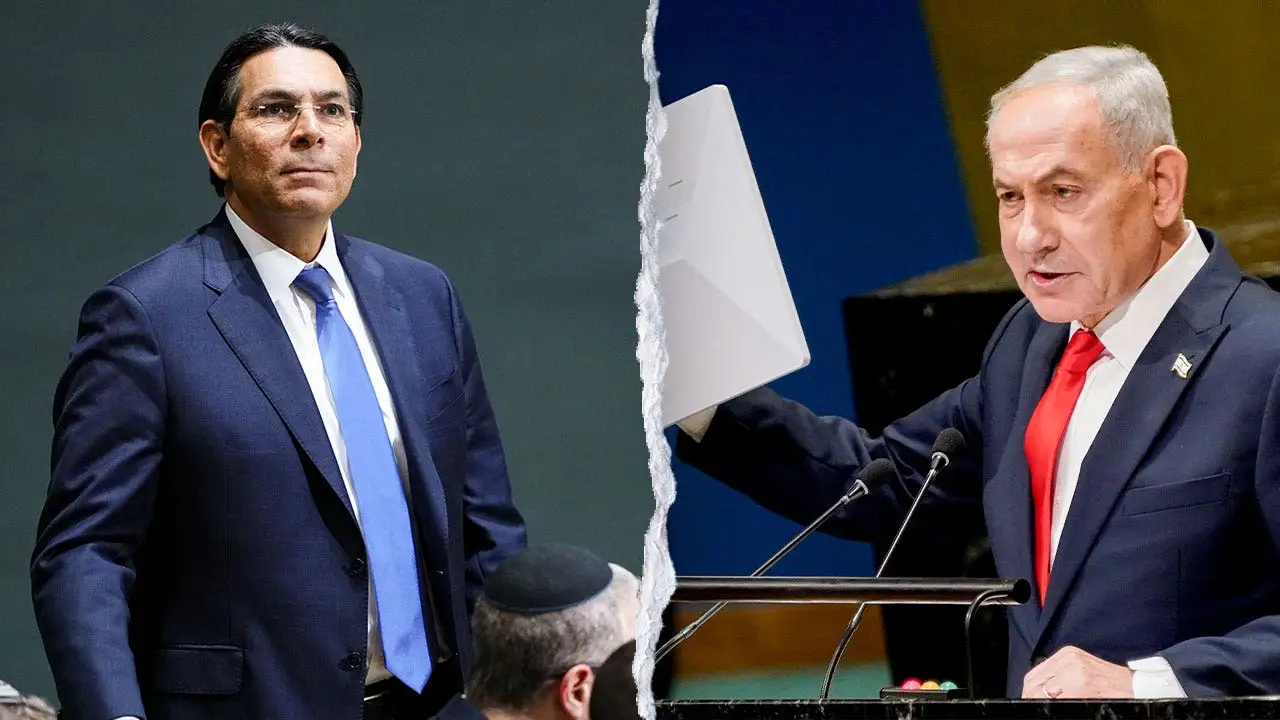

In a remarkable diplomatic moment that has captivated social media, a video of Israel’s Ambassador to the United Nations, Danny Danon, offering a Starlink device to an Iranian representative has gained approximately 9 million views, with analytics indicating nearly 40% of that viewership coming from Iran. This viral exchange followed remarks made by Israeli Prime Minister Benjamin Netanyahu during the United Nations General Assembly, and has since sparked discussions about freedom and expression among Iranian citizens. Surprisingly, the Iranian official declined the offer, yet the event has had significant implications in terms of audience engagement and perception across geopolitical lines.
| Article Subheadings |
|---|
| 1) Diplomatic Exchange at the U.N. |
| 2) The Starlink Surprise |
| 3) Iranian Reaction and Audience Analytics |
| 4) Disinformation Campaigns in Response |
| 5) The Significance of the Encounter |
Diplomatic Exchange at the U.N.
During a recent session of the United Nations General Assembly, tensions between Israel and Iran took an intriguing turn. On one hand, Benjamin Netanyahu delivered a stirring address focusing on a range of issues affecting regional security, including Iran’s influence in the Middle East. On the other hand, the U.N. proceedings featured a moment that resonated with the public, wherein Danny Danon engaged in direct interaction with an Iranian representative. This encounter unfolded shortly after Netanyahu had showcased a Starlink device which he proposed as a means of connecting the Iranian people with authentic information and the outside world.
The setting for this diplomatic exchange was fraught with the weight of past grievances, yet it unraveled an unanticipated pathway for dialogue. While he presented the device as a gesture of goodwill, the underlying message was evidently aimed at diminishing the Iranian government’s censorship of information despite the usual animosity between the two nations. This moment did not simply serve as a diplomatic maneuver; it symbolized an aspirational engagement for freedom and connectivity amidst prevailing socio-political strife.
The Starlink Surprise
The inclusion of the Starlink device in Netanyahu’s U.N. address was a deliberate move, orchestrated to foster not just dialogue, but also hope among the Iranian populace who are often oppressed by governmental internet censorship. The plan came to fruition as the Prime Minister had urged his ambassador to extend this unconventional offer to the Iranian delegation, culminating in Danon’s notable approach after the Prime Minister’s speech.
In the video that went viral, Danon is seen presenting the Starlink device to an Iranian official while articulating a message of freedom and connectivity. Understandably, this initiative posed some risks, given the historical tensions between the two nations. The audacity of such an outreach was accentuated further when the Iranian representative politely declined the offer, an action that was telling of the entrenched dynamics at play. Nevertheless, the exchange became a focal point for the media, as it provided visual and substantive content around the issues of internet access and political engagement.
Iranian Reaction and Audience Analytics
Following the video’s release, audience analytics revealed startling statistics regarding its viewership. Close to 40% of the audience for this viral content was traced back to Iran, a figure that stands out starkly against the typical audience demographics for Israeli diplomatic content. The remaining audience included viewers from the United States, Israel, Canada, and Germany, yet it was the Iranian figure that captured the attention of Danon’s office. An official representative expressed surprise at how the encounter had gained traction within Iranian circles, reflecting on the unusual interest from a population usually shielded from direct interactions with Israeli entities.
This unexpected reach raises questions about the appetite for such dialogues among Iranian citizens, especially amid increasing internet censorship and suppression of freedom of expression within their own country. The engagement is viewed not only as a commentary on the state of Iranian-Israeli relations but as a significant indicator of the yearning for information and connection stemming from the Iranian populace. The representative from Danon’s office framed the impact of the video as a breach in conventional barriers, underlining a longing for communication and transparency.
Disinformation Campaigns in Response
In a twist that signals the contentious nature of digital diplomacy, the Iranian regime began a parallel campaign, attempting to dilute the attention garnered by Danon’s viral video. Reports surfaced of accounts believed to be of Iranian origin recirculating an older video showing former Israeli Ambassador Gilad Erdan being escorted from the General Assembly during an earlier protest against the then-President of Iran, Ebrahim Raisi. This video, originally shot in September 2023, featured Erdan holding a photo of the young Iranian woman, Mahsa Amini, who became an emblematic figure within the protests against governmental oppression.
While this video aimed at undermining the impact of Danon’s recent encounter by portraying it as part of an ongoing clash, it also highlights the strategies employed by regimes to influence narratives amid increasing scrutiny. Danon’s office characterized this resurgence of old content as a “disinformation campaign”, indicating a clear acknowledgment of the power of narrative in shaping public perception. Such actions suggest a recognition within the Iranian government of the potential influence that Danon’s video may have had on the Iranian people’s consciousness.
The Significance of the Encounter
The significance of the viral Starlink offer extends beyond its immediate diplomatic implications. It also reflects the evolving dynamics of international relations in a digitally interconnected world where diplomacy increasingly takes place in the public eye. The ability for the Iranian populace to access discussions and information that challenge their government’s narrative is pivotal. Danon’s representative noted that while encounters like these can be risky, they also possibly shift perceptions within traditional power structures, suggesting room for new pathways of communication and understanding.
This episode serves as a hallmark example of how social media can reshape diplomatic narratives, extending the reach of traditional forums like the U.N. General Assembly. As representatives from both sides evaluate the fallout of such interactions, it remains to be seen whether these discussions will translate into dialogue that fosters greater understanding or whether they will simply reinforce existing divisions. The implications lie not just in how governments respond to each other, but also how populations engage with these developments, ultimately shaping the larger discourse around freedom and expression in oppressive regimes.
| No. | Key Points |
|---|---|
| 1 | The viral video of the Starlink offer has been viewed by around 9 million people. |
| 2 | Close to 40% of the views came from Iran, indicating significant interest. |
| 3 | The gesture was framed as a message of freedom to the Iranian populace. |
| 4 | The Iranian representative declined the Starlink device during the exchange. |
| 5 | The Iranian regime initiated a disinformation campaign in response to the video’s popularity. |
Summary
In summation, the diplomatic exchange surrounding the offering of a Starlink device to an Iranian representative by Israel’s U.N. ambassador is a potent symbol of the complexities and potentials within international relations today. The viral reaction, particularly its reach within Iran, signals an appetite for freer communication among people ensnared in restricted environments. Despite the Iranian government’s attempts to quash this dialogue through disinformation, the episode reinforces the notion that contestation of narratives is possible even against the backdrop of long-simmering tensions. As such, this moment not only underscores a unique opportunity for connection but also may help shape future conversations surrounding freedom, expression, and the role of technology in bridging unfathomable divides.
Frequently Asked Questions
Question: Why was the Starlink device significant in this context?
The Starlink device was significant as it represented a potential means for Iranian citizens to access uncensored information, contrasting sharply with the regime’s efforts to maintain strict online controls and censorship.
Question: What did the Iranian representative do when offered the Starlink device?
The Iranian representative declined the offer of the Starlink device made by Danny Danon, maintaining the existing protocol and stance of the Iranian government.
Question: How did the public react to the video of the exchange?
The video of the exchange went viral, gaining approximately 9 million views and resonating significantly with audiences in Iran, which suggests a growing interest and engagement with issues surrounding freedom and information access.
