

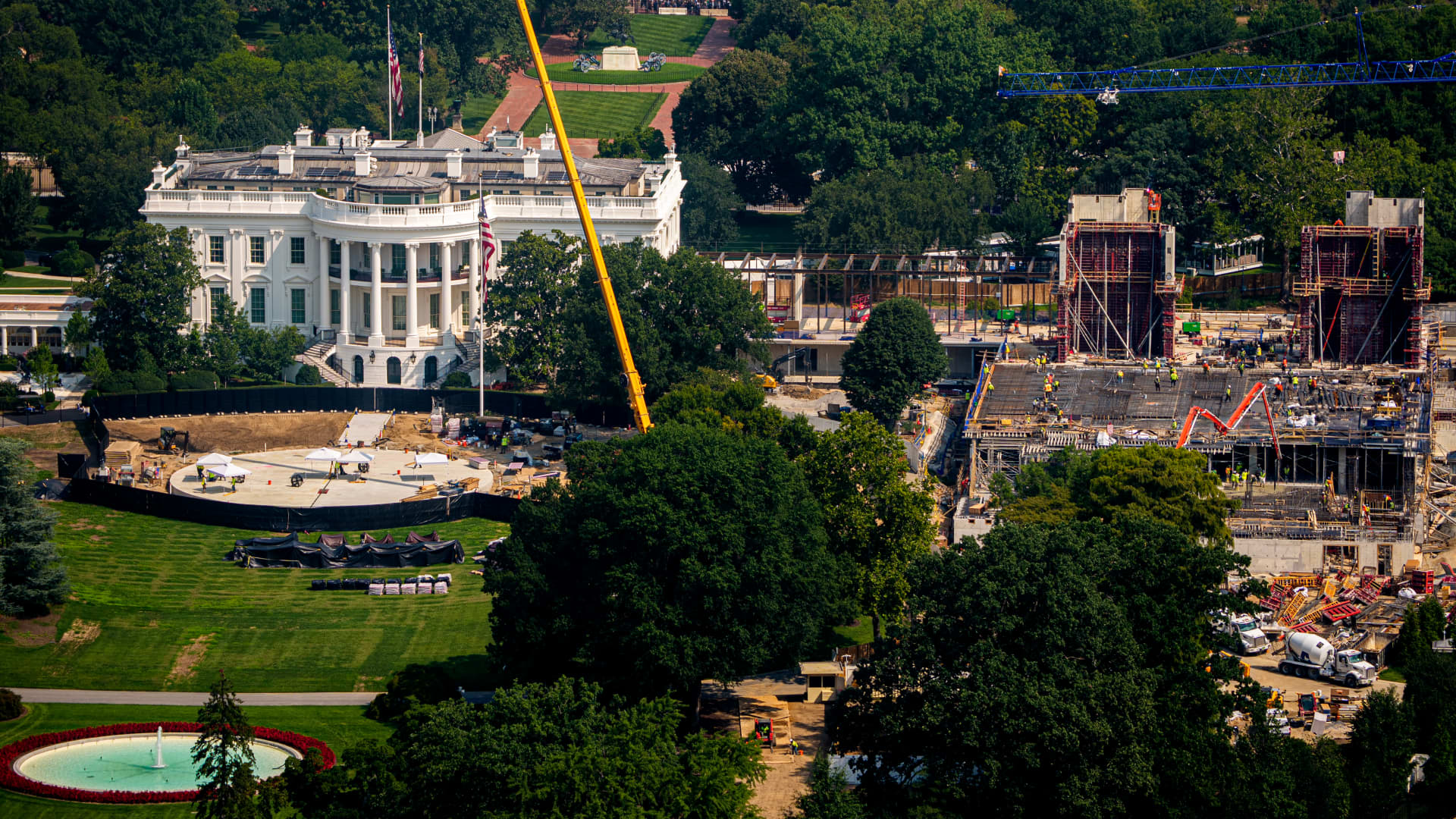

The ongoing construction of a new ballroom at the White House has sparked legal debates and controversy, culminating in a recent Supreme Court decision. The court allowed President Donald Trump to proceed with the roughly $400 million project while legal challenges from the National Trust for Historic Preservation are still underway. This ruling raises significant questions regarding the legal authority surrounding modifications to historic federal properties.
| Article Subheadings |
|---|
| 1) Supreme Court Decision on Ballroom Construction |
| 2) Legal Challenges and Standing Issues |
| 3) Opinions of the Chief Justice and Dissenting Justices |
| 4) Reactions from President Trump and the National Trust |
| 5) Implications for Historic Preservation Laws |
Supreme Court Decision on Ballroom Construction
On August 10, 2026, the Supreme Court handed down a split decision concerning the construction of a new ballroom at the White House, permitting President Donald Trump to continue with the project. The court’s majority contended that the National Trust for Historic Preservation likely does not have legal standing to challenge the roughly $400 million initiative. This decision effectively allows the construction to proceed while various legal arguments are pending.
The Supreme Court’s ruling did not clarify whether Trump possesses the legal authority to remodel federal property without congressional approval. As the legal case unfolds, this remains a crucial point of contention. Legal experts have noted that the decision represents a significant move to balance the powers of the executive branch while acknowledging ongoing concerns about federal law.
Legal Challenges and Standing Issues
The crux of the legal challenge stems from the assertion made by the National Trust for Historic Preservation that they have the right to block the construction due to its implications on historic preservation. According to the Trust, the new ballroom threatens to alter the landscape of a historic federal property. During the Supreme Court hearing, Alison Hoagland, a member of the Trust, argued that having to witness the alterations to the White House during her visits constituted a tangible injury. However, the court’s response indicated that this claim likely falls short of what is required to establish legal standing.
The court remarked that “mere offense, disagreement, or distaste” is insufficient to qualify as a concrete injury necessary to challenge the project. Legal analysts note that this interpretation could set a precedent, making it more challenging for citizens and organizations seeking to contest governmental projects based on aesthetic or sentimental grounds.
Opinions of the Chief Justice and Dissenting Justices
In a strongly worded dissent, Chief Justice John Roberts expressed concern over the implications of allowing the construction to move forward without addressing its legality. He pointed out that Congress has prohibited building constructions on federal land unless expressly permitted. The Chief Justice emphasized the significance of the White House as a national symbol and remarked that a preservationist like Hoagland could experience unique aesthetic damage due to modifications made to the historic site.
The dissenting justices highlighted that the ongoing construction of the ballroom may not just be an isolated instance, but rather a situation that could erode the legal framework protecting historic structures. This dissent signifies the tensions within the court regarding the intersection of executive authority and preservation of American heritage.
Reactions from President Trump and the National Trust
After the ruling, President Trump took to social media platform Truth Social, praising the Supreme Court’s decision as a milestone in his administration. He expressed confidence that the new ballroom would become an enduring symbol of national pride once completed in 2028. Moreover, he asserted that the project was proceeding “under budget and ahead of schedule,” despite what he termed the “baseless lawsuit” from the National Trust.
Conversely, Brent Leggs, CEO of the National Trust, expressed disappointment over the decision but highlighted the strength of the dissenting opinions. Leggs maintained that the ruling does not conclusively address the legality of the construction project and underscored the principle that each President is merely a custodian of the People’s House. He warned that unilateral decisions regarding significant changes to such important national resources should require congressional approval.
Implications for Historic Preservation Laws
The Supreme Court’s ruling and the ongoing construction of the ballroom raise pertinent questions regarding the future of historic preservation laws in the United States. Critics of the project argue that allowing the executive branch to unilaterally alter historic sites could set a dangerous precedent. There are concerns that such a precedent may undermine the protections that have been established to safeguard America’s architectural heritage.
Legal scholars are now examining the impact this ruling could have on future projects involving federal properties. If this balance of authority leans towards executive discretion, it might result in fewer checks on similar undertakings while diminishing the role of preservation organizations. The outcomes of the ongoing litigation may ultimately influence how historic preservation laws adapt in an evolving political landscape, ensuring that these cultural resources remain protected for generations to come.
| No. | Key Points |
|---|---|
| 1 | The Supreme Court decision allows President Trump to proceed with the ballroom construction at the White House. |
| 2 | The National Trust for Historic Preservation challenged the project’s legitimacy, citing potential harm to historic integrity. |
| 3 | Chief Justice Roberts expressed dissent, highlighting concerns over the legality and potential aesthetic injuries caused by the construction. |
| 4 | President Trump hailed the ruling as a triumph for his administration and a symbol of national pride. |
| 5 | The case raises significant implications for the balance of authority between the executive branch and preservation efforts. |
Summary
The Supreme Court’s decision to allow the continued construction of a new ballroom at the White House ignites a complex dialogue about presidential authority, legal standing, and the preservation of historic landmarks. While permitting the construction, the court’s ruling also prompts deep reflection on the values inherent in safeguarding America’s cultural heritage. As both supporters and critics voice their opinions, the legal landscape surrounding historic preservation may see profound changes in the months and years to come, further highlighting the importance of public engagement in preserving the integrity of historic sites.
Frequently Asked Questions
Question: What is the significance of the Supreme Court’s ruling?
The ruling permits President Trump’s construction of the ballroom to continue while legal challenges are ongoing, raising questions about executive authority and historic preservation.
Question: Who is challenging the ballroom project?
The National Trust for Historic Preservation is spearheading the legal challenges, arguing that the project threatens the integrity of a historic federal property.
Question: What are the implications of Chief Justice Roberts’ dissent?
Roberts’ dissent emphasizes the need for congressional authority in modifying federal properties, noting that the construction may proceed lawfully without proper oversight.
