

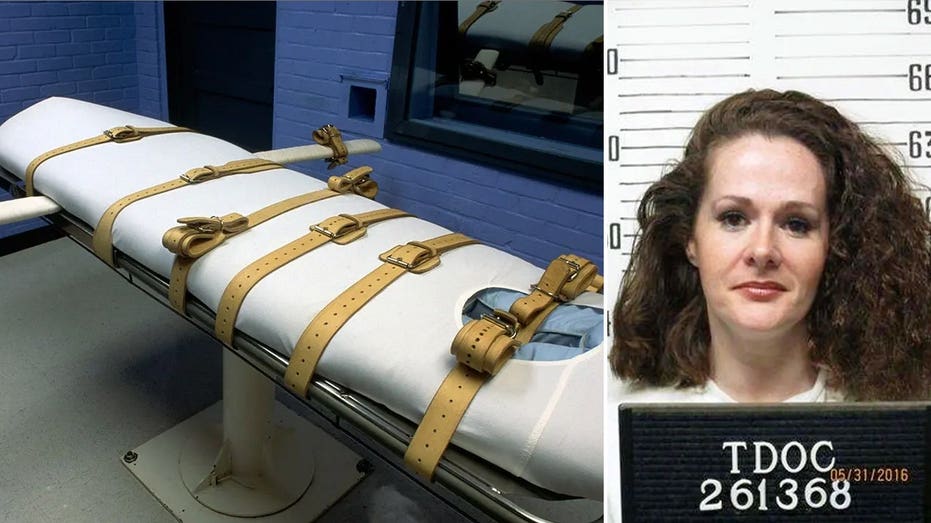

Tennessee death row inmate Christa Pike remained unconscious and on a ventilator after the state’s failed attempt to execute her on Sept. 30, according to her attorneys. Pike was scheduled to be executed for the 1995 torture killing of 19-year-old Colleen Slemmer. Her legal team alleges that execution personnel struggled to establish intravenous access, used at least seven needles and administered two doses of pentobarbital. The attorneys have asked a Tennessee court to require officials to preserve evidence as investigations into the incident proceed.
Pike’s attorneys said Friday that she was critically ill, intubated and receiving hospital treatment for injuries to both arms and the effects of the execution drugs. The state’s attorney general’s office said the governor had called for an investigation and that officials needed to determine what happened.
| 1) | Pike’s condition after the failed execution |
| 2) | Alleged problems establishing intravenous access |
| 3) | Prior warnings about medical complications |
| 4) | Court request to preserve execution evidence |
| 5) | Investigation and broader legal implications |
Pike’s condition after the failed execution
Christa Pike was taken to a hospital after the execution attempt at a Tennessee correctional facility on Wednesday night. Her attorneys, Stephen Ferrell and Luke Ihnen, said Friday that she remained critically ill, unconscious, intubated and dependent on a ventilator. They said she was being treated for serious effects associated with pentobarbital and significant injuries to both arms.
Pike had been scheduled to become the first woman executed in Tennessee in more than 200 years. Her conviction stems from the torture and killing of Colleen Slemmer, who was 19 when she died in 1995. The failed procedure does not resolve Pike’s underlying conviction or death sentence, but it has created new legal and investigative questions about the state’s execution process.
Alleged problems establishing intravenous access
Pike’s attorneys allege that the execution team used at least seven needles while attempting to establish intravenous access. According to their emergency court filing, Pike suggested possible insertion points, and one needle was allegedly removed after being bent at approximately a 90-degree angle.
The filing says Pike cried, whimpered and breathed loudly during the procedure. It also attributes two statements to her during the attempt:
“My arm feels like it’s about to burst open.”
“Does this happen like that?”
Her attorneys say she arrived at the hospital with both arms swollen, burned and blistered. They further allege that the execution team failed to recognize that the IV lines had failed before administering another dose of pentobarbital.
Prior warnings about medical complications
The defense says it warned Tennessee officials months before the scheduled execution that Pike’s medical history could make intravenous access unusually difficult. The cited concerns included thrombocytosis, post-traumatic stress disorder, small veins and a history of difficult needle insertion.
According to the motion, the attorneys also warned that improper delivery of pentobarbital could cause serious illness, needless suffering or a prolonged death. They allege those warnings were dismissed as speculation. The filing characterizes pentobarbital as a highly caustic substance and says medical experts have compared its effects on tissue and veins to harsh chemical agents. These claims remain allegations presented by Pike’s legal team.
Court request to preserve execution evidence
Pike’s attorneys filed an emergency motion in Davidson County Chancery Court seeking an order requiring the Tennessee Department of Correction to preserve physical, written and electronic evidence connected to the attempted execution. They argue the material is necessary to determine what happened, protect Pike’s legal rights and establish accountability.
The requested evidence could include records and materials concerning the execution team, IV placement, syringes, drugs, medical care and communications surrounding the procedure. The attorneys argue that litigation is reasonably foreseeable and that officials have an affirmative duty to preserve relevant information. The court’s filing describes the incident as a “botched attempted execution,” a characterization made by the defense.
Investigation and broader legal implications
The failed execution has prompted calls for an investigation into the preparation and conduct of the procedure. A spokesperson for the Tennessee attorney general’s office said the governor had appropriately called for an investigation and that officials needed to know what occurred. The Tennessee Department of Correction and the attorney general’s office were contacted for comment regarding the allegations.
The case could raise questions about execution protocols, medical oversight, evidence preservation and the constitutional limits on carrying out a death sentence. Those issues will depend on the findings of official inquiries, medical reviews and any subsequent court proceedings. At present, the detailed account of the execution comes primarily from Pike’s emergency motion and statements by her attorneys.
| Number | Key Point |
|---|---|
| 1 | Pike remained unconscious, intubated and on a ventilator after the failed execution attempt. |
| 2 | Her attorneys allege that at least seven needles were used to establish IV access. |
| 3 | The defense says it warned officials about medical factors that could complicate the procedure. |
| 4 | A court motion seeks preservation of physical, written and electronic evidence. |
Summary
Tennessee’s attempted execution of Christa Pike failed after alleged difficulties establishing IV access and delivering pentobarbital. Pike remains hospitalized in critical condition, while her attorneys seek evidence preservation and an investigation into the conduct of the procedure. State officials have acknowledged the need to determine what happened, but the allegations have not yet been resolved through an independent inquiry or court ruling.
Frequently Asked Questions
Why was Christa Pike scheduled for execution?
Pike was scheduled to be executed for the 1995 torture killing of 19-year-old Colleen Slemmer.
What happened during the execution attempt?
According to Pike’s attorneys, the execution team struggled to establish IV access, used at least seven needles and administered two doses of pentobarbital. The defense alleges that the IV lines failed and that Pike suffered injuries to both arms.
What are Pike’s attorneys asking the court to do?
They are asking Davidson County Chancery Court to require the Tennessee Department of Correction to preserve physical, written and electronic evidence related to the attempted execution.
What happens next?
The governor has called for an investigation. Further medical reviews, official findings and court proceedings are expected to address the execution procedure and the allegations made by Pike’s legal team.
