

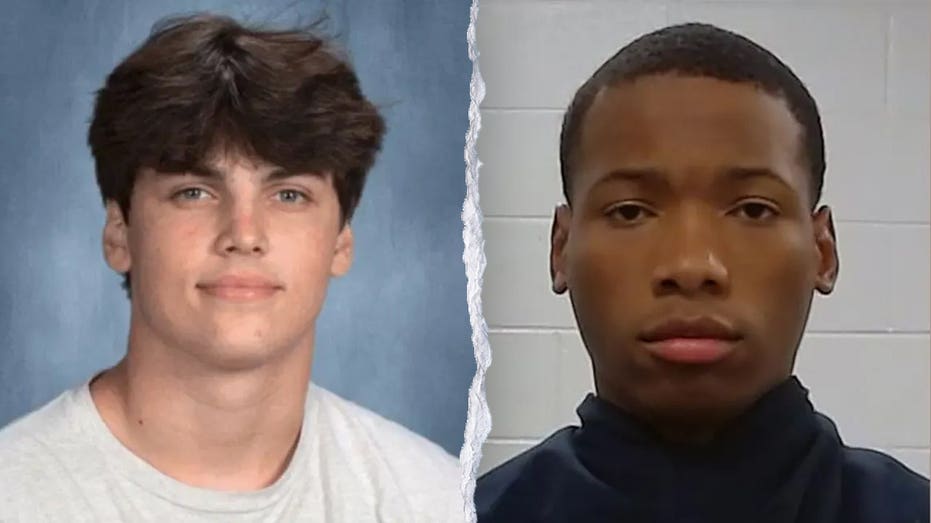

A Texas judge has denied Karmelo Anthony’s request for a new trial after former defense attorneys testified about a disputed unwritten agreement with prosecutors. The ruling leaves Anthony’s murder conviction and 35-year prison sentence intact while his direct appeal continues. The hearing also examined courtroom-access limits, proceedings held without Anthony and jury instructions involving self-defense.
Retired District Judge Michael Chitty issued the decision Saturday after reviewing the motion, court record, evidence, arguments, briefs and relevant case law. His order did not explain the reasoning in detail.
| 1) | Judge rejects request for a new trial |
| 2) | Dispute over the unwritten courtroom agreement |
| 3) | Why Anthony did not testify |
| 4) | Other constitutional claims considered |
| 5) | Conviction and appeal remain in place |
Judge rejects request for a new trial
Judge Michael Chitty denied the motion after a two-day hearing in McKinney, Texas. He considered testimony from former defense attorneys, arguments from both sides, the existing trial record and applicable law. The decision means Anthony will not receive a new trial at the trial-court level based on the issues presented in the motion.
The request followed the removal of Judge John Roach from the remaining trial-court proceedings. Judge Sid Harle found that a reasonable outside observer could question Roach’s impartiality after he publicly said the jury “got it right” and defended several decisions made during the trial.
Dispute over the unwritten courtroom agreement
The central issue was an oral agreement between Anthony’s original defense lawyers and prosecutors. The defense understood the arrangement to restrict potentially damaging character evidence involving both sides. Former lead attorney Mike Howard testified that he believed the agreement would allow Anthony to testify about the confrontation at a Frisco track meet while keeping the testimony focused on that incident.
On the final day of trial, prosecutors told the defense they did not believe the agreement applied if Anthony testified. They also argued that the defense had opened the door to character evidence. Howard described a heated break in the proceedings, while acknowledging under cross-examination that the attorneys had never expressly agreed on whether a testifying defendant was covered. He said he could not determine whether prosecutors had acted in bad faith.
Why Anthony did not testify
Former defense attorney Toby Shook gave similar testimony. He said the original defense team had expected Anthony to testify in support of his self-defense claim and understood the agreement to cover testimony about the confrontation. Prosecutors’ position therefore surprised him.
Shook testified that the defense later informed Anthony that Judge Roach had said he could not enforce the unwritten agreement. Anthony was then uncertain whether taking the stand could allow prosecutors to introduce the character evidence the agreement was intended to exclude. The dispute ultimately left Anthony unwilling to testify.
The defense also presented a self-defense training presentation used by lead prosecutor Bill Wirske in continuing legal education courses. One slide stated that a defendant “(probably) needs to testify.” Wirske disputed the defense account, saying the lawyers had not discussed what the agreement would permit if Anthony took the stand and that prosecutors remained willing to honor it.
Other constitutional claims considered
The hearing also addressed whether restrictions on courtroom access violated Anthony’s Sixth Amendment right to a public trial. The defense challenged proceedings held without Anthony present and argued that some jury instructions limited jurors’ ability to consider self-defense.
The case arose from an altercation at a track meet in Frisco, Texas. Anthony’s lawyers maintained that self-defense was central to the case, while prosecutors opposed the new-trial request and disputed the alleged breach of the oral agreement.
Conviction and appeal remain in place
Karmelo Anthony, 19, was convicted in June in the stabbing death of Austin Metcalf, 17. A Collin County jury found him guilty of murder and imposed a 35-year prison sentence. The case involved an encounter during a Frisco track meet.
Saturday’s ruling does not end Anthony’s legal challenge. His claims will continue through a direct appeal, where a higher court can review the trial proceedings and the legal issues raised by his attorneys.
| No. | Key Point |
|---|---|
| 1 | Judge Michael Chitty denied Anthony’s request for a new trial. |
| 2 | Former defense attorneys described a dispute over an unwritten agreement on character evidence. |
| 3 | Anthony did not testify after uncertainty over whether the agreement would protect him. |
| 4 | The motion also raised public-trial, absence and self-defense-instruction claims. |
| 5 | Anthony’s murder conviction and 35-year sentence remain in effect during his appeal. |
Summary
The ruling preserves Anthony’s conviction and sentence after the court rejected arguments that an unwritten agreement, courtroom restrictions and trial procedures violated his rights. Testimony showed that disagreement over the agreement contributed to Anthony’s decision not to testify. The remaining avenue identified in the proceedings is his direct appeal.
Frequently Asked Questions
What did the judge decide?
Retired District Judge Michael Chitty denied Karmelo Anthony’s request for a new trial.
Why did Anthony not testify?
His former attorneys said he became uncertain whether prosecutors could introduce character evidence if he testified after a dispute over an unwritten agreement.
What happens next?
Anthony’s murder conviction and 35-year sentence remain in place, while his legal challenge continues through a direct appeal.
