

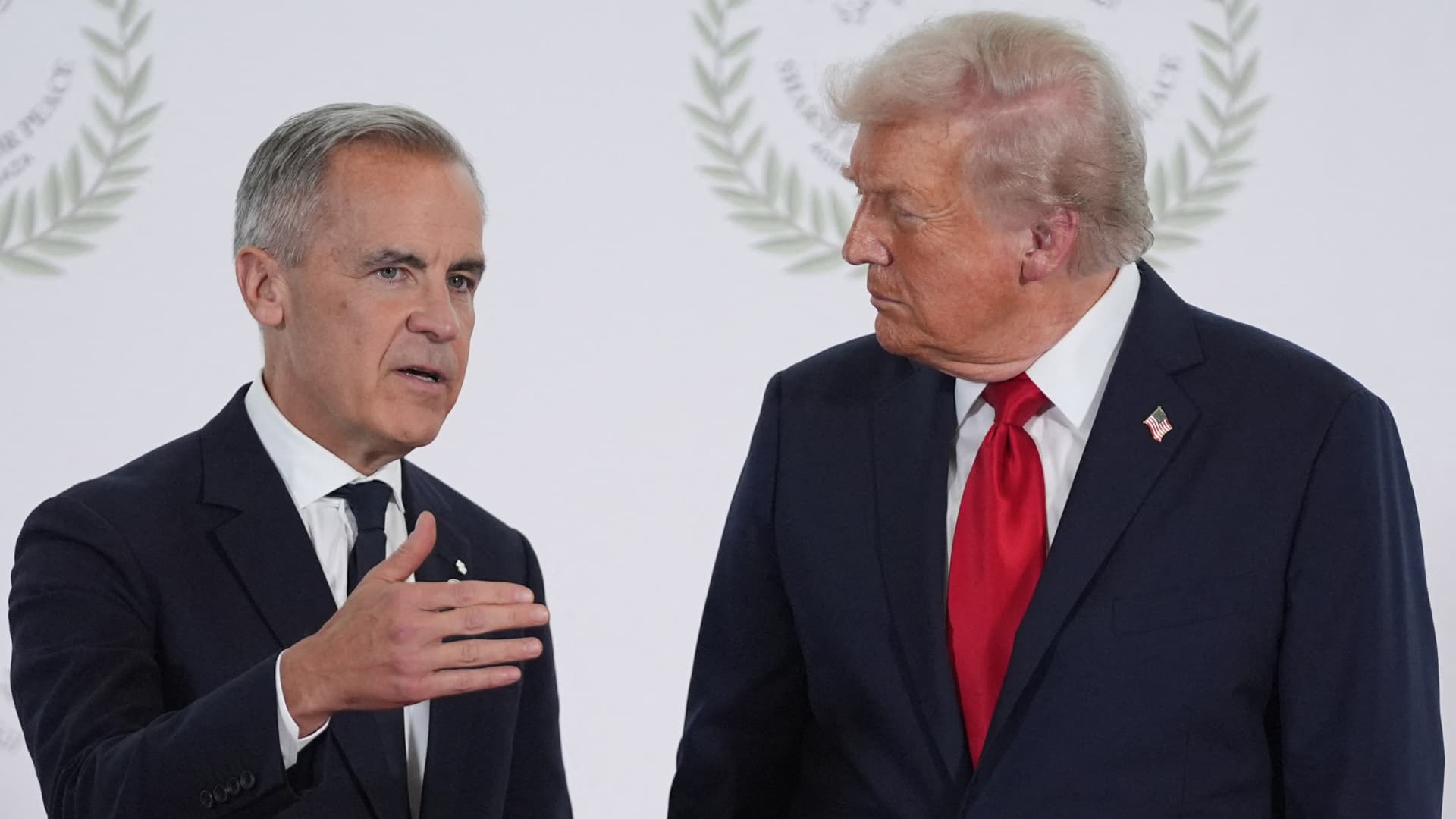

In a significant development regarding U.S.-Canada trade relations, President Donald Trump announced a last-minute decision to halt the impending imposition of a 50% tariff on certain Canadian imports. This announcement was made just hours before the tariffs were set to take effect, following trade talks with Canadian Prime Minister Mark Carney. The tariffs were part of a broader strategy aimed at addressing perceived trade discrimination by Canada against U.S. businesses, particularly in the motor vehicle, alcohol, and dairy sectors.
| Article Subheadings |
|---|
| 1) Trump’s Tariff Controversy |
| 2) Impacts on Canadian Goods |
| 3) Business Reactions and Concerns |
| 4) History of Trade Tensions |
| 5) Future of U.S.-Canada Trade Relations |
Trump’s Tariff Controversy
On October 13, 2025, President Donald Trump made headlines with his unexpected announcement regarding tariffs on Canadian imports. The proposed 50% tariffs would have primarily affected a range of goods, including hockey sticks and wine, among other consumer products. Trump’s decision came after he and Canadian Prime Minister Mark Carney engaged in trade discussions aimed at resolving ongoing trade disputes. This announcement was shared via Trump’s social media platform, Truth Social, where he indicated that the trade pause was contingent upon the finalization of a deal between the two nations.
This sudden pause in the imposition of tariffs marks a significant shift in the administration’s trade policy, which has previously been characterized by aggressive tariff implementations. The timing of the announcement raised eyebrows, as it occurred just hours before the tariffs were due to take effect, demonstrating the urgency in diplomatic negotiations between the U.S. and Canada.
Impacts on Canadian Goods
The planned 50% tariffs were set to cover approximately $20 billion worth of Canadian imports, specifically targeting products that the Trump administration claimed were subject to unfair trade practices. These tariffs were imposed under Section 338 of the Tariff Act of 1930, a seldom-used statute dating back to the Great Depression era. If enacted, these tariffs would have dramatically increased costs for U.S. consumers and hindered many Canadian businesses that rely on sales across the border.
Trade analysts indicated that while the tariff amount represented a small fraction of the overall $382 billion in goods imported from Canada that year, the specific products targeted could have faced steep price increases. Items such as hockey sticks and wines are staples in the market for many U.S. consumers, and such tariff increases would have led to significant price hikes, potentially making these goods economically unviable in the U.S. market. This situation highlighted the complexities of trade relationships and the tangible impacts tariffs can have on everyday consumers.
Business Reactions and Concerns
The response from the business community was immediate and filled with concern. Leaders from various sectors, including small businesses and trade associations, expressed anxiety about the implications of the 50% tariffs. Dan Kelly, president of the Canadian Federation of Independent Business, stated that many members foresaw a drastic downturn in their U.S. sales if the tariffs took effect. The uncertainty alone had already led some businesses to pause new orders, anticipating negative financial impacts.
Kelly pointed out that “a 50% tariff essentially makes a product uneconomic to sell into a particular market.” This sentiment resonated with many small business owners who feared that such a trade barrier would not only diminish their sales but could also endanger livelihoods across the border. The potential for business disruptions due to increased costs and reduced customer demand was actively discussed in various business forums.
History of Trade Tensions
The trade tensions between the United States and Canada have a long history, punctuated by tariffs and trade agreements designed to ease cross-border exchanges. President Trump’s administration has consistently cited unfair trade practices by Canada, resulting in a series of tariffs over the years targeting various sectors, including lumber, metals, and automotive parts. Additionally, concerns surrounding drug trafficking led to previously imposed tariffs that were negated by a Supreme Court ruling.
The history of these tensions reflects broader issues within international trade, such as trade agreements and their implications for domestic industries. Despite the trade agreements such as the USMCA, the overarching narrative has been one of careful negotiation, risk, and the potential for retaliatory measures. The looming tariffs were seen as capitalizing on historical tensions and shaping the current landscape of North American trade policy.
Future of U.S.-Canada Trade Relations
As the U.S. and Canada navigate their trade relationship, the recent decision to halt the tariffs poses both opportunities and challenges for the future. Officials from both countries are now tasked with finalizing a comprehensive agreement that addresses longstanding trade disputes while fostering cooperation and economic growth. With both leaders expressing a willingness to discuss further trade arrangements, the potential for improved relations exists, but it requires careful management of existing tensions.
Looking ahead, the implications of Trump’s decision could reshape future negotiations between the two nations. The evolution of the trade policy under his administration may indicate a pivot towards strategic collaboration, particularly in sectors synergistic to both economies. Experts suggested that maintaining open lines of communication will be essential for mitigating further trade disputes and enhancing mutual economic benefits, as families and businesses in both nations have a vested interest in a healthy bilateral relationship.
| No. | Key Points |
|---|---|
| 1 | President Trump paused the implementation of a 50% tariff on select Canadian imports. |
| 2 | The tariffs targeted products including hockey sticks and wine, affecting approximately $20 billion in goods. |
| 3 | Concerns from the business sector highlighted potential negative impacts on small and medium enterprises. |
| 4 | The tariffs were part of a broader pattern of trade tensions, challenging historical trade norms. |
| 5 | Future negotiations may reshape U.S.-Canada trade relations positively, pending effective dialogue. |
Summary
The recent decision by President Trump to halt the impending tariffs on Canadian imports is a pivotal moment in the U.S.-Canada trade relationship. Following intensive discussions with Prime Minister Carney, this pause opens the door for further negotiations that could lead to a more favorable trading environment for businesses and consumers in both nations. Addressing trade disputes thoughtfully will be crucial as both countries seek to build and maintain a robust economic partnership.
Frequently Asked Questions
Question: What was the rationale behind the proposed tariffs on Canadian imports?
The proposed tariffs were largely justified by the Trump administration as a response to perceived trade discrimination by Canada in sectors like motor vehicles, alcohol, and dairy.
Question: How would a 50% tariff affect Canadian businesses?
A 50% tariff would significantly increase the prices of Canadian goods in the U.S. market, potentially making them uncompetitive and leading to decreased sales and revenue for Canadian businesses.
Question: What are the broader implications of such trade policies?
The implementation of tariffs can disrupt supply chains, increase costs for consumers, and create tensions in international relations, thus affecting economic stability on both sides of the border.
