

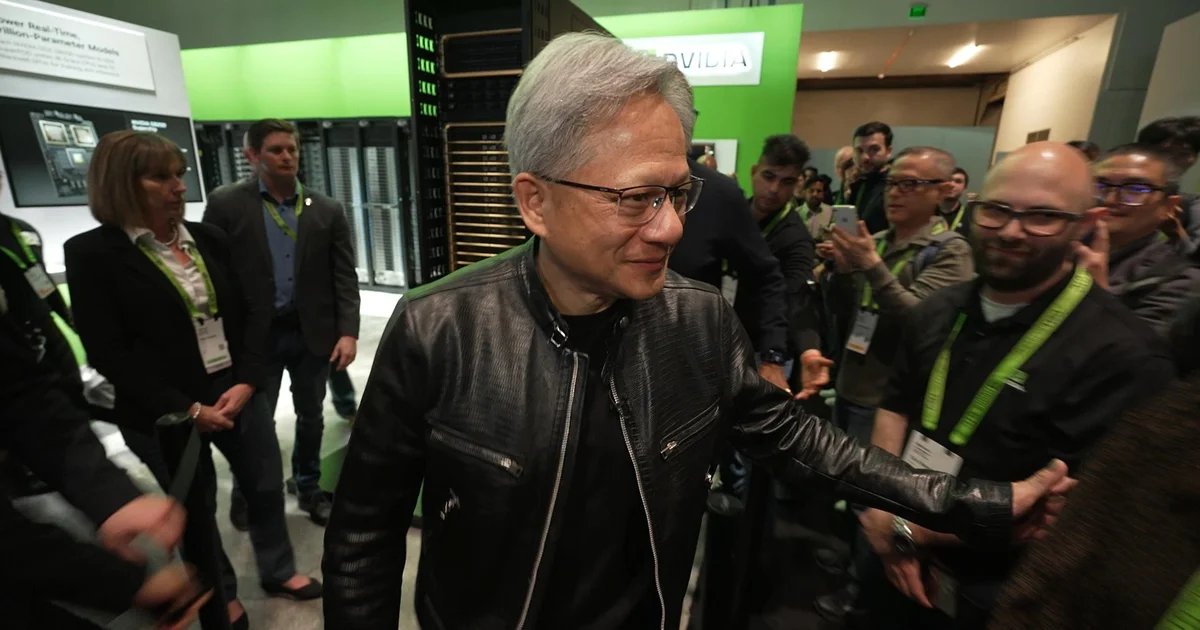

In a significant development for the semiconductor industry, President Trump has announced that California-based Nvidia will be permitted to sell its advanced H200 computer chips to selected customers in China. This decision marks a notable shift in the U.S. government’s approach to technology exports to China, particularly regarding products essential to artificial intelligence (AI) development. The administration will receive a 25% cut from these sales, while the deal does not encompass Nvidia’s more advanced systems, highlighting ongoing concerns about national security in relation to China’s burgeoning tech sector.
| Article Subheadings |
|---|
| 1) Significance of the Nvidia Deal |
| 2) The National Security Perspective |
| 3) The Response from Nvidia |
| 4) Implications for the Semiconductor Industry |
| 5) Future Outlook and Broader Context |
Significance of the Nvidia Deal
The announcement made by President Trump regarding Nvidia’s ability to sell H200 computer chips to certified customers in China is a remarkable move for the semiconductor landscape. As one of the leading companies in AI technology, Nvidia’s chips are pivotal in supporting cutting-edge applications around the globe. The approval for these sales indicates a shift in the regulatory environment concerning technology transfers to China, particularly at a time when both nations compete fiercely in AI development.
Nvidia’s decision comes at a critical juncture in which the U.S. government is reassessing its trade policies in the face of rising competition from China. By allowing approved sales, officials may see potential for boosting U.S. economic interests while still maintaining some measure of oversight. This balancing act aims to protect sensitive technology while fostering U.S. companies’ capabilities to thrive globally.
The National Security Perspective
The U.S. administration’s decision is underscored by an ongoing concern over national security risks concerning technology exports to China. Both the Trump and Biden administrations have previously restricted advanced chip technology, citing possible military applications and the risk of bolstering China’s AI sector in ways inconsistent with American interests. Experts argue that the sophisticated AI capabilities made possible by Nvidia’s chips could potentially contribute to military applications, which raises legitimate security concerns.
By enforcing these export regulations, the United States seeks to ensure that advancements in AI technology do not translate to military superiority for potential adversaries. However, the government’s approval for the H200 chips indicates a nuanced approach, suggesting an understanding of strategic cooperation in specific technological areas while still being vigilant about overall security implications.
The Response from Nvidia
In response to President Trump’s announcement, a spokesperson for Nvidia expressed optimism about the new guidelines, stating that they reflect a fairness that benefits American interests. The company has advocated for greater access to the Chinese market, arguing that restrictive export regulations could backfire and inadvertently lead to the development of a robust, homegrown chip industry in China. The sentiment from Nvidia’s leadership expresses hope that technology collaboration can yield mutual benefits for both nations.
An indication of Nvidia’s strong lobbying efforts is the series of dialogues held between its CEO, Jensen Huang, and President Trump concerning export controls. Nvidia believes that these negotiations and the resulting agreement could significantly enhance its global competitiveness while also ensuring that American technology remains at the forefront.
Implications for the Semiconductor Industry
This new approach not only has implications for Nvidia but also for the broader semiconductor industry, which includes companies like AMD and Intel. President Trump hinted that similar conditions would apply to these firms, suggesting a wider trend of controlled engagement between U.S. semiconductor manufacturers and the Chinese market. The U.S. government is poised to take a percentage of revenue from these sales—a financial incentive that might encourage firms to engage more earnestly with the Chinese market without sacrificing strategic interests.
The overall environment for U.S. chipmakers is increasingly competitive, necessitating strategic considerations both at home and abroad. While the approval for Nvidia is significant, the trend of regulated interaction may provide a framework for other companies to follow suit, potentially paving the way for further sales, albeit under carefully controlled terms.
Future Outlook and Broader Context
As America continues to navigate its relationship with China, technology and trade policy will remain at the forefront of discussions. The landscape is shifting, characterized by both competitive and collaborative elements as businesses seek to maximize economic opportunity while adhering to national security protocols. Looking ahead, more U.S. companies may follow Nvidia’s example of pressing for access to global markets, especially in China—a move that could encourage further economic partnerships.
Analysts suggest that while this may kindle technological advancements, it also necessitates vigilance and strategic oversight to ensure that any tech acquired does not inadvertently support adversarial agendas. The environment will likely remain complex, with an ongoing dialogue balancing innovation and security shaping future policies.
| No. | Key Points |
|---|---|
| 1 | President Trump allows Nvidia to sell H200 chips to China under regulated conditions. |
| 2 | The U.S. government will receive a 25% cut from these chip sales. |
| 3 | Nvidia’s advanced systems, like Blackwell and Rubin, are excluded from the deal. |
| 4 | National security concerns about technology transfers to China remain central to U.S. policy. |
| 5 | The favorable response from Nvidia indicates a potential shift towards more collaborative technology engagement. |
Summary
In conclusion, President Trump’s decision to approve Nvidia’s sale of H200 chips to China represents a significant step in the U.S. technology export strategy, balancing economic opportunity with national security. This strategic engagement not only highlights Nvidia’s pivotal role in the AI sector but also aims to set a precedent for other U.S. companies navigating the complex landscape of international trade and technology transfer.
Frequently Asked Questions
Question: What are the implications of the new deal for Nvidia?
The deal will enhance Nvidia’s market access in China and allow it to capitalize on the burgeoning demand for AI technologies while yielding substantial revenue for the company and the U.S. government.
Question: Why is the U.S. government concerned about chip sales to China?
The government is concerned that advanced chip technology could be used for military purposes or bolster China’s domestic AI capabilities, which may not align with U.S. security interests.
Question: How might this decision affect other semiconductor companies?
Other semiconductor companies like AMD and Intel could benefit from similar regulated access to the Chinese market, potentially enhancing their competitive edge while still adhering to national security protocols.
