

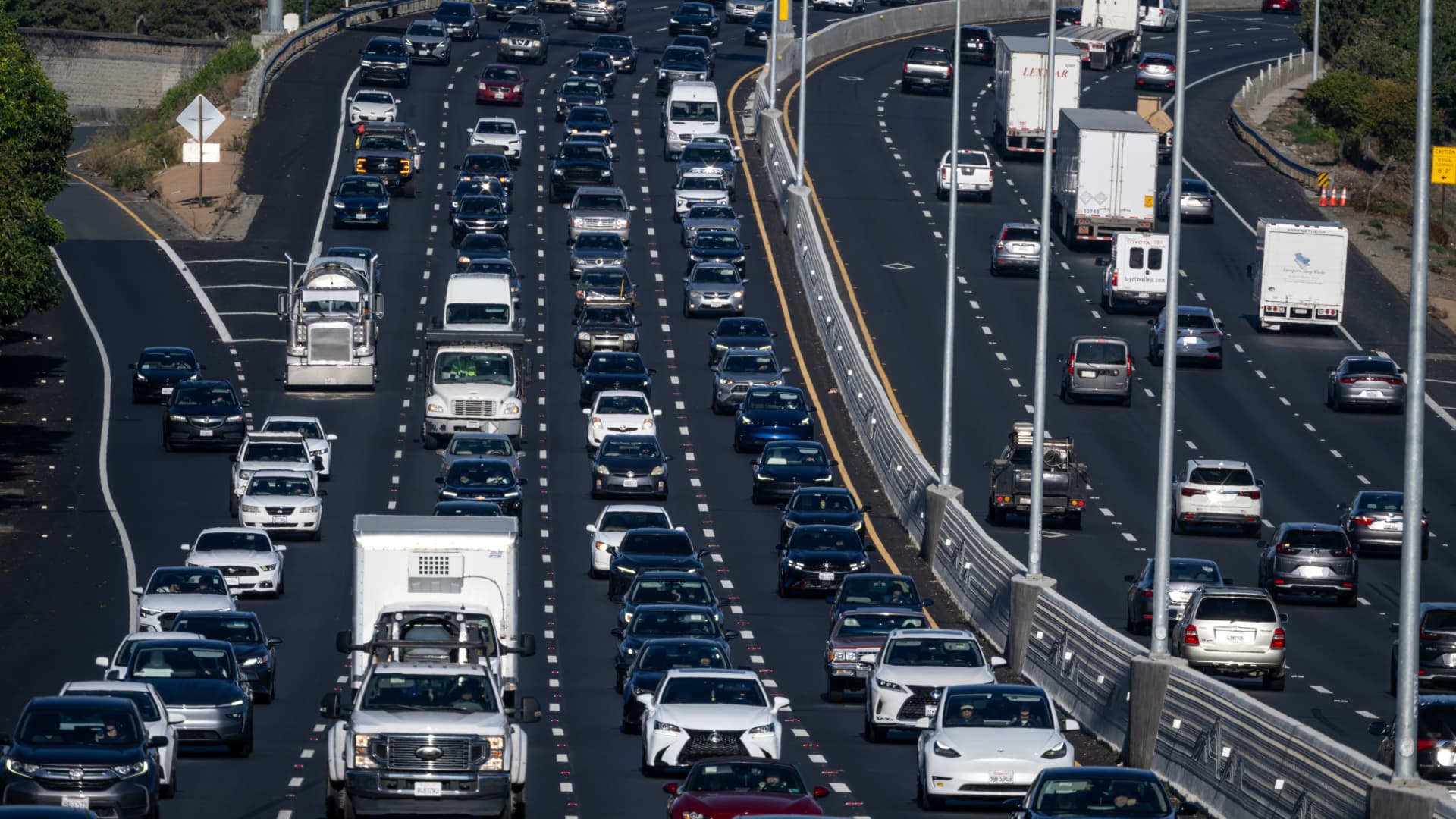

In a significant policy shift, President Donald Trump announced on December 3, 2025, plans to roll back strict fuel economy standards implemented during the Biden administration. These adjustments to the Corporate Average Fuel Economy (CAFE) standards are intended to ease the financial burden on automakers and consumers alike. Industry leaders, including the CEOs of major automakers, praised the proposed changes, which aim for a target fuel efficiency of 34 miles per gallon by 2031, significantly lower than Biden’s goal of 50 miles per gallon.
| Article Subheadings |
|---|
| 1) Background of CAFE Standards |
| 2) Trump’s Aggressive Regulatory Rollback |
| 3) Industry Reactions and Support |
| 4) Implications for Consumers |
| 5) Future of Electric Vehicles and Sustainability |
Background of CAFE Standards
The Corporate Average Fuel Economy (CAFE) standards were established in 1975 in response to the energy crisis, aimed at improving the fuel efficiency of vehicles sold in the United States. Over the decades, these standards have evolved alongside technological advances and changing environmental concerns. The regulations enacted during the Biden presidency intended to tackle climate change by significantly increasing fuel efficiency, mandating that passenger cars and light trucks achieve an average of 50 miles per gallon by 2031. This ambitious target was viewed as a way to not only benefit the environment but also to stimulate the market for electric vehicles (EVs) across the nation.
Supporters of the standards argued that the automotive industry had both the capability and responsibility to transition toward more sustainable transportation solutions. The higher standards were expected to foster innovations that could enable manufacturers to create greener vehicles while also assisting consumers in reducing fuel costs.
Trump’s Aggressive Regulatory Rollback
In a strong push against the regulatory framework established under his predecessor, President Trump proposed significant cuts to the CAFE standards on December 3, 2025. During an Oval Office announcement, Trump stated,
“We are officially terminating Joe Biden’s ridiculously burdensome, horrible actually, CAFE standards that imposed expensive restrictions.”
This initiative reflects Trump’s continuing agenda to dismantle various environmental regulations perceived to hinder economic growth and the automotive industry.
The proposed standards would lower the efficiency goal from 50 miles per gallon to around 34 miles per gallon by 2031, a drastic shift that has renewed debates about the balance between economic interests and environmental responsibilities. The National Highway Traffic Safety Administration, which oversees the implementation of these standards, is expected to play a crucial role in formalizing these changes.
Industry Reactions and Support
Attending the announcement alongside Trump were key industry figures, including Jim Farley, CEO of Ford Motor Company, and Antonio Filosa, CEO of Stellantis. Their presence highlighted the support from leading automakers for the rollback of the standards. Executives from various automotive companies echoed sentiments that the revised standards align with consumer preferences and the economic realities of the market.
The Alliance for Automotive Innovation, a prominent trade group representing many automakers, expressed approval of the initiative. John Bozzella, the CEO of the Alliance, noted,
“We’re reviewing NHTSA’s announcement, but we’re glad the agency has proposed new fuel economy standards.”
This endorsement signals a broader industry consensus that the stricter regulations set by the Biden administration were challenging for manufacturers to achieve, especially in the current environment where electric vehicle sales are growing, but still not dominant.
Implications for Consumers
The implications of these proposed changes for consumers are multifaceted. On one hand, reducing regulatory burdens may lead to a drop in vehicle prices, making new cars more affordable. The average cost of a new vehicle has surged past $50,000, and easing environmental standards may help address affordability concerns in the automotive market.
Conversely, critics argue that such deregulation poses risks for consumers in the long term. Lower fuel efficiency standards may lead to increased fuel costs over time, countering the initial savings from buying less expensive vehicles. Additionally, environmental advocates express concerns that abandoning stringent efficiency measures could exacerbate climate change issues as greenhouse gas emissions from the automotive sector continue to rise.
Future of Electric Vehicles and Sustainability
The rollback of CAFE standards raises critical questions about the future of electric vehicles and sustainability efforts in the U.S. While Trump’s administration has pushed to reduce the regulatory framework surrounding traditional internal combustion engine vehicles, the growing demand for electric vehicles indicates a possible dichotomy in market dynamics. Automakers are increasingly investing in EV technology in anticipation of future trends toward sustainability.
The American Petroleum Institute has been vocal about its desire to repeal the stricter fuel economy standards, arguing that they threaten the existence of liquid fuel vehicles. The shift in policy may inadvertently steer the market in conflicting directions, with traditional vehicle efficiency losing regulatory support while electric vehicle adoption is still growing.
However, major players in the electric vehicle space, such as Tesla, have not publicly commented on the new standards yet. Their silence may indicate a strategic wait-and-see approach regarding how these changes will shape the regulatory landscape for the burgeoning EV market.
| No. | Key Points |
|---|---|
| 1 | President Trump announced a rollback of CAFE standards mandating lower fuel efficiency targets. |
| 2 | The new standards would require an average of 34 miles per gallon by 2031, down from 50 mpg. |
| 3 | Automakers view the change as beneficial for consumer affordability amid rising vehicle costs. |
| 4 | Deregulation could have long-term environmental consequences, raising concerns among sustainability advocates. |
| 5 | The future of electric vehicles remains uncertain amid the changing regulatory environment. |
Summary
The proposed changes to the CAFE standards by the Trump administration mark a significant change in the U.S. automotive regulatory landscape. While the shift aims to alleviate financial pressures on manufacturers and consumers, it also raises critical questions regarding environmental impact and the acceleration of electric vehicle adoption. The complexities surrounding fuel economy regulations will undoubtedly continue to provoke debate as stakeholders evaluate both short-term benefits and long-term sustainability goals.
Frequently Asked Questions
Question: What are the CAFE standards?
CAFE standards refer to the Corporate Average Fuel Economy regulations that set specific fuel efficiency targets for vehicles sold in the United States.
Question: What is Trump’s proposal regarding fuel economy standards?
President Trump proposes to lower the fuel efficiency standards from 50 miles per gallon to 34 miles per gallon by 2031.
Question: How do these changes impact electric vehicle production?
The rollback of strict fuel economy standards may slow the momentum for electric vehicle production by reducing the pressure on automakers to innovate and improve fuel efficiency in their offerings.
