

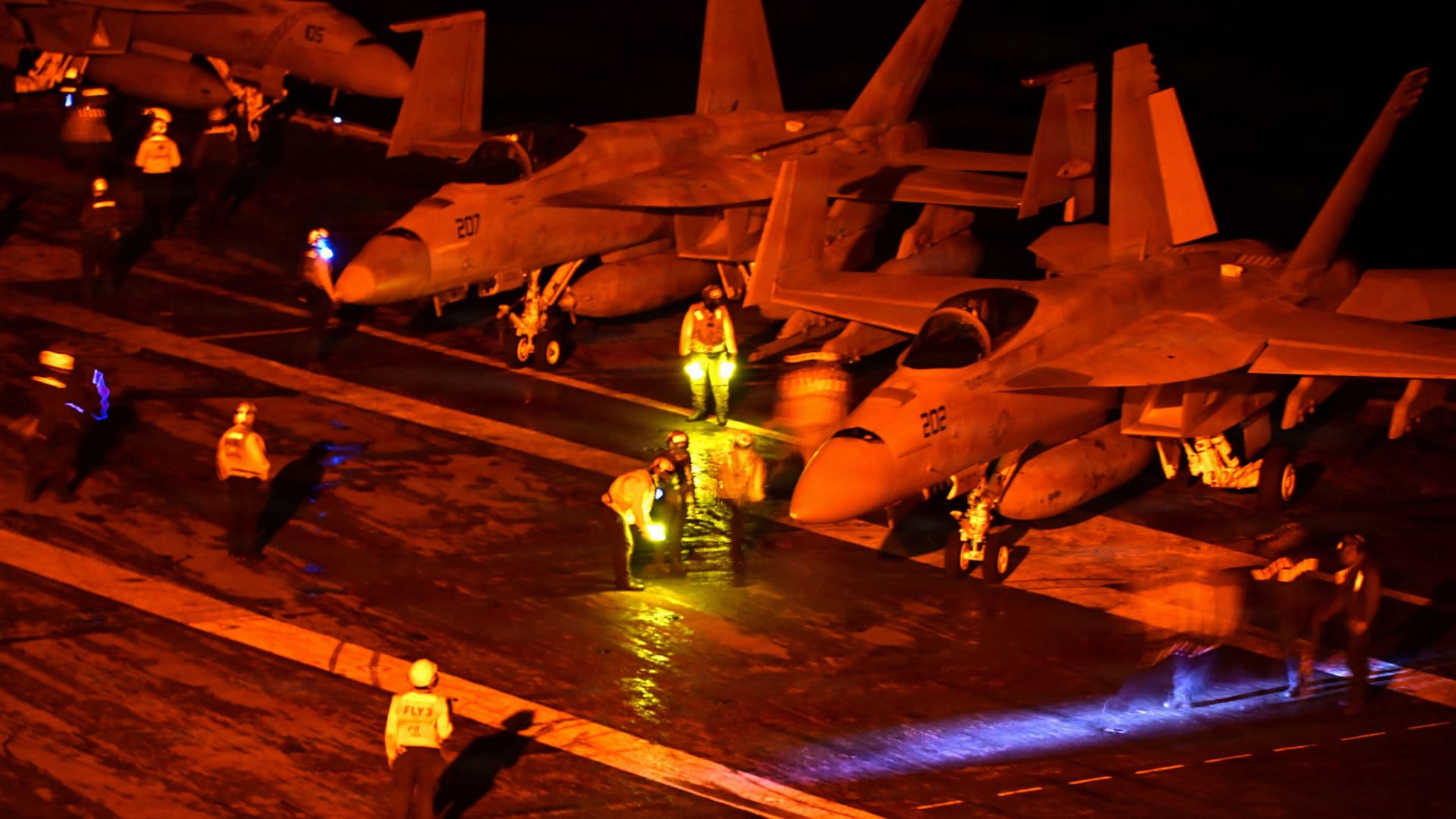

In a significant escalation of military tensions, the United States has extended its confrontational stance towards Iran, particularly threatening pivotal maritime assets in the Strait of Hormuz. The conflict intensified following the U.S. military’s strikes on Iranian rocket launchers amid Iranian claims of disabled tankers caused by naval mines. As both nations exchange blows, officials warn of dire consequences, particularly for commercial shipping routes vital for global oil supplies.
| Article Subheadings |
|---|
| 1) U.S. Threats and Military Movements |
| 2) Iranian Retaliation and Military Responses |
| 3) The Importance of the Strait of Hormuz |
| 4) Implications for Global Shipping |
| 5) Potential for Further Escalation |
U.S. Threats and Military Movements
Following a series of provocative actions, President Donald Trump issued stark warnings directed at Iran, specifically regarding the vital oil export terminal on Kharg Island. Trump emphasized that the island would face devastating military action, declaring it “going to be blown to smithereens!” This rhetoric escalates the existing tensions marked by ongoing skirmishes in the region. U.S. military operations intensified over the weekend when American forces targeted Iranian military installations on Larak Island.
The U.S. Central Command confirmed the strikes, revealing they were conducted in response to intelligence indicating that the Islamic Revolutionary Guard Corps (IRGC) was preparing to launch rockets potentially armed with sea mines into the strategic Strait of Hormuz, a key shipping lane for oil and other goods. A spokesperson from the Navy, Captain Tim Hawkins, stated that the operations reflect a continued commitment to safeguard maritime routes crucial for international trade.
Iranian Retaliation and Military Responses
In a strong statement following the U.S. military strikes, the Iranian foreign ministry declared that the United States and its allies are fully responsible for the escalating situation. Iran warned that it would respond decisively to any further military aggression, indicating a readiness to escalate military operations against perceived threats. This declaration aligns with Iran’s historical posture of retaliation against outside intervention, particularly regarding its sovereignty in the Persian Gulf region.
In retaliation for the U.S. strikes on Larak Island, Iranian forces reportedly targeted American military bases in Jordan with combined missile and drone operations. These assaults were said to have inflicted significant damage on both the King Hussein and Al Azraq bases, further heightening fears of an all-out confrontation. Iranian military officials claimed that the strikes led to heavy damage to enemy infrastructure and vowed to continue their aggressive posture regarding U.S. military presence in the region.
The Importance of the Strait of Hormuz
The Strait of Hormuz serves as a critical maritime chokepoint where approximately 20% of the world’s oil supply is transported. Given its strategic importance, it has historically been the center of conflict and assertion of naval power. The IRGC has utilized Larak Island as a significant military command post, leveraging its geography to monitor vessel traffic and enhance Iran’s operational capabilities in the region. Recent developments have disrupted shipping routes significantly, as the increasing hostility poses a substantial risk to vessel safety.
Recent reports indicate that the attacks and military activities within the Strait are drawing international concern, specifically regarding the safety of commercial vessels navigating these treacherous waters. The dynamic poses a threat not just to Middle Eastern stability but also to global energy markets, which are sensitive to supply chain disruptions that can follow military conflict.
Implications for Global Shipping
The situation in the Strait of Hormuz has immediate ramifications for the global shipping industry. The U.S. Navy’s blockade against Iranian ports aims to curb Iranian threats to commercial shipping routes; however, this has led to increased tensions with Iran, which continues to target vessels that do not adhere to its specified shipping lanes. The maritime trade community has been alerted to exercise heightened caution as uncertainties increase regarding potential attacks in the region.
On August 19, additional reports surfaced of another tanker being struck by an unknown projectile while navigating the Strait, underscoring the perilous environment commercial shipping is currently facing. While no casualties were reported, the UK Maritime Trade Operations agency advised all vessels to adopt extra precautionary measures in light of the increasingly hostile maritime landscape.
Potential for Further Escalation
As hostilities persist between the two nations, the potential for further escalation remains high. With U.S. military forces actively positioned in the region and Iranian forces historically willing to engage militarily when provoked, analysts predict a precarious trajectory ahead. The deployment of advanced naval assets and air power further complicates the landscape, particularly if additional provocations or miscalculations occur among the involved parties.
A diplomatic resolution appears increasingly elusive as rhetoric from both sides intensifies, suggesting that both nations are bracing for potentially larger confrontations. If the current trend continues, the implications could lead to a wider regional conflict, drawing in other stakeholders and significantly impacting international trade, energy prices, and geopolitical stability.
| No. | Key Points |
|---|---|
| 1 | President Donald Trump issued dire threats towards Iran, vowing military action against important assets like Kharg Island. |
| 2 | The U.S. military executed airstrikes against Iranian positions in response to missile preparations aimed at disrupting maritime lanes. |
| 3 | Iran’s military declared intentions to retaliate against U.S. forces, affirming its defense of sovereignty in the Strait of Hormuz. |
| 4 | The Strait of Hormuz is critical for global oil shipments, with increasing military activity posing significant risks to shipping. |
| 5 | The potential for further escalation remains high, with both nations prepared for military engagement amidst heightened tensions. |
Summary
In summary, the continued military posturing and hostile exchanges between the United States and Iran represent a significant crisis, with potential ramifications for global security and trade. As both nations tread the fine line between military might and diplomacy, the risks to the Strait of Hormuz—and by extension, the wider global economy—are mounting. The international community watches closely, as the decisions made in the coming days and weeks could set a course for either escalation or a return to diplomacy.
Frequently Asked Questions
Question: What triggered the latest U.S. military actions against Iran?
The U.S. military actions were triggered primarily by intelligence suggesting that Iranian forces were preparing to launch rockets armed with sea mines into the Strait of Hormuz, leading to a preemptive military response from the United States.
Question: How has Iran responded to U.S. military operations?
Iran responded with threats of retaliation and launched missile and drone strikes on American military bases in Jordan, asserting its military readiness to counter U.S. aggression in the region.
Question: Why is the Strait of Hormuz significant?
The Strait of Hormuz is significant as it is a critical chokepoint for maritime oil transport. Approximately 20% of the world’s oil supply passes through this strait, making it a vital route for global energy trade.
