

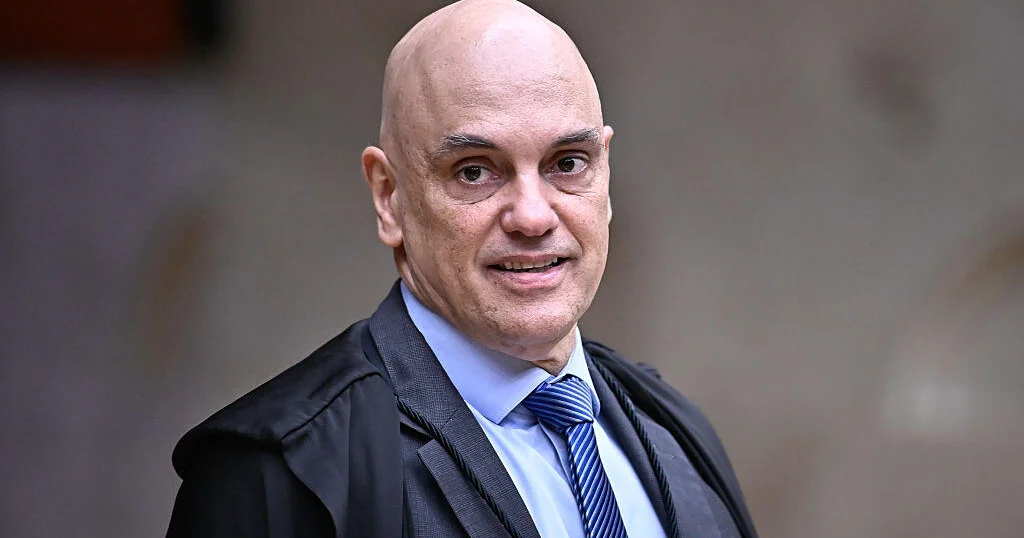

In a significant diplomatic shift, the United States has removed Brazilian Supreme Court Justice Alexandre de Moraes from its sanctions list. The decision, which follows a series of positive discussions between leaders of the two nations, comes after the U.S. initially sanctioned De Moraes due to his controversial role in charging former President Jair Bolsonaro. The lifting of the sanctions has sparked contrasting responses from the Brazilian government and Bolsonaro’s supporters, reflecting the ongoing tensions in Brazilian politics.
| Article Subheadings |
|---|
| 1) Context of the Sanctions |
| 2) The Impact of the Sanction Lifting |
| 3) Reactions from Brazilian Leaders |
| 4) Historical Tensions Between the U.S. and Brazil |
| 5) Future Diplomatic Relations |
Context of the Sanctions
The sanctions on Alexandre de Moraes were initially imposed in July 2022, shortly after he became embroiled in legal proceedings against Jair Bolsonaro, who faced accusations of a conspiracy to remain in power after losing the 2022 elections. The U.S. Treasury Office of Foreign Assets Control cited De Moraes’ actions as abusive, claiming he authorized pre-trial detentions and restricted freedom of expression within Brazil. The Global Magnitsky Human Rights Accountability Act was invoked to justify these sanctions, emphasizing the U.S. commitment to human rights enforcement globally.
The sanctions drew international attention, especially given their implications for political freedoms in Brazil. The U.S. administration viewed De Moraes as emblematic of an authoritarian trend in Brazilian politics, while many supporters of Bolsonaro saw the sanctions as necessary measures to support democratic governance. The initial impact included a halt to diplomatic engagements between the two nations, straining relations significantly and indicating a hardening of positions from both governments.
The Impact of the Sanction Lifting
The removal of sanctions against De Moraes symbolizes a thawing of relations between the U.S. and Brazil. Following discussions between President Donald Trump and Brazilian President Luiz Inácio Lula da Silva, the sanctions were lifted, signaling a potential shift in U.S. foreign policy towards Brazil. The Brazilian administration celebrated this action as a victory for its government and an indication of a strengthened bilateral relationship.
Upon the sanctions’ removal, Brazil’s government expressed optimism for improved diplomatic engagement, focusing on collaboration in areas such as trade and regional security. The implications for trade were particularly noted, as both nations had dealt with tariff disputes, including a 40% tariff imposed by the Trump administration on Brazilian goods. By revoking this punitive measure, the U.S. indicated an interest in restoring favorable trade conditions.
Reactions from Brazilian Leaders
Brazilian officials have responded positively to the lifting of the sanctions, interpreting it as a significant diplomatic gain for the Lula administration. Minister Gleisi Hoffmann emphasized that the actions taken by Lula’s government have been instrumental in dialogue that respects Brazil’s sovereignty. The sentiment reflects a shift away from Bolsonaro’s heavily pro-Trump stance, which characterized his presidency and alienated many in the international community.
On the other hand, reactions from Bolsonaro’s supporters have been markedly somber. Eduardo Bolsonaro, son of the former president, expressed disappointment at the decision, lamenting the implications it may carry for his father’s political legacy and influence. Eduardo indicated that the lack of cohesion and advocacy within the Brazilian political sphere contributed to what he sees as a betrayal of his father’s interests in the eyes of the U.S. administration.
Historical Tensions Between the U.S. and Brazil
The U.S.-Brazil relationship has historically ebbed and flowed, often influenced by the personalities in charge and broader geopolitical considerations. Under Bolsonaro, Brazil was dubbed the “Trump of the Tropics,” reflecting a close alliance with the former U.S. president, which fostered significant cooperation. However, Bolsonaro’s removal from office and the subsequent rise of Lula has reshaped this dynamic. Lula’s administration has sought to distance itself from previous foreign policy postures, looking to create a more independent and multidimensional diplomatic strategy.
The sanctions against De Moraes served as a pivotal point of contention, illustrating the fraught and complex nature of international relations. For long-time observers, this period of tension marked a significant departure from the cooperation witnessed during Bolsonaro’s term, adding layers of complexity to the continuing evolution of U.S.-Brazil relations.
Future Diplomatic Relations
The future trajectory of diplomatic relations between the U.S. and Brazil looks cautiously optimistic following the lifting of sanctions. Both leaderships have expressed interest in mending ties, although the complexities of their political histories will play a role in shaping the future. Upcoming summits and bilateral discussions are likely to focus on shared concerns, including economic recovery post-pandemic, climate change, and regional security challenges.
However, the inter-party conflicts within Brazil, represented through contrasting views on American engagement, will likely influence how Lula’s administration navigates its relationship with the U.S. Continued dialogue grounded in mutual respect and understanding will be essential in ensuring the progress made with the sanctions’ lifting is not short-lived.
| No. | Key Points |
|---|---|
| 1 | The U.S. lifted sanctions onBrazilian Supreme Court Justice Alexandre de Moraes. |
| 2 | This decision follows diplomatic engagement between presidents Trump and Lula. |
| 3 | The lifting is viewed as a positive development for Lula’s administration. |
| 4 | Responses vary significantly between the current and former Brazilian governments. |
| 5 | Future U.S.-Brazil relations are expected to focus on economic and security cooperation. |
Summary
The recent lifting of sanctions against Justice Alexandre de Moraes marks a notable shift in U.S.-Brazil relations, showcasing the complexities involved in international diplomacy. Amidst contrasting perspectives, the Brazilian administration has viewed this action as a success in its efforts to regain favor on the global stage. Moving forward, both nations have the potential to strengthen ties through meaningful dialogue and cooperation; however, they must navigate internal political landscapes that may influence their interactions.
Frequently Asked Questions
Question: What led to the sanctions against Alexandre de Moraes?
The sanctions were imposed due to allegations that De Moraes abused his judicial position to suppress freedom of speech and authorized arbitrary detentions during his treatment of cases related to former President Jair Bolsonaro.
Question: How has President Lula’s administration responded to the lifting of sanctions?
Lula’s government has framed the lifting of sanctions as a diplomatic victory, emphasizing successful engagement with the Trump administration.
Question: What implications might this lifting of sanctions have for Brazilian politics?
The removal could symbolize a potential realignment of political power in Brazil, particularly affecting opposition forces connected to Bolsonaro and reshaping the dynamic between government and judiciary.
