

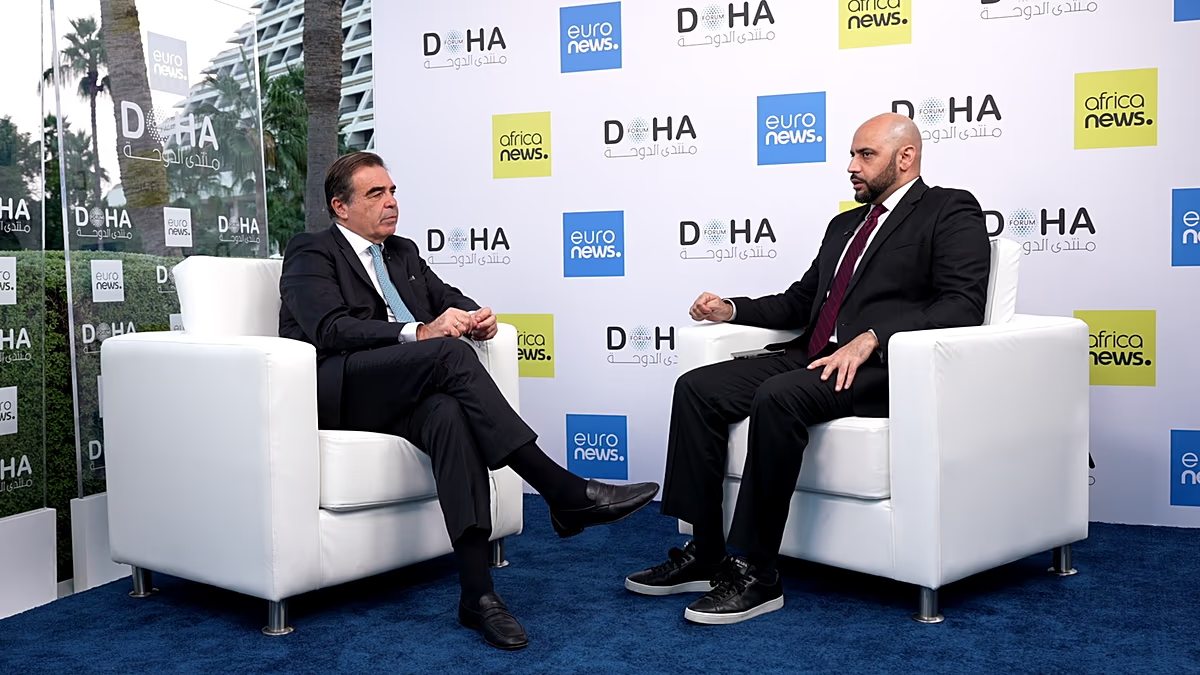

The Doha Forum recently convened influential European Union policy figures to address critical global issues, including the ongoing war in Ukraine and tensions in the Middle East. Among those in attendance were former European Commission Vice President Margaritis Schinas and current EU Special Representative for the Gulf Region, Luigi Di Maio. The discussions brought to light the EU’s strategies for maintaining economic partnerships and addressing security challenges in a rapidly changing geopolitical landscape.
| Article Subheadings |
|---|
| 1) Focus on Ukraine: The Push for Peace |
| 2) The U.S. Role in European Security |
| 3) Future Economic Partnerships with the GCC |
| 4) The Hydrogen Economy: A New Horizon |
| 5) Concluding Thoughts on Global Cooperation |
Focus on Ukraine: The Push for Peace
The escalation of conflict in Ukraine, which has persisted for nearly five years, remains a pressing issue on the international stage. The ongoing devastation of the war has resulted in significant loss of life and considerable implications for European nations, which have collectively expended billions of euros in support of Ukraine. During the discussions at the Doha Forum, Margaritis Schinas emphasized the EU’s unwavering financial commitment to Ukraine, stating that the EU has been providing approximately €2 billion per month since the onset of the conflict. This financial backing is intended to empower Ukraine as it continues to confront the adversities of war.
Schinas noted,
“We have bought armaments for Ukraine. We have stood by the country in very difficult, diplomatic moments and will continue to do that.”
His comments reflect a call for renewed international efforts to achieve a peaceful resolution to the conflict. With discussions underway involving the United States, Schinas is hopeful that progress can be made. However, he cautioned that any potential agreement to end hostilities would mark only the beginning of a more complex phase, which would require ongoing diplomatic engagements.
The U.S. Role in European Security
The relationship between the European Union and the United States remains a cornerstone of global political dynamics. Schinas pointed out that the bond between Europe and the U.S. is invaluable, stating,
“The transatlantic relationship is too precious to be put at risk. So we will explain, we will engage, we will make sure that we do the right things.”
This sentiment was expressed against the backdrop of a controversial National Security Strategy document released by the U.S. government, which criticized European policies and suggested an imminent cultural transformation in Europe due to migration and censorship.
Amid these tensions, Schinas remains focused on promoting the EU’s strategic interests while maintaining effective collaboration with the U.S. He acknowledges the necessity of navigating these complexities as European policymakers seek to reassure their American counterparts of the stability and attractiveness of the European project. This dialogue is essential in elevating Europe’s position in global affairs while solidifying ties with existing allies.
Future Economic Partnerships with the GCC
As the EU navigates a rapidly evolving geopolitical landscape, forging new economic partnerships has emerged as a priority. Luigi Di Maio underscored the importance of collaborating with historical allies while simultaneously pursuing relationships with emerging economic powers. The Gulf Cooperation Council (GCC) states represent a significant opportunity, with combined markets now accounting for nearly 20% of the global economy and 18% of global trade.
Di Maio remarked,
“The more we will realize that we have to continue to work with our historical allies, but we have to create new partnerships.”
This strategy aims to enhance stability and economic prospects for both Europe and the GCC states. With existing tensions in various regions, the EU recognizes the potential benefits of leveraging partnerships with Gulf nations to secure shared economic growth.
The Hydrogen Economy: A New Horizon
One area of potential collaboration between the EU and the GCC that has garnered considerable interest is the hydrogen sector. As both regions seek cleaner energy alternatives and strategies to combat climate change, hydrogen stands out as a promising area for investment and technology development. Di Maio highlighted the efforts of various GCC nations in this space, noting their commitment to developing technologies and forming important business-to-business (B2B) and government-to-government (G2G) partnerships.
He provided insights into recent engagements, stating,
“I will mention probably the most promising one, that is hydrogen. Many countries in the GCC are investing in hydrogen, are developing technologies.”
Di Maio elaborated on the involvement of European companies in the hydrogen sector, highlighting collaborations with countries like Oman and Saudi Arabia, where European businesses have shown increasing interest in developing hydrogen projects.
Concluding Thoughts on Global Cooperation
The dialogues at the Doha Forum illuminate the importance of both peace-building initiatives and strategic economic relationships in addressing the plethora of challenges faced by Europe and its partners. With the backdrop of complex geopolitical tensions, Schinas and Di Maio’s discussions reflect a shared commitment to fostering solidarity and cooperation among allies. As the EU continues pursuing initiatives to bolster its own security and economic frameworks, the insights gained through forums like Doha hold significant importance for shaping the future of international relations.
| No. | Key Points |
|---|---|
| 1 | The EU is providing substantial financial support to Ukraine amid ongoing conflict. |
| 2 | The transatlantic relationship between the EU and the U.S. remains crucial for security. |
| 3 | Collaboration with the Gulf Cooperation Council (GCC) is becoming increasingly important. |
| 4 | Hydrogen technology represents a key area for future partnerships between the EU and GCC. |
| 5 | The Doha Forum serves as a vital platform to discuss strategic global initiatives. |
Summary
The discussions at the Doha Forum signal a pivotal moment for both the European Union and its international partners. With a focus on crucial issues such as the conflict in Ukraine and emerging economic partnerships, policymakers are actively navigating a complex geopolitical landscape. As diplomatic efforts to achieve peace are pursued, the establishment of strategic economic alliances, particularly with the Gulf Cooperation Council, speaks to the increasing need for global cooperation.
Frequently Asked Questions
Question: What is the primary focus of the discussions held at the Doha Forum?
The primary focus of the discussions at the Doha Forum was to address critical global issues, including the ongoing conflict in Ukraine and the EU’s strategies for maintaining security and economic partnerships.
Question: How is the EU supporting Ukraine amid the ongoing conflict?
The EU is providing approximately €2 billion per month in financial support to Ukraine, which includes funding for military armaments and diplomatic assistance during challenging moments.
Question: What potential partnership is being explored between the EU and the GCC?
The EU is exploring a partnership with the Gulf Cooperation Council (GCC) focused on economic collaboration, particularly in sectors like hydrogen technology, which has significant growth potential.
