

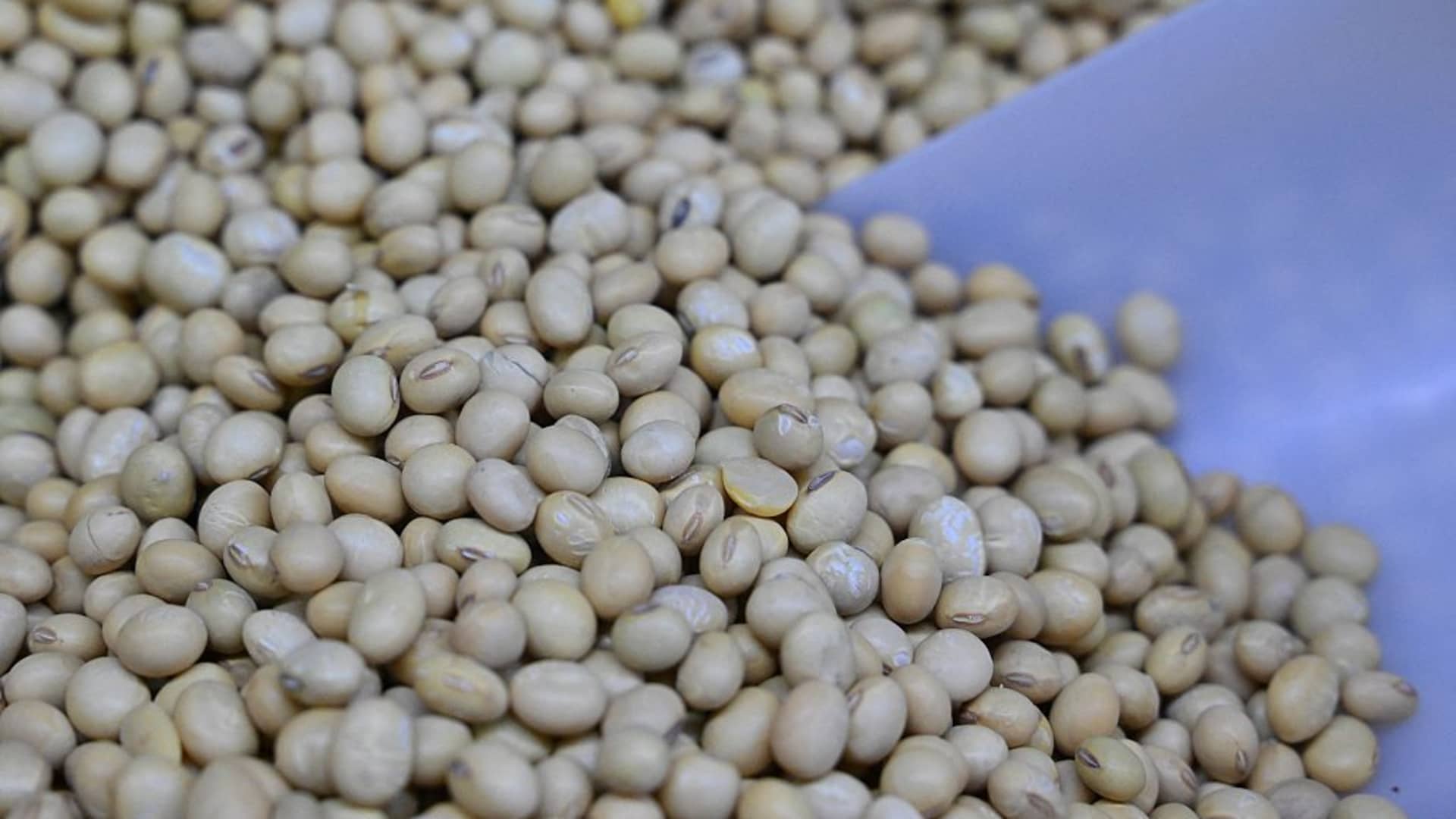

Recent developments indicate a significant shift in China’s agricultural policies, particularly concerning soybean imports. Increasing domestic production, fostered by government support, has led to a gradual slowdown in the country’s imports of this crucial crop. Analysts from a major financial institution predict that by 2035, China’s corn and soybean yields may match up to 85% of those in the United States, representing a dramatic change for the world’s largest importer of soybeans.
| Article Subheadings |
|---|
| 1) China’s Shift in Soybean Dependency |
| 2) Enhancements in Domestic Agricultural Production |
| 3) Impact of Trade Relations on Imports |
| 4) Agricultural Development Investments |
| 5) Key Players in China’s Agricultural Sector |
China’s Shift in Soybean Dependency
China’s reduced demand for U.S. soybeans marks a significant turning point in its agricultural landscape. Historically reliant on imports, particularly from the U.S., China has made strides toward greater self-sufficiency. In recent years, government policies have focused on bolstering domestic production, particularly for soybeans, which play a pivotal role in animal feed. Analysts note that this trajectory is indicative of a broader aim: achieving food security and reducing vulnerability to international trade fluctuations.
The importance of soybeans cannot be overstated, as they are integral to livestock nutrition. China’s prominence as the largest soybean importer globally underscores the gravity of this transition. However, shifting focus towards domestic production represents a strategic move by the Chinese government to secure its agricultural supply chain and enhance food independence.
Enhancements in Domestic Agricultural Production
The advancements in China’s agricultural production capabilities can be traced to various factors, including improved management techniques and government initiatives. Analysts from a leading financial institution believe that by 2035, China could significantly enhance its corn and soybean yields, aligning them closer to those of the United States. The projections suggest a possible increase of yields to around 80% to 85% of U.S. standards, compared to the current level of about 50%.
This increase in production capacity is attributed to enhanced agricultural practices, investments in technology, and optimized management of farming resources. As new technologies emerge, they are expected to drive efficiencies in crop yields and animal feed management, thereby lessening China’s dependency on imported soybeans and aligning with its broader self-sufficiency goals.
Impact of Trade Relations on Imports
The shift in soybean imports is also closely tied to the evolving trade relations between the U.S. and China. Recent attempts to ease trade tensions saw China resume purchases of U.S. soybeans, albeit at reduced volumes compared to previous years. This development occurred after both nations reached a trade truce in October, a crucial step amid an otherwise tense backdrop of international relations and tariffs.
The analysts noted that China’s ability to stabilize its reliance on grain imports for the first time in two decades could potentially reverse the trajectory of its agricultural policies. While the country continues to balance external purchases with internal production, the focus on self-sufficiency may influence its future trade agreements and import strategies. As China navigates these changes, the agricultural sector remains a critical focal point in its economic strategy.
Agricultural Development Investments
Investment in agricultural research and development has seen a significant increase in China over recent years. Reports indicate that the average annual public sector spending on this front rose to $6.6 billion between 2019 and 2021, five times more than two decades ago. This is a reflection of the Chinese government’s commitment to enhancing food security and agricultural productivity.
Such investments are critical for supporting technological advancements, which can lead to higher yields, better crop resilience, and a reduction in reliance on imported agricultural products like soybeans. As the government continues this funding trend, it is likely to bolster the agricultural landscape further, potentially allowing China to meet its ambitious self-sufficiency targets.
Key Players in China’s Agricultural Sector
Amid these transformative developments, several companies are poised to benefit from the changing dynamics of China’s agricultural sector. Analysts highlight companies that specialize in biotech seeds, agricultural machinery, and fertilizers as key players to watch. For instance, Shenzhen-listed Dabeinong, noted for its dominance in the biotech seeds market, serves as a cornerstone for enhancing agricultural productivity and improving yield performance.
Another industry key player includes First Tractor, based in Hong Kong, which is expected to capitalize on the trend towards modernization within China’s agricultural machinery industry. The expectations for this company align with a general shift towards intelligent tractor technology, fostering enhanced operational efficiencies. Furthermore, Shanghai-listed Yunnan Yuntianhua, a leading fertilizer producer, is recognized for its high dividend yield and self-sufficiency in upstream resources for fertilizer production.
| No. | Key Points |
|---|---|
| 1 | China has reduced its soybean imports, emphasizing domestic production and self-sufficiency. |
| 2 | By 2035, China’s corn and soybean yields are expected to reach up to 85% of U.S. levels. |
| 3 | The U.S.-China trade relations have impacted soybean import volumes. |
| 4 | Investment in agricultural research has increased significantly, now averaging $6.6 billion annually. |
| 5 | Key companies in China’s agricultural sector include Dabeinong, First Tractor, and Yunnan Yuntianhua. |
Summary
The gradual decrease in China’s reliance on U.S. soybean imports marks a pivotal moment in the nation’s agricultural evolution. By focusing on domestic production through strategic investments and improved practices, China is actively working to enhance its food security. As global trade dynamics continue to shift, the outlook for the agricultural sector remains integral to the country’s long-term economic stability and self-sufficiency goals.
Frequently Asked Questions
Question: Why is soybean production important for China?
Soybean production is critical for China because it serves as a major component in livestock feed, which is essential for the country’s meat production industry.
Question: What investments is China making to improve its agricultural sector?
China is significantly increasing its investments in agricultural research and development, with annual spending reaching approximately $6.6 billion between 2019 and 2021.
Question: How has trade affected soybean imports in China?
Recent trade tensions with the U.S. have led to fluctuations in soybean imports, but a recent truce has allowed for the resumption of purchases, albeit at a reduced volume compared to historical trends.
