

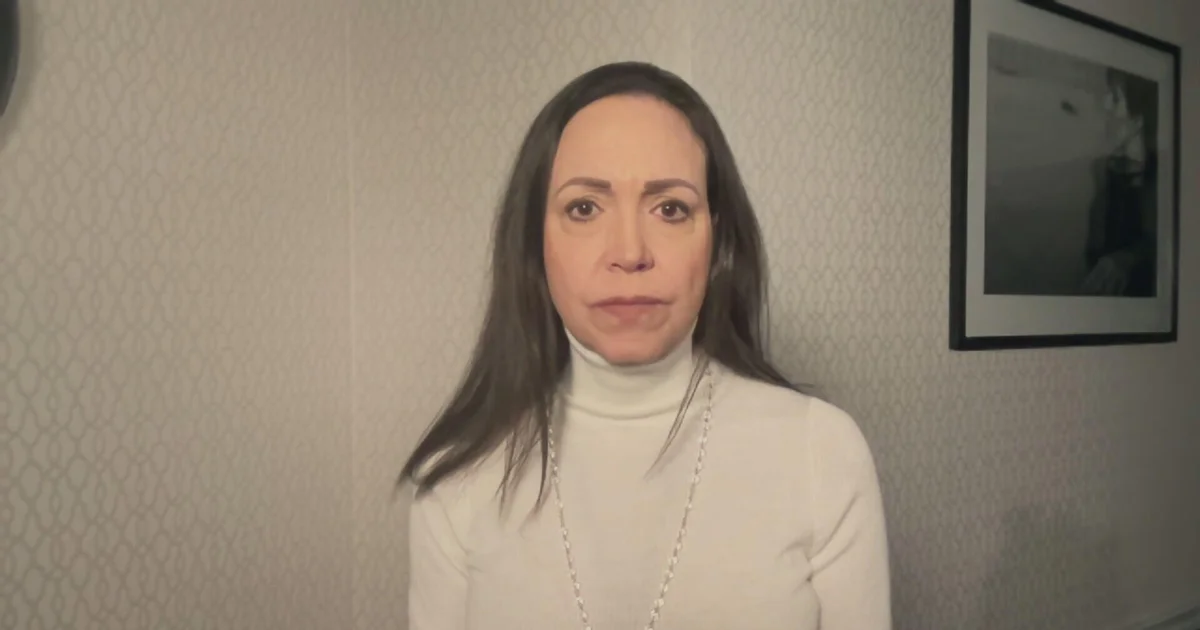

In a recent interview, Venezuelan opposition leader María Corina Machado expressed her willingness to support U.S. military action to remove President Nicolas Maduro from power. During the conversation, she emphasized the necessity of international pressure to ensure that democracy prevails in Venezuela. Machado’s statements come amid escalating tensions between the U.S. and Maduro’s administration, with sanctions and military threats prominently featured in the dialogue surrounding the troubled nation.
| Article Subheadings |
|---|
| 1) Machado’s Stance on U.S. Involvement |
| 2) The Context of the Venezuelan Crisis |
| 3) U.S. Military Presence in the Region |
| 4) Sanctions and Their Impact |
| 5) Future Implications for Venezuela |
Machado’s Stance on U.S. Involvement
In an interview on “Face the Nation,” María Corina Machado articulated her support for increased U.S. involvement in Venezuela, suggesting that military action might be necessary to expedite President Nicolas Maduro‘s departure from office. Machado, a noted advocate for democracy and a recipient of the Nobel Peace Prize, asserted, “I will welcome more and more pressure so that Maduro understands that he has to go, that his time is over.” She firmly believes that the will of the Venezuelan populace, which she claims is overwhelmingly against Maduro, necessitates a robust response from international allies, particularly the United States.
When pressed on how her advocacy for military intervention aligns with her Nobel accolade, Machado responded, “in order to maintain freedom and to achieve freedom, you do need strength.” She argues that while traditional methods of regime change may not apply in this scenario, the Venezuelan people have already indicated their desire for change through democratic processes. “We had an election,” Machado stated, emphasizing that over 70% of the population supports a new direction for the country. Her comments spotlight the dire state of democracy in Venezuela, where many citizens feel trapped under oppressive governance.
The Context of the Venezuelan Crisis
The situation in Venezuela has been critically contentious for several years, characterized by economic collapse, severe food shortages, and rampant violence. Maduro’s presidency has faced immense criticism for alleged human rights violations and authoritarian practices. As the nation grapples with these challenges, opposition leaders like Machado have sought international support to overthrow what they describe as a corrupt regime. This context sets the stage for ongoing disputes about the appropriate measures to address the situation in the country and restore democratic governance.
Machado’s focus on civilian agency and national will reflects a broader narrative in Venezuelan politics, where citizens are increasingly frustrated with the lack of viable alternatives. The call for external assistance resonates deeply with many, yet it also raises ethical questions about sovereignty and the potential for foreign intervention to exacerbate existing tensions rather than alleviate them.
U.S. Military Presence in the Region
The U.S. military has bolstered its presence around Venezuela, driven by concerns over narcotics trafficking and regional stability. Military action has been a point of discussion within the Trump administration, which has not shied away from making threats regarding the potential for land strikes aimed at Maduro’s regime. In conducting over 20 airstrikes against alleged drug smuggling operations in the region, officials have defended these actions as vital in the fight against drug trafficking that affects American communities.
Machado expressed uncertainty regarding specific U.S. military strategies, acknowledging the complexities involved. “We are not involved, and we will not get involved into another nation’s policy for their own national security,” she said. This statement suggests a cautious approach to foreign military engagement while underscoring the pressing need for external influence to create change in Venezuela.
Sanctions and Their Impact
In addition to military posturing, recent sanctions imposed by the U.S. on Venezuelan officials and entities illustrate the multifaceted approach being taken. Actions targeting Maduro’s family members and vessels accused of oil smuggling represent an ongoing strategy to apply economic pressureone that has been met with varying degrees of success. Sanctions are often credited with constraining the ruling party’s financial resources but have also attracted criticism for disproportionately harming the Venezuelan populace, which already suffers from acute shortages of basic necessities.
Machado’s perspective offers insight into the broader implications of sanctions. By advocating for international sanctions against Maduro’s associates and supporters, she is urging allies to reject the legitimacy of a government widely perceived as illegitimate. Yet, the challenge remains: while sanctions may weaken Maduro’s grip, they also run the risk of entrenching his regime further by fostering a narrative of external persecution.
Future Implications for Venezuela
As the political chess game unfolds, the implications for Venezuela remain significant. Machado’s willingness to engage in discourse around military action highlights the dire circumstances many Venezuelans find themselves in, while simultaneously revealing the divergent opinions surrounding foreign involvement. While supporters argue that any action aimed at destabilizing Maduro’s regime is justified, opponents warn of potential fallout, including increased violence and the possibility of civil unrest.
What lies ahead for Venezuela will largely depend on the international community’s response and the internal dynamics of opposition groups. The imperative for unity among opposition factions will be tested as differing views on foreign intervention could lead to fragmentation. As Machado continues to rally support for her cause, the path forward remains laden with complexities that demand careful consideration.
| No. | Key Points |
|---|---|
| 1 | Machado supports U.S. military intervention as a means to remove Maduro. |
| 2 | The Venezuelan crisis stems from economic collapse and governmental oppression. |
| 3 | The U.S. has increased military presence in the region to combat drug trafficking. |
| 4 | Economic sanctions have been imposed on Maduro and related entities. |
| 5 | The future of Venezuela depends on unified opposition and international support. |
Summary
The discourse surrounding Venezuela’s political climate reveals a nation at a critical crossroads. María Corina Machado’s advocacy for U.S. military action to remove President Nicolas Maduro underscores the desperation felt by many citizens amid ongoing struggles for freedom and democracy. As the international community contemplates how best to support the Venezuelan people, the intertwining elements of military, economic, and diplomatic strategies will play pivotal roles in shaping the nation’s future.
Frequently Asked Questions
Question: What obstacles does Venezuela face under Maduro’s leadership?
Venezuela struggles with economic collapse, severe food and medicine shortages, and rampant violence, contributing to a widespread humanitarian crisis.
Question: What role do sanctions play in the Venezuelan conflict?
Sanctions are intended to weaken Maduro’s regime by limiting financial resources but may also adversely affect the Venezuelan populace, complicating the situation further.
Question: How does Machado’s peace prize relate to her stance on military intervention?
Machado argues that while she advocates for peace, the struggle for freedom may necessitate strength and, at times, military intervention to realize democratic goals.
