


The pressure on independent media in Turkey has intensified, resulting in a disturbing rise in arrests and censorship against journalists and activists. A recent report highlights the grim scenario, detailing the escalation of online censorship and the jailing of various journalists, primarily under accusations of disinformation. As the government tightens its grip on media freedom, the broader implications for civil rights and freedom of speech are being called into question.
| Article Subheadings |
|---|
| 1) Government censorship of journalists escalates |
| 2) Impact of recent İstanbul floods on infrastructure |
| 3) Conditions of detained LGBTI+ activists under scrutiny |
| 4) Political shifts in opposition municipalities |
| 5) Ongoing regional tensions and humanitarian crises |
Government censorship of journalists escalates
The latest edition of bianet‘s Media Monitoring Report reveals a marked increase in the persecution of journalists in Turkey over the past three months. A total of at least 17 journalists were subjected to investigations due to their reporting, with 13 being taken into custody and seven others imprisoned pending trial. The report emphasizes the alarming trend of government-led restrictions on freedom of speech, highlighting that access to numerous news reports and social media accounts owned by journalists was blocked entirely.
One significant incident involves İsmail Arı, a reporter for BirGün, who was arrested on charges of “publicly disseminating misleading information.” His detention came shortly after he responded to a police summons, highlighting the risks that journalists face in Turkey, where reporting on contentious issues can lead to serious legal repercussions. The rapid decline in press freedom has ignited a nationwide debate about the implications for democracy and civil rights.
In another troubling case, the account of Halk TV on X, which boasts over three million followers, was blocked just one week after state-appointed guardians assumed control over the pro-opposition broadcaster. Authorities have resorted to creative yet repressive tactics to stifle dissent and alternative viewpoints in a media landscape fraught with fear and intimidation. Furthermore, a separate case against Tuğçe Yılmaz, a former editor of bianet, was recently dismissed due to the expiration of the statutory deadline for filing charges. Yılmaz faced accusations related to her interview with Turkey’s Armenian community, an episode that underscores the precariousness that journalists face when reporting on sensitive subjects in an increasingly authoritarian environment.
Impact of recent İstanbul floods on infrastructure
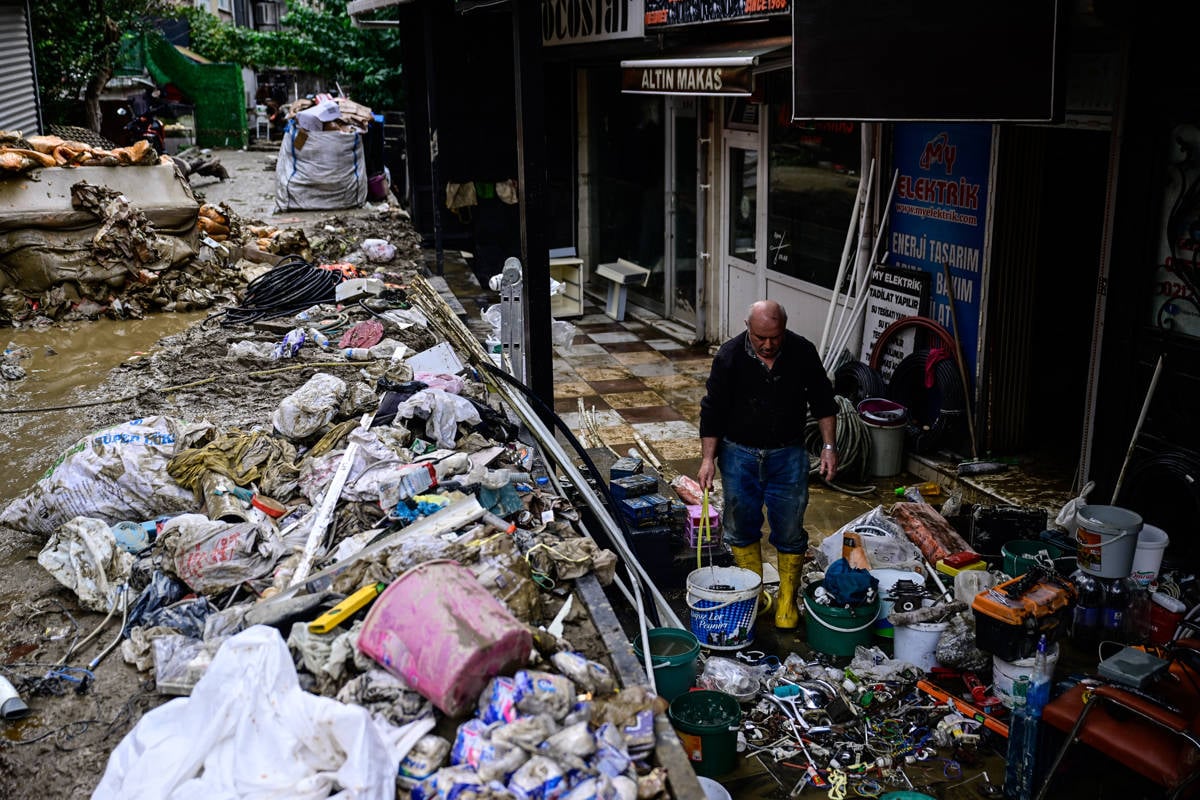
On October 14 and 15, İstanbul experienced catastrophic flooding that resulted in the death of seven individuals and widespread damage to approximately 3,000 homes and businesses. Thousands of damage claims are currently being processed as residents and business owners navigate the aftermath of this environmental disaster. The floods have reignited critical discussions about urban planning, infrastructure inadequacies, and the government’s management of construction in vulnerable areas.
In a conversation with reporters, climate scientist Barış Önol expressed grave concern regarding the increasing frequency and intensity of extreme rainfall events in the region. He explained how factors such as population growth and unregulated construction are exacerbating the risks associated with flooding, irrespective of climate change. The floods have also temporarily improved reservoir levels in the city, raising the fill rate from 38.06% to a more optimistic 52.43%, its highest level since 2018. While these short-term gains may provide relief, they do little to address the long-term challenges posed by climate change and infrastructural deficiencies in one of Turkey’s largest cities.
Conditions of detained LGBTI+ activists under scrutiny
In a recent development, Özgül Saki, a member of parliament, reported improvements in the prison conditions of LGBTI+ activists after visiting nine detainees who have been held for over 40 days without an indictment. The detentions occurred during state-led operations cynically dubbed “My Family Is Safe,” which target individuals associated with the LGBTI+ rights movement. Currently, eighty-two activists remain incarcerated amid widespread calls for their release.
Lawyers of the detained executives from the Kaos GL association, a prominent LGBTI+ rights organization, have characterized the extended detentions as “hostage-taking.” They allege that the activists are being subjected to inhumane treatment, including isolation, restricted access to medical care, and invasive strip searches. Legal experts and human rights advocates are following the situation closely, denouncing the investigation that centers on vague and ambiguous allegations of “obscenity,” which historically relates to sexually explicit materials. Such vague charges raise significant concerns about the government’s motivations behind these arrests and the broader implications for civil liberties in Turkey.
Political shifts in opposition municipalities
Following the 2024 local elections, significant changes have occurred in the political landscape, as reported by Gökhan Günaydın from the main opposition New Party. Recent data indicates that 106 mayors elected from opposition parties have defected to the ruling Justice and Development Party (AKP). This mass defection reflects a disturbing trend where political pressures and incentives are used by the ruling party to consolidate control over local governance.
As part of ongoing corruption investigations, 32 opposition mayors remain incarcerated, further complicating the political map. Günaydın has openly accused the government of leveraging both legal and political machinery to win over local leaders who once championed opposition causes. The ramifications of these municipal shifts could ripple throughout the country’s political discourse, raising fundamental questions about governance and accountability.
Ongoing regional tensions and humanitarian crises
In an alarming international development, Azerbaijan has issued arrest warrants for seven individuals residing in Turkey in connection with protests and social media activities opposing restrictions on religious attire in Azerbaijani schools. Azerbaijani authorities indicated that they are actively engaged in judicial cooperation with Turkey to fulfill these objectives, prompting criticism from civil rights advocates who find such actions invasive and unjustified.
Concurrently, the renewed conflict in Yemen has raised serious questions about Turkey’s commitments under the Mecca defense pact as Ankara strives to limit Iranian influence in the region. Nonetheless, officials are attempting to navigate these tricky waters delicately, aiming to sidestep direct military engagement. The humanitarian situation on the ground in both Azerbaijan and Yemen continues to deteriorate, resulting in calls from various organizations for urgent international intervention and support to mitigate the suffering of those caught in these crises.
| No. | Key Points |
|---|---|
| 1 | Significant increase in arrests of journalists in Turkey, particularly under disinformation laws. |
| 2 | Recent floods in İstanbul caused severe damage, renewing concerns about urban infrastructure. |
| 3 | Detained LGBTI+ activists face poor conditions; legal representatives describe the situation as “hostage-taking.” |
| 4 | Over 100 opposition mayors have switched allegiance to the AKP since the last local elections, reflecting political pressure. |
| 5 | Azerbaijan seeks to arrest individuals in Turkey, highlighting regional tensions concerning religious freedoms. |
Summary
The recent developments in Turkey signify alarming trends in censorship, political maneuvering, and humanitarian crises. The continuing arrests of journalists threaten the integrity of the press, while the political landscape becomes increasingly polarized as opposition figures face intimidation and pressure to switch allegiances. Meanwhile, marginalized communities, such as LGBTI+ activists, are caught in a web of legal ambiguity and repression. Observers warn of the long-term consequences of these issues, urging both domestic and international actors to address these challenges and advocate for fundamental human rights and freedoms.
Frequently Asked Questions
Question: What is the significance of the Media Monitoring Report?
The Media Monitoring Report provides insights into the state of press freedom in Turkey, highlighting instances of censorship, arrests, and other forms of governmental repression against journalists.
Question: How have recent floods impacted İstanbul’s infrastructure?
The recent floods led to extensive damage in İstanbul, prompting discussions about the inadequacies of urban planning and the necessity for improved infrastructure to handle extreme weather events.
Question: What challenges are LGBTI+ activists facing in Turkey?
LGBTI+ activists in Turkey are experiencing unlawful detentions and harsh treatment within the prison system, often under vague legal charges related to obscenity or public safety.
