

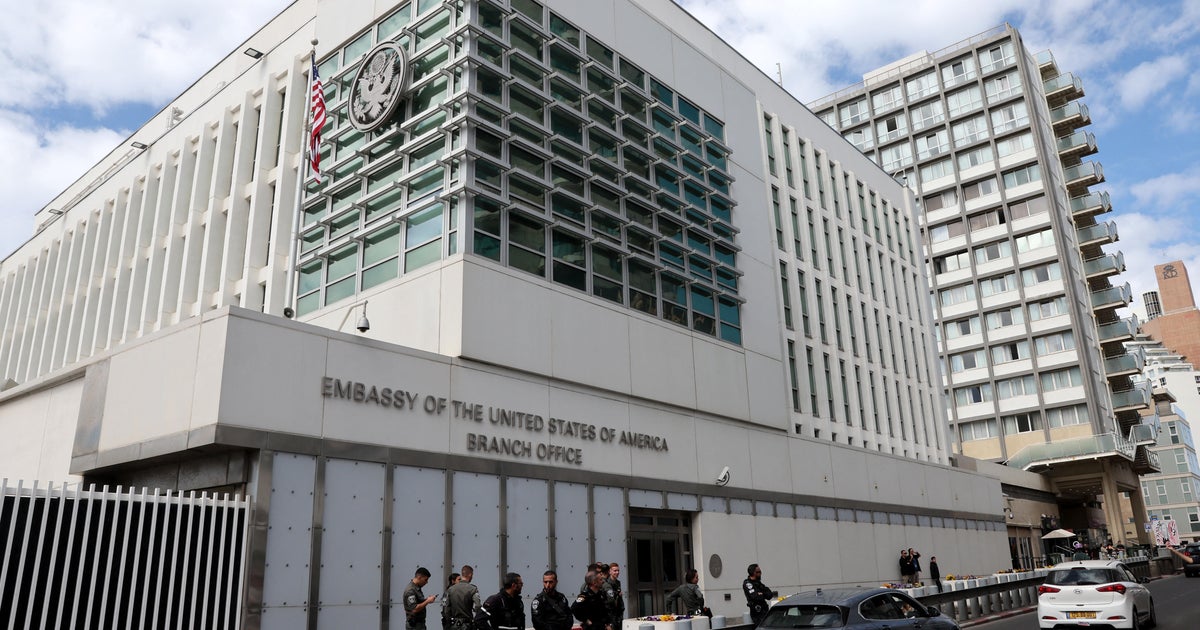

Tensions in the Middle East have escalated significantly as the U.S. State Department has ordered government employees in Israel to limit their travel, coinciding with the sanctioning of evacuation measures for family members of U.S. military personnel in the region. This directive arises amidst concerns regarding a potential Israeli military operation targeting Iran’s nuclear facilities. The U.S. Embassy has issued travel warnings, urging all American nationals in Israel to exercise heightened caution due to the complex and rapidly changing security environment.
Following a recent vote by the International Atomic Energy Agency (IAEA) indicating Iran’s non-compliance with nuclear obligations, Iran has announced plans to expand its uranium enrichment program. U.S. President officials have reiterated that denying Iran the capability to develop nuclear weapons is a priority, underscoring the urgent geopolitical stakes involved.
| Article Subheadings |
|---|
| 1) U.S. Government Restrictions in Israel |
| 2) Current Security Landscape in Israel |
| 3) Iran’s Increasing Nuclear Activities |
| 4) Implications of IAEA’s Resolution |
| 5) Future Geopolitical Considerations |
U.S. Government Restrictions in Israel
On Thursday, amid rising tensions in the Middle East, the U.S. State Department communicated a directive ordering all government personnel in Israel to impose restrictions on their travel. The limitations specifically extend to areas beyond the greater Tel Aviv region, which encompasses Herzliya, Netanya, Even Yehuda, Jerusalem, and Be’er Sheva. These measures were enacted as a precautionary response to fears that Israel might initiate military operations targeting Iran’s nuclear program.
Additionally, the latest intelligence reports indicate that Israeli forces are poised for action, leading to heightened concerns over potential violence in the region. U.S. officials have conveyed messages suggesting Israel is prepared to execute operations in Iran to neutralize nuclear threats. Consequently, the State Department’s edict signifies the gravity of the situation, as it prioritizes the safety and security of its personnel in the region.
In making this announcement, the State Department reiterated that American personnel are free to transit between specified areas, including moving to Israel’s Ben Gurion Airport. However, a warning was also issued, emphasizing that all American nationals should remain vigilant and aware of their surroundings. The guidance included urgent suggestions for these individuals to identify the nearest bomb shelters in anticipation of an emergency, citing the unpredictability of potential rocket and missile strikes in the area.
This marked restriction comes at a time when the military dynamics in the region are particularly sensitive. As Iran’s nuclear ambitions linger in the backdrop, the specter of conflict remains a serious concern for not only Israel but also for U.S. interests in the Middle East.
Current Security Landscape in Israel
The security situation in Israel has always been complex, but recent developments have amplified the risk environment significantly. The U.S. Embassy’s advisories underscore the need for American nationals to remain on high alert, particularly given the increase in military activities and the threat of missile strikes from hostile entities.
The ongoing military preparedness of both Israeli forces and their regional adversaries complicates the security landscape. U.S. officials have accentuated the unpredictable nature of potential attacks, which may arise without warning. The State Department’s calls for personal security awareness reflect a broader concern that multiple actors in the region could spark conflict at any moment.
Moreover, President Trump’s comments further highlight the fraught nature of the regional dynamic. When queried about U.S. nationals in the Middle East, he succinctly remarked that the area “could be a dangerous place.” This acknowledgment of inherent risks set the stage for the administration’s tightened precautionary measures, reflective of an urgent international landscape that remains subject to sudden shifts in government strategies and military postures.
Iran’s Increasing Nuclear Activities
In the wake of an IAEA board resolution, Iran has taken a decisive stance to bolster its uranium enrichment capabilities. The Iranian Foreign Ministry announced that it plans to establish a new enrichment facility at a secure location and outlined additional steps to enhance its nuclear program. This announcement comes following an unprecedented IAEA determination of Iran’s failure to meet its nuclear obligations, signaling a turning point in Tehran’s approach to international agreements.
Accompanying this assertive announcement was a statement from the Atomic Energy Organization of Iran, which declared that these moves were necessitated by the perceived political maneuvering within international circles. Iranian authorities have positioned their actions as a direct response to external pressures, suggesting that the Islamic Republic views its nuclear program as both a strategic and sovereign right.
Furthermore, the Iranian leadership has indicated its commitment to replace aging centrifuges at existing facilities with more advanced models. These enhancements are intended to significantly increase the production rate of enriched materials, marking an escalation in Iran’s nuclear capabilities amid global scrutiny. This plan highlights Iran’s determination to continue its nuclear activities, irrespective of international calls for restraint.
Implications of IAEA’s Resolution
The recent IAEA resolution, finding Iran non-compliant with its nuclear obligations, symbolizes a profound diplomatic rupture. This marks the first time in two decades that the agency has rendered such a judgment against Iran concerning its nuclear activities. This recent vote saw substantial backing from 19 member nations, further isolating Iran in the international arena.
The implications of this ruling extend beyond mere diplomatic rhetoric; they fundamentally challenge the terms of the Nuclear Non-Proliferation Treaty (NPT), to which Iran is a signatory. Under the NPT, Iran is obligated to declare all nuclear materials and allow IAEA inspections to ensure compliance. The recent IAEA findings suggest a serious deviation from these commitments, exacerbating tensions not only with the agency but also among Western powers committed to containing Iran’s nuclear ambitions.
Furthermore, Iran’s immediate response to the IAEA’s ruling reveals its defiance and willingness to pursue nuclear enhancements. The narrative crafted by Iranian officials contends that the country’s right to pursue nuclear technology is inexorable and non-negotiable. This development sets the stage for increased friction with Western powers as they seek to re-engage Tehran in negotiations over its nuclear program, with upcoming talks scheduled to take place in Oman soon.
Future Geopolitical Considerations
As both the U.S. and Israel reassess their stances in light of Iran’s nuclear advancements, the geopolitical landscape is poised for significant changes. The increasing complexities surrounding U.S.-Iran negotiations coupled with Israel’s military readiness raises critical questions about the future of regional stability. The strategic calculations made by both American and Israeli policymakers will fundamentally influence the Middle East’s balance of power.
For the United States, the imperative is clear: it must navigate an intricate web of alliances while holding fast to its commitments to non-proliferation. The dynamics of regional politics necessitate careful diplomacy in liaising with allies, while confronting adversarial nations intent on defying international norms.
Simultaneously, for Israel, anticipating Iranian military capabilities and potential operations becomes crucial to maintaining its national security. As military readiness escalates, the risk of convergence into direct conflicts with Iran increases, threatening wider regional stability. Overall, the unfolding scenario signals that careful monitoring and strategic responses will be pivotal as events evolve in this highly volatile geopolitical context.
| No. | Key Points |
|---|---|
| 1 | The U.S. has restricted government employees’ travel in Israel due to security concerns. |
| 2 | The IAEA has declared Iran non-compliant with its nuclear obligations, leading to heightened tensions. |
| 3 | Iran announced plans to expand its uranium enrichment facilities in response to the IAEA vote. |
| 4 | President Trump emphasized the U.S. will not allow Iran to develop nuclear weapons. |
| 5 | The geopolitical landscape in the Middle East remains fraught with tension and the risk of military escalation. |
Summary
The current geopolitical situation in the Middle East is marked by heightened tensions as the U.S. government implements travel restrictions for personnel in Israel—a precautionary measure influenced by the potential for military operations against Iran. Concurrently, Iran is poised to expand its nuclear activities following a declaration of non-compliance by the IAEA, presenting significant implications for both regional security and international diplomatic relations. The complexity of these dynamics necessitates vigilant monitoring and responsive strategies from policymakers on both sides, as the threat landscape continues to evolve in a volatile environment.
Frequently Asked Questions
Question: Why did the U.S. impose travel restrictions in Israel?
The U.S. imposed travel restrictions due to concerns that Israel might initiate military operations against Iran, which could pose risks to American personnel.
Question: What action did the IAEA take against Iran?
The IAEA declared Iran non-compliant with its nuclear obligations, marking a significant diplomatic development in the context of international nuclear regulation.
Question: How is Iran responding to the IAEA’s findings?
Iran announced plans to expand its uranium enrichment program, stating that it intends to establish new facilities and replace outdated centrifuges, underscoring its commitment to advancing its nuclear capabilities.
