

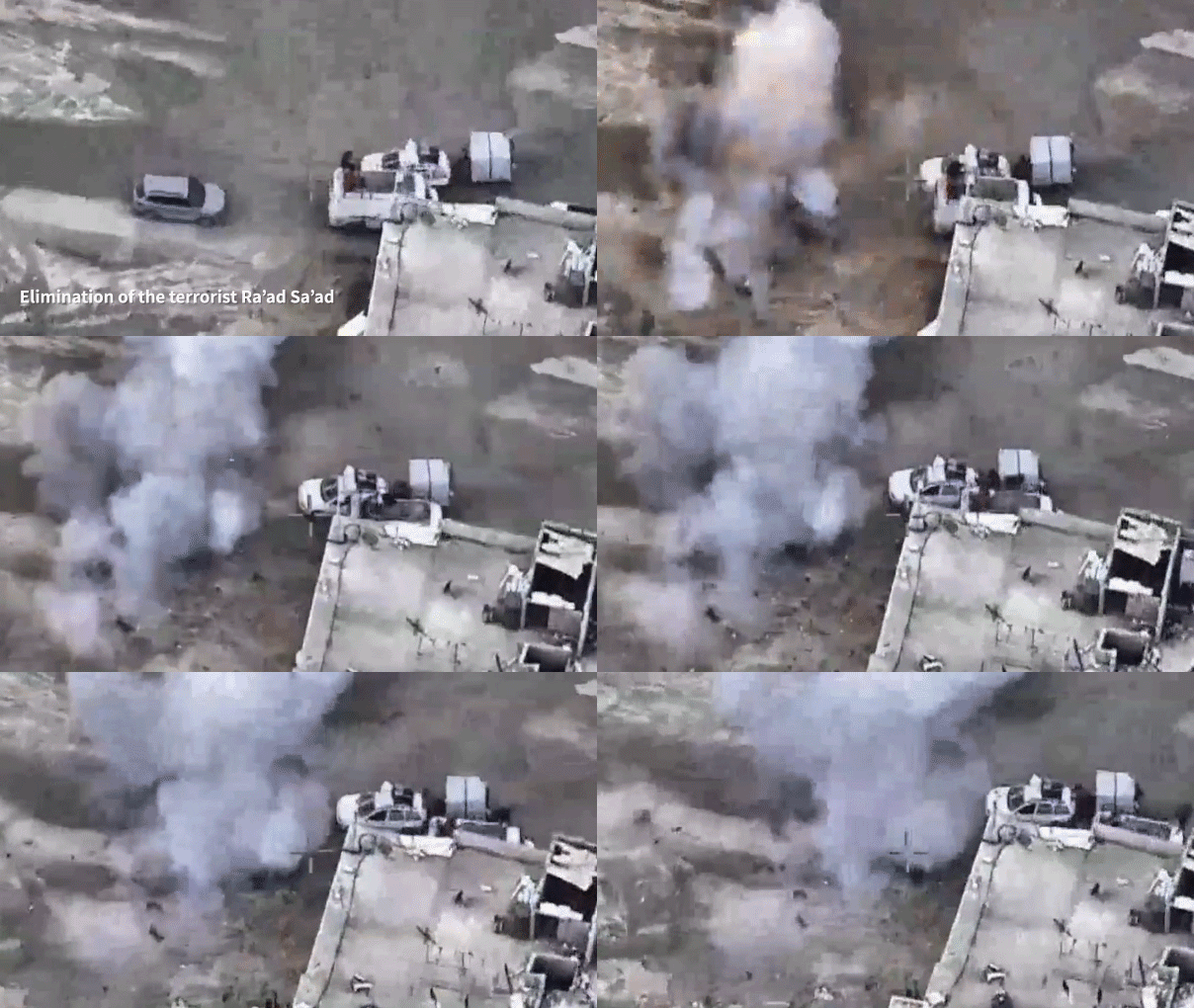

In a significant blow to Hamas, the Israel Defense Forces (IDF) confirmed on Saturday that they had eliminated Ra’ad Sa’ad, a pivotal figure and head of the Weapons Production Headquarters within Hamas’ military wing. Sa’ad was notably involved in orchestrating the October 7 attacks and played a major role in the organization’s military operations. The IDF stated that his death “significantly degrades Hamas’ ability to reestablish its capabilities,” marking a crucial moment in the ongoing conflict in Gaza.
| Article Subheadings |
|---|
| 1) The Target: Ra’ad Sa’ad’s Profile |
| 2) The Details of the Operation |
| 3) Implications for Hamas and Israel |
| 4) Background of the October 7 Attacks |
| 5) Future of the Conflict |
The Target: Ra’ad Sa’ad’s Profile
Ra’ad Sa’ad was a senior figure in Hamas and played a vital role in shaping the organization’s military strategies. As the head of the Weapons Production Headquarters, he directed the production of explosives and weapons that have been pivotal in conflicts with Israel. His tenure included various leadership positions, notably as the Gaza Brigade commander, making him one of the most influential militants in the group.
As a close associate of Marwan Issa, the deputy head of Hamas’ military wing, Sa’ad was involved in critical decision-making that affected Hamas’ military capabilities. He was recognized not only as a seasoned veteran but also as one of the last remaining high-ranking Hamas officials operating within Gaza, highlighting the importance of his elimination. His extensive experience and influence made him a target for Israeli forces seeking to destabilize Hamas’ leadership structure.
The Details of the Operation
The operation that resulted in Sa’ad’s death was conducted amid reports that he was actively working to reestablish Hamas’ military capabilities in violation of an ongoing U.S.-brokered ceasefire. An official from the IDF confirmed that Sa’ad’s recent activities included efforts to revive weapons manufacturing processes and re-engage with military operations against Israel.
This strike was deemed necessary under the terms of the ceasefire agreement, which permits Israel to act against factions actively participating in terrorism. The IDF stated that Sa’ad’s actions directly contradicted the conditions of the agreement, leading to Israel’s decision to target him. The operational success was reportedly the result of intelligence gathering and surveillance that tracked Sa’ad’s movements and activities effectively.
Implications for Hamas and Israel
The death of Ra’ad Sa’ad is projected to have significant ramifications for Hamas’ operational capabilities. Analysts suggest that without Sa’ad, Hamas may struggle to coordinate its military infrastructure as effectively, which would impede their ability to produce and deploy weapons. This could limit their capacity to launch future operations against Israel and diminish their overall threat level.
Furthermore, Israeli officials have stated that eliminating top figures within Hamas is part of a broader strategy to curb the faction’s influence in the region. This incident may also provoke a response from Hamas, leading to potential increases in hostilities if they seek to retaliate for Sa’ad’s death. The interplay between these factions will be a critical element shaping the ongoing conflict and the future of peace negotiations.
Background of the October 7 Attacks
The October 7 attacks, orchestrated by Hamas, were a well-planned operation that caught Israeli forces off guard, resulting in significant casualties. Sa’ad’s involvement in the military planning of these attacks underscores his significance within Hamas. These coordinated assaults were characterized by their brutality and strategic precision, leading to widespread condemnation and calls for action against Hamas from the international community.
The aftermath of the attacks saw Israel launching an extensive military campaign aimed at dismantling the operational capacities of Hamas. This campaign involved airstrikes and ground operations, further destabilizing the already fragile situation in Gaza. The consequences of these attacks are still being felt today as the conflict continues to evolve, with ongoing hostilities affecting civilians on both sides.
Future of the Conflict
As Israel continues its military operations against Hamas and targets key figures within the organization, the conflict shows no signs of abating. The killing of Ra’ad Sa’ad may lead to tactical changes within Hamas, as the group seeks to fill the leadership void left by his death. Analysts speculate that Hamas may adopt more decentralized strategies or further rely on its remaining leaders to maintain operations against Israel.
On the other hand, Israel may intensify its efforts to dismantle Hamas’ military structure, potentially leading to escalated violence in the region. The relationship between Hamas and external entities, such as Iran, could also play a crucial role in determining the future trajectory of the conflict, as support from these allies may enable Hamas to recover more quickly.
| No. | Key Points |
|---|---|
| 1 | Ra’ad Sa’ad was a key figure in Hamas and orchestrated significant military operations. |
| 2 | Israeli forces conducted a successful operation to eliminate Sa’ad amid violations of a ceasefire. |
| 3 | His death is expected to degrade Hamas’ military capabilities significantly. |
| 4 | The ongoing conflict is likely to intensify following this event and could escalate retaliatory actions from Hamas. |
| 5 | The future of the conflict may depend on Hamas’ ability to adapt following the loss of key leadership figures. |
Summary
The elimination of Ra’ad Sa’ad represents a pivotal moment in the ongoing conflict between Israel and Hamas, as it targets a key leader responsible for orchestrating military actions against Israel. His death underscores the fragility of the situation in Gaza and highlights the contentious dynamics in the region, as both parties prepare for potential escalations in violence. The implications of this operation may reverberate through the conflict for months to come, as both sides recalibrate their strategies in light of recent events.
Frequently Asked Questions
Question: What role did Ra’ad Sa’ad play in Hamas?
Ra’ad Sa’ad was the head of Hamas’ Weapons Production Headquarters and played a pivotal role in the military decisions of the organization, including the planning of significant attacks against Israel.
Question: How did the Israeli forces manage to target Sa’ad?
Israeli forces employed intelligence gathering and surveillance methods to track Sa’ad’s activities, which revealed that he was violating the terms of a ceasefire agreement.
Question: What might be the consequences of Sa’ad’s death for Hamas?
Sa’ad’s elimination is expected to significantly degrade Hamas’ military capabilities, potentially leading to disruptions in command and control within the organization, as well as affecting their operational strategies moving forward.
