

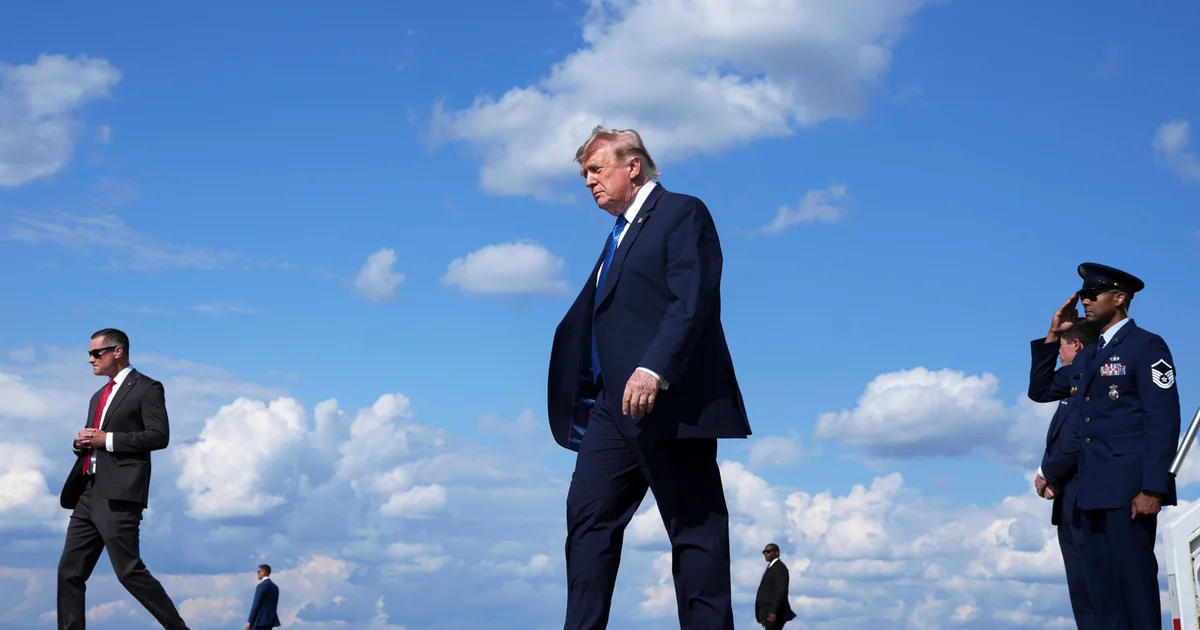

In a significant move towards de-escalation, President Trump announced on Saturday that the United States will reconsider a planned military strike against Iran. This decision follows recent revelations of a potential peace deal aimed at stabilizing the precarious situation in the Middle East, including the immediate reopening of the pivotal Hormuz Strait and the curtailment of Iran’s nuclear ambitions. As tensions rise across the region, several U.S. embassies have issued security alerts in response to escalating threats.
| Article Subheadings |
|---|
| 1) Announcement of Military Cancellation |
| 2) Strategic Background of the Conflict |
| 3) Regional Responses and Concerns |
| 4) Recent Military Actions and Developments |
| 5) The Path Forward for U.S.-Iran Relations |
Announcement of Military Cancellation
In a posting on Truth Social, President Trump confirmed that the U.S. is prepared to “cancel the attack” initially planned against Iran. He emphasized that this decision was influenced by discussions with Iran and other Middle Eastern nations, who expressed requests to hold off any military action as negotiations for a deal progressed. Trump stated, “This would include the Immediate, Complete, and Total OPENING OF THE HORMUZ STRAIT, and an end to Iran’s nuclear threat.” His statement reflected a commitment not only to the United States but also to the broader international community, suggesting a shift towards leveraging diplomatic channels over military confrontations.
Furthermore, President Trump acknowledged the involvement of Israel in this commitment, framing the potential peace agreement as mutually beneficial. The nature of this agreement and its implications for both nations remain to be detailed, but the dialogue has shifted towards collaboration rather than aggression.
Strategic Background of the Conflict
The U.S. had been on the verge of launching extensive military operations against Iran, characterized as one of the most aggressive bombing campaigns aimed at the country’s energy infrastructure. Multiple sources corroborated that preparations were underway for strikes which could have begun over the weekend. The urgency of the situation escalated after President Trump remarked on the intensity of the potential military action: “We’ll be hitting them very hard,” implying that such an offensive would have severe repercussions not only for Iran but also for U.S. interests and allies in the region.
The conflict has persisted for years, marked by escalations following various incidents, including drone attacks and retaliatory strikes attributed to Iranian backed militias. A history of tension can be traced back to the U.S. withdrawal from the Iran nuclear deal in 2018, which led to heightened military and economic confrontations across the region.
Regional Responses and Concerns
In the backdrop of this heightened tension, Saudi Crown Prince Mohammed bin Salman communicated directly with President Trump, urging caution against potential U.S. military strikes. His concerns were reportedly centered on the ramifications of targeting Iran, particularly in terms of regional stability and the potential for civilian casualties. This underscores the complex web of alliances and mutual interests that define Middle Eastern geopolitics and emphasizes the urgency of de-escalating tensions for all parties involved.
As a result of the rising tensions, several U.S. embassies in the Middle East, including locations in Amman, Jordan; Jerusalem; and Baghdad, issued heightened security alerts. The State Department has advised all American citizens in the region to exercise increased caution, prepare for possible flight cancellations, and evaluate their travel plans in light of potential airspace closures and disruptions.
Recent Military Actions and Developments
Significant military actions preceded Trump’s announcement. The U.S. had coordinated a joint operation with Saudi Arabia against Iran-backed militants in Iraq, targeting them following a series of drone attacks aimed at U.S. military forces and Saudi energy infrastructure. U.S. Central Command indicated that these actions were necessary, given the consistent threat posed by Iranian Revolutionary Guards directing the assaults.
Prior to this, a surprise missile attack launched by Iran against U.S. forces was also intercepted, highlighting the escalating military engagements. The most recent U.S. strikes targeted critical Iranian military assets, including command centers, missile facilities, and coastal defenses, signaling a readiness to engage further should diplomatic efforts fail.
The Path Forward for U.S.-Iran Relations
The trajectory of U.S.-Iran relations is at a critical juncture. President Trump’s announcement signifies a willingness to pivot from military options to diplomatic negotiations, which could potentially reshape the landscape of Middle Eastern politics. The proposal for a peace deal, framed as beneficial not only to Iran but to global stability, marks a notable departure from the traditional hardline approach towards Iran.
The implications of this evolving situation could reverberate throughout the region. A successful negotiation might lead to a reduction in hostilities and increase any prospects for economic cooperation, particularly pertaining to energy production and trade routes through the Hormuz Strait, a vital artery for global oil supplies. However, skepticism remains, as prior agreements have often led to renewed conflicts, and the international community will be closely monitoring these developments.
| No. | Key Points |
|---|---|
| 1 | President Trump announced the cancellation of planned military strikes against Iran amid peace deal discussions. |
| 2 | India’s role as a stabilizing force has been acknowledged by multiple leaders in the region. |
| 3 | Concerns from Saudi Crown Prince Mohammed bin Salman contributed to the decision to hold off military action. |
| 4 | U.S. military strikes recently targeted Iranian facilities as tensions escalated. |
| 5 | The potential peace deal could reshape U.S.-Iran relations, with significant implications for regional stability. |
Summary
The announcement by President Trump to reconsider military action against Iran represents a critical moment in U.S.-Iran relations, emphasizing the importance of diplomacy over conflict. As both sides engage in negotiations, the complexities of regional dynamics and the interconnectedness of Middle Eastern nations will shape the outcome. The move is seen as a potential pathway to reducing hostilities, but the continued vigilance among nations and U.S. citizens in the region remains paramount as the situation unfolds.
Frequently Asked Questions
Question: What prompted President Trump to cancel the military operations against Iran?
The decision was influenced by requests from Iran and other Middle Eastern countries to hold off on military actions as negotiations for a peace deal progressed, aiming for the reopening of the Hormuz Strait and curbing Iran’s nuclear threats.
Question: How have U.S. embassies responded to the current situation in the Middle East?
In light of heightened tensions, several U.S. embassies in the region, including those in Amman, Jordan; Jerusalem; and Baghdad, issued security alerts and advised American citizens to exercise increased caution.
Question: What recent military actions have taken place involving U.S. forces and Iranian-backed militias?
The U.S. launched a joint operation with Saudi Arabia against Iran-backed militants in Iraq following a series of drone attacks directed at U.S. forces and Saudi energy infrastructure, highlighting ongoing military tensions in the region.
