

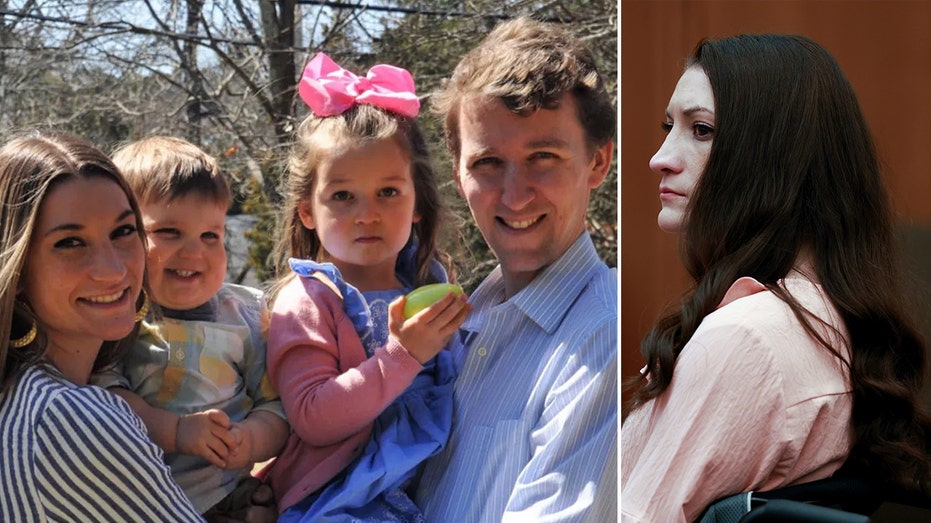

Lindsay Clancy’s jury is expected to begin deliberations after closing arguments in her first-degree murder trial over the deaths of her three children. The defense says Clancy was experiencing postpartum psychosis when the children were killed, while prosecutors have challenged that explanation. Tommy Pope, who prosecuted Susan Smith in South Carolina, said he has not seen enough evidence of a break from reality in Clancy’s case. The comparison comes as jurors assess conflicting testimony about mental illness, motive and Clancy’s actions before and after the killings.
| 1) | The charges and the jury’s next step |
| 2) | Why the defense is relying on psychosis |
| 3) | Pope’s comparison with the Susan Smith case |
| 4) | Mental health evidence and financial stress |
| 5) | The unresolved question of motive |
The charges and the jury’s next step
Clancy, 36, faces three counts of first-degree murder in the deaths of Cora, Dawson and Callan, all of whom were under 6. The children were found strangled at the family’s home in Duxbury, Massachusetts, in January 2023. Prosecutors completed their rebuttal case on Wednesday afternoon, with closing arguments scheduled for Thursday before jurors consider the evidence and reach a verdict.
The trial has focused on what Clancy understood and intended at the time of the killings. The jury must weigh the prosecution’s account against the defense claim that a serious psychiatric condition affected her ability to perceive reality and make decisions.
Why the defense is relying on psychosis
Defense attorney Kevin Reddington has argued that Clancy was suffering from postpartum psychosis when she killed her children. The defense has pointed to her mental-health history and the effects of extreme sleep deprivation as evidence that her thinking may have become severely distorted.
During testimony, forensic psychiatrist Gregory Saathoff acknowledged that severe insomnia can lead to psychosis. Reddington also questioned Saathoff about sleep deprivation being used as a form of torture. Saathoff agreed that psychosis was possible in such circumstances, although the testimony remained part of a broader dispute over whether Clancy’s conduct demonstrated a loss of contact with reality.
Pope’s comparison with the Susan Smith case
Tommy Pope, now the speaker pro tempore of the South Carolina House of Representatives, prosecuted Susan Smith after she killed her two sons, 3-year-old Michael and 14-month-old Alexander, by strapping them into a car and allowing it to roll into a lake. Smith was convicted and sentenced to life in prison.
Pope said the central difference between the cases is that Smith’s prosecution presented a discernible motive, while Clancy’s case does not appear to have one. He said jurors often examine seemingly ordinary actions, such as ordering food, sending someone away or making a phone call, to determine whether a defendant was functioning in a reality-based way.
“Was it a break from reality? Or did she just commit a horrible, horrible crime and make a horrible, horrible choice?” Pope said.
Pope added that, despite Clancy’s prior treatment, he did not clearly see a break from reality in the evidence presented.
Mental health evidence and financial stress
Saathoff testified that financial pressure was among the stressors Clancy faced before the killings. He said she believed her brain had been damaged and that she could no longer perform the work she loved or help support her family. According to his testimony, those beliefs contributed to a sense that she had become a burden.
The testimony was offered to help explain the circumstances surrounding the deaths, while the prosecution has argued that the mental-health evidence does not establish the level of impairment required by the defense. Jurors must decide how much weight to give the competing psychiatric interpretations and the testimony about Clancy’s behavior.
The unresolved question of motive
Pope said the lack of an apparent end goal stands out in Clancy’s case. He questioned what Clancy intended to accomplish after killing the children, including whether her subsequent jump from a window was a suicidal act. He described that issue as a major disconnect when comparing the case with Smith’s prosecution.
In Smith’s case, prosecutors argued that her romantic relationship and the man’s alleged unwillingness to be with a mother supplied a motive. Smith’s defense instead characterized the killings as part of a suicide attempt linked to severe depression. The contrasting theories give Clancy’s jurors a framework for considering whether motive supports the prosecution’s interpretation or whether mental illness better explains the events.
| Number | Key Point |
|---|---|
| 1 | Clancy faces three first-degree murder charges in the deaths of her children. |
| 2 | The defense argues that postpartum psychosis affected her perception and decisions. |
| 3 | A former prosecutor said he sees no clear break from reality in the evidence. |
| 4 | Psychiatric testimony addressed insomnia, financial pressure and feelings of being a burden. |
Summary
The verdict will depend on how jurors interpret Clancy’s mental state, her conduct surrounding the killings and the absence of an obvious motive. The prosecution has challenged the psychosis defense, while the defense has used psychiatric testimony to argue that severe mental illness and sleep deprivation altered Clancy’s ability to understand reality. Pope’s comparison with the Smith case highlights the competing importance of motive and mental state in evaluating the evidence.
Frequently Asked Questions
What charges does Lindsay Clancy face?
Clancy faces three counts of first-degree murder in the deaths of Cora, Dawson and Callan.
What is the defense’s main argument?
The defense argues that Clancy was experiencing postpartum psychosis and that severe insomnia and other stressors affected her grasp of reality.
Why was Susan Smith’s case discussed?
Tommy Pope, who prosecuted Smith, used the earlier case to compare the role of motive and mental illness with the issues facing Clancy’s jury.
