

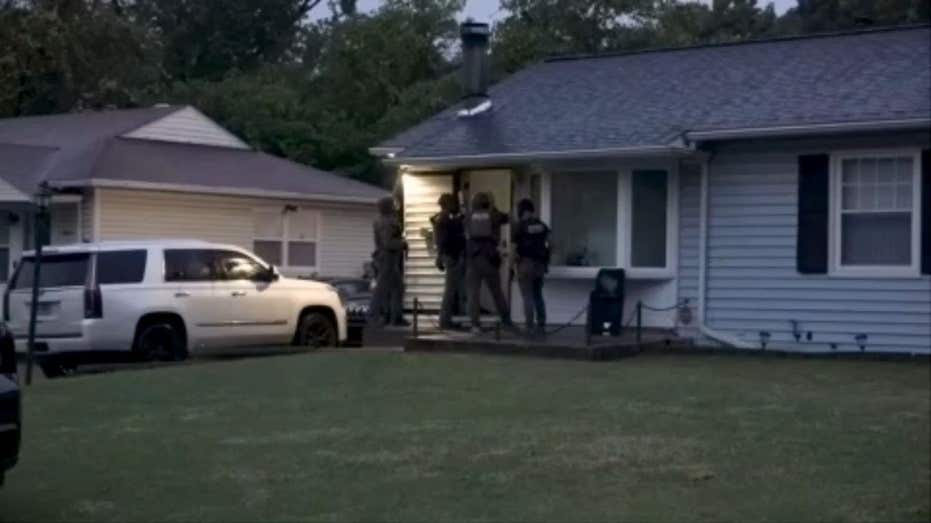

The Department of Justice said a months-long enforcement operation in St. Louis resulted in 435 arrests and major seizures of drugs, firearms and currency. Operation Show Me Justice began in August and involved federal and local agencies targeting outstanding warrants, gun offenses, drug crimes and other violations. Authorities reported seizing 80 kilos of drugs, 166 illegal firearms, six machine gun conversion devices and more than $1 million in currency. Officials said the effort demonstrates that violent crime can be addressed through coordinated federal, state and local action.
| Article Subheadings | |
|---|---|
| 1) | Operation targets crime in St. Louis |
| 2) | Arrests and seizures reported |
| 3) | Officials call for local-federal partnerships |
| 4) | Comparable operations broaden enforcement push |
| 5) | What the operation signals for public safety |
Operation targets crime in St. Louis
Operation Show Me Justice was conducted in St. Louis, Missouri, beginning in August and concluding with a news conference on Thursday, October 15, 2026. The effort brought together the U.S. Marshals Service, the Bureau of Alcohol, Tobacco, Firearms and Explosives, the Drug Enforcement Administration and the St. Louis Police Department. Their stated purpose was to concentrate investigative and arrest resources on firearms, drugs, outstanding warrants and other crimes in the city.
Acting Deputy Attorney General Trent McCotter announced the results alongside Sen. Eric Schmitt, a Missouri Republican. The agencies used the coordinated operation to locate people sought on existing warrants and pursue cases involving weapons and narcotics.
Arrests and seizures reported
Authorities said the operation produced 435 arrests involving drug crimes, firearm crimes and other offenses. Of that total, 412 were arrests on outstanding warrants. McCotter said many of those arrested had more than one warrant, indicating that a substantial part of the effort focused on locating people already wanted by the courts.
The operation also generated significant seizures. Officials reported recovering 80 kilos of drugs, 166 illegal firearms, six machine gun conversion devices and more than $1 million in currency. The announcement did not provide a further breakdown of the drugs, firearms or currency by case, agency or type.
Officials call for local-federal partnerships
McCotter urged mayors, city councils, governors and police chiefs nationwide to contact federal authorities about similar operations. He said federal agencies were prepared to work with local jurisdictions that want additional support addressing violent crime and related offenses.
“Violence is not inevitable. We want to partner with you. We want to work with you. We want to help you,” McCotter told officials in other jurisdictions.
The message framed the St. Louis effort as a partnership model rather than a standalone federal deployment. Local police provided city-level knowledge and enforcement capacity, while federal agencies contributed specialized investigative, arrest and seizure resources.
Comparable operations broaden enforcement push
Federal authorities have also partnered with state and local agencies in Washington, D.C., and Memphis on similar public-safety operations. The St. Louis announcement came about a week after federal and California authorities conducted Operation Save Skid Row in Los Angeles.
That Los Angeles operation targeted drug distribution networks in the Skid Row area through 28 arrest warrants and 44 search warrants. More than 100 law enforcement vehicles were involved, and authorities said the targets included members of several gangs. The separate operations reflect a broader federal emphasis on combining national agencies with local departments to address drug markets, gangs and violent crime.
What the operation signals for public safety
The St. Louis results provide officials with measurable enforcement outcomes, including arrests, weapons removed from circulation and narcotics seized. The operation also highlights the role of outstanding warrants in public-safety campaigns, since most of the reported arrests involved people who were already wanted.
Authorities presented the effort as evidence that cities can seek federal assistance rather than accept violent crime as unavoidable. The longer-term effect on crime in St. Louis was not provided in the announcement, and the reported figures describe enforcement activity rather than a broader assessment of citywide crime trends.
| No. | Key Point |
|---|---|
| 1 | Operation Show Me Justice ran in St. Louis from August through October 15, 2026. |
| 2 | Authorities reported 435 arrests, including 412 outstanding warrant arrests. |
| 3 | Seizures included 80 kilos of drugs, 166 illegal firearms and six conversion devices. |
| 4 | Officials said more than $1 million in currency was seized. |
Summary
Federal and local agencies reported hundreds of arrests and substantial gun and drug seizures after a concentrated enforcement operation in St. Louis. Officials emphasized that the effort relied on interagency cooperation and encouraged other jurisdictions to seek similar support. The reported results document the operation’s enforcement activity, while its broader effect on violent-crime trends remains to be determined.
Frequently Asked Questions
What was Operation Show Me Justice?
It was a months-long enforcement operation in St. Louis involving the U.S. Marshals Service, ATF, DEA and the St. Louis Police Department.
How many arrests were reported?
Authorities reported 435 arrests, including 412 involving outstanding warrants.
What did authorities seize?
Officials reported seizing 80 kilos of drugs, 166 illegal firearms, six machine gun conversion devices and more than $1 million in currency.
