

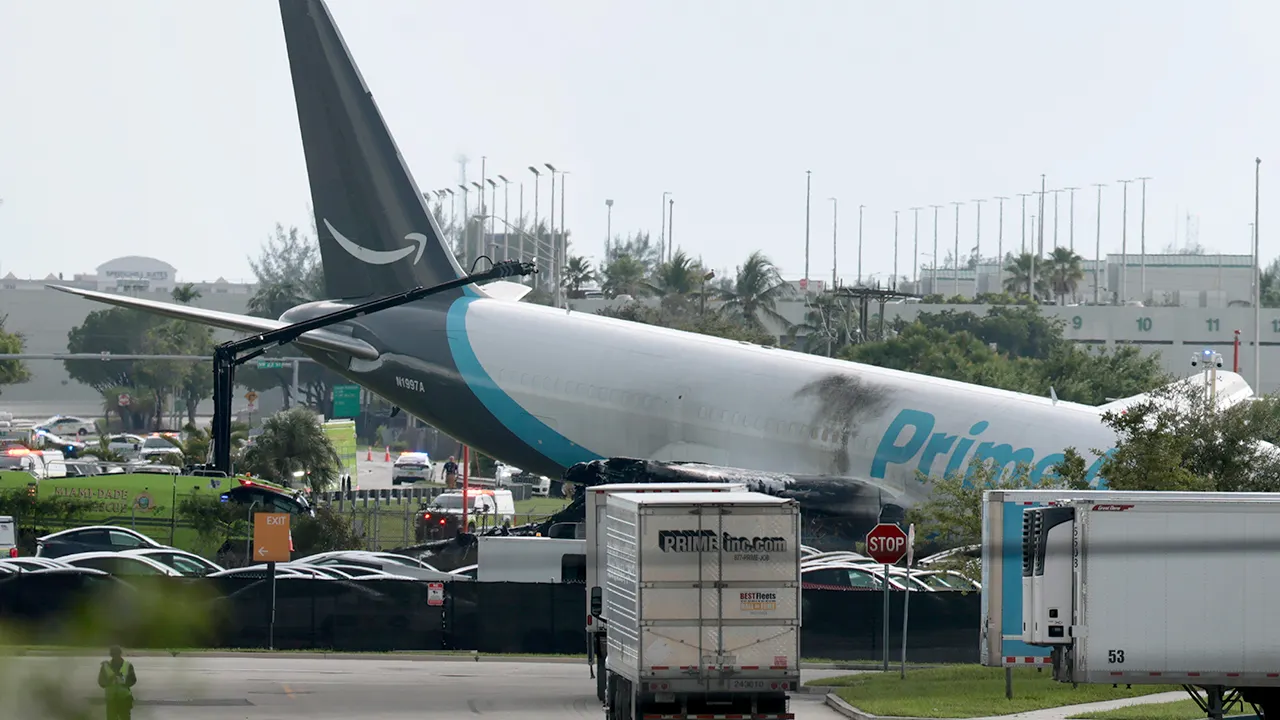

Authorities have launched an investigation into a tragic plane crash involving an Amazon cargo aircraft that occurred at Miami International Airport on September 6, 2026. The National Transportation Safety Board (NTSB) reported that key braking systems failed to deploy as the Boeing 767 went off the runway, resulting in the death of five individuals and injuries to five others. The crash is under scrutiny as officials work to piece together the series of events that led to this devastating incident.
| Article Subheadings |
|---|
| 1) Overview of the Incident |
| 2) Victims and Casualties |
| 3) Investigation and Technical Details |
| 4) Pilot Information and Cargo Details |
| 5) Implications and Future Actions |
Overview of the Incident
The plane crash occurred when Prime Air Flight 7598, operated by Amazon, overran the runway while landing at Miami International Airport. The incident transpired on Sunday as the aircraft failed to stop, resulting in significant destruction. It struck multiple vehicles, including a van occupied by several individuals. The moments leading up to the crash are crucial as investigators piece together the operational conditions at Miami International Airport that day.
Witnesses reported a loud crash as the plane descended, with debris scattering across the airport property. Eyewitness accounts indicate that smoke was visible as the aircraft came to a halt after breaching airport security. The event has raised questions regarding airport safety protocols and highlighted the risks involved in air freight operations.
The NTSB is at the forefront of the investigation into the causes of the crash and has been collecting data from the aircraft’s black box, which records flight parameters and cockpit conversations. This data will be instrumental in determining whether pilot error, mechanical failure, or external factors led to the accident.
Victims and Casualties
As a result of the crash, five people lost their lives, and another five sustained injuries. Officials have reported that seven of the deceased were traveling in a van that was tragically crushed under the weight of the aircraft. The local community has been deeply affected, with families mourning the loss of their loved ones. The identities of the victims have not been disclosed, pending the notification of next-of-kin.
The five injured occupants, which included passengers from the other vehicle struck, were transported to nearby hospitals for treatment. Their conditions have not been publicly shared, raising concerns regarding their recovery and future health outcomes. The community has begun to rally around the victims’ families, offering support and assistance during this difficult time.
Rescue operations were prompt, with emergency services responding quickly to the scene. Crews battled to contain potential fires caused by the crash while also tending to the victims amidst chaotic circumstances. The quick actions of first responders are credited with saving additional lives that day, avoiding a greater tragedy.
Investigation and Technical Details
Following the incident, the NTSB has identified that key braking systems on the Amazon cargo plane failed to deploy. According to NTSB investigator Chihoon Shin, while preliminary data shows that wheel brakes were applied, there was no indication that the speed brakes or thrust reversers deployed. This revelation raises serious concerns about the aircraft’s operational integrity and the apparatus designed to ensure a safe landing.
“When we analyze the full list of parameters, we’ll have a better idea of the aircraft’s performance during this landing,”
said Chihoon Shin. He emphasized the need for a thorough review of all flight data to ascertain whether there were any irregularities leading up to the accident.
Officials have also confirmed that pilot interviews will form a crucial component of the investigation. Gaining first-hand accounts from the flight crew will help elucidate how they navigated the landing process and why certain safety systems failed. The NTSB is taking a careful approach to ensure a comprehensive understanding of the event.
Pilot Information and Cargo Details
Though the names of the pilots involved in the incident have not been released, NTSB Chairwoman Jennifer Homendy provided information about their qualifications. The captain, aged 55, had accumulated over 7,145 hours of flight time, according to his latest Class 1 medical certification issued earlier in 2026. The first officer, aged 37, had logged 2,655 flight hours. This experience suggests that both pilots were well-qualified to operate the aircraft under normal conditions.
In terms of cargo, investigators confirmed that no hazardous materials were on board the flight, which mainly consisted of contact lenses, weighing a total of 32,222 pounds. The nature of the cargo also helps to rule out certain factors that might have contributed to the crash, such as the risk of explosive substances. However, the weight and distribution of the cargo may still play a role in the aircraft’s performance and landing dynamics.
Implications and Future Actions
The implications of this crash extend beyond the immediate loss of life and injuries. The event serves as a sobering reminder of the potential dangers associated with aviation and freight logistics. As investigations continue, there will likely be increased scrutiny of safety protocols and regulatory measures related to cargo airlines. It is crucial for authorities to ensure that similar accidents do not occur in the future.
Airports and aviation regulatory bodies may initiate reviews and updates to their operational guidelines in light of this incident. The effectiveness of runway safety measures, pilot training programs, and aircraft maintenance protocols will likely be re-evaluated to bolster safety standards across the industry. The use of modern technology in aircraft support systems may also come under examination to determine its reliability during critical landing operations.
The community affected by the tragedy has shown resilience and solidarity. Local advocacy groups are urging the airport and Amazon to take tangible steps to prevent future accidents, ensuring that safety remains a top priority when operating in and around aviation spaces.
| No. | Key Points |
|---|---|
| 1 | Amazon cargo flight crash in Miami resulted in five fatalities and multiple injuries. |
| 2 | Investigation reveals failure of key braking systems, with speed brakes and thrust reversers not deploying. |
| 3 | Victims involved included passengers in a van, raising safety concerns in airport areas. |
| 4 | NTSB will interview pilots to gather insights into the crash event and operational procedures. |
| 5 | The incident may lead to revised safety protocols within aviation and cargo transport sectors. |
Summary
The crash of an Amazon cargo plane at Miami International Airport has left a profound impact on the local community, with five lives tragically lost and others forever changed. As investigations unfold, critical details surrounding the causes and consequences of the accident are expected to inform future aviation safety measures. The importance of ensuring operational integrity in aviation remains paramount, emphasizing the need for continuous evaluation and improvement to prevent similar tragedies.
Frequently Asked Questions
Question: What led to the plane crash at Miami International Airport?
The crash was primarily attributed to the failure of key braking systems, specifically the non-deployment of speed brakes and thrust reversers during the landing process.
Question: How many people were affected in the crash?
The incident resulted in five fatalities, with another five people sustaining injuries during the accident.
Question: What actions are being taken following the crash?
An investigation initiated by the NTSB is underway to determine the causative factors of the accident, including interviews with pilots and a thorough analysis of flight data.
