


A September 10, 2026, newsletter focused on antisemitism highlighted controversies involving rapper Macklemore, journalist Rula Jebreal and several political commentators. The edition also examined heightened security at American synagogues and argued that anti-Israel sentiment can affect U.S. national security interests. Its coverage included disputed public remarks, criticism from lawmakers and commentators, and an editorial on cooperation between the United States and Israel.
| 1) | Macklemore faces criticism after a concert performance |
| 2) | Rula Jebreal’s remarks draw condemnation from Democrats |
| 3) | Podcast hosts criticized over a blood libel explanation |
| 4) | Synagogues maintain extensive security measures |
| 5) | Editorial argues the U.S.-Israel alliance supports security |
Macklemore faces criticism after a concert performance
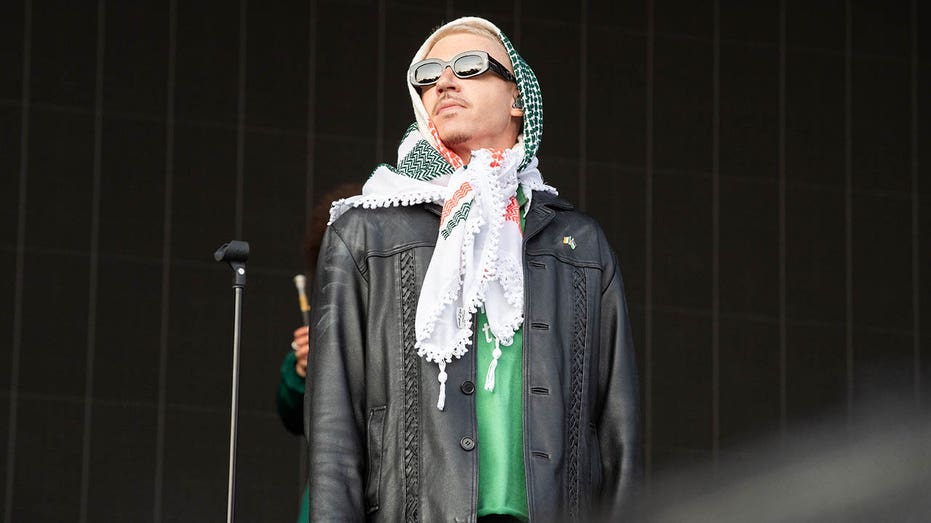
The newsletter reported that actor and comedian Michael Rapaport criticized rapper Macklemore after a performance at MetLife Stadium. Macklemore was opening for Ed Sheeran when he chanted “Free Palestine” and performed his protest song “Hind’s Hall.” Rapaport described the appearance in strongly negative terms and questioned Sheeran’s decision to share the stage with him.
The controversy centered on Macklemore’s public opposition to Israel and the reaction to those comments in the United States. The newsletter presented the incident as part of a wider debate over whether political statements at major entertainment events contribute to hostility toward Jewish people or reflect criticism of Israeli policy.
“Free Palestine.”
Rula Jebreal’s remarks draw condemnation from Democrats
Journalist Rula Jebreal faced backlash after referring to House Minority Leader Hakeem Jeffries as an “AIPAC monkey” during a podcast appearance. The Congressional Black Caucus and other Democratic lawmakers condemned the remark as racist and offensive. Jebreal later issued an apology on X, but critics said the statement did not resolve the controversy.
The episode involved a prominent member of Congress, a journalist known for criticizing Israel and a reference to the American Israel Public Affairs Committee. It drew attention because the language was directed at a senior Democratic leader and was criticized by members of his own party. The newsletter included the remark as its quote of the week.
“He is a bought and paid by AIPAC monkey. With all due respect, and I don’t mean it in a racist way. He is just basically an errand boy, and we’re done and tired.”
Podcast hosts criticized over a blood libel explanation
The newsletter also described criticism aimed at podcast hosts Jon Favreau and Jon Lovett after they mocked Vice President JD Vance for using the term “blood libel.” While attempting to explain the antisemitic conspiracy theory, the hosts were accused of confusing its meaning with Jesus’ crucifixion and the biblical story of Passover.
Critics argued that the discussion was inaccurate and dismissive of the historical significance of the term. The dispute illustrates how public commentary about antisemitism can itself become controversial when speakers address a sensitive subject without accurately explaining its origins or meaning.
Synagogues maintain extensive security measures
The newsletter reported that American synagogues and Jewish community centers are operating under heightened security as Rosh Hashanah approaches in 2026. It said facilities across the country use armed guards, surveillance cameras and mandatory bag checks after what it described as thousands of threat incidents.
According to the report, measures that were once considered exceptional have become a permanent part of Jewish communal life. The security changes reflect continuing concerns about antisemitic attacks and terrorism, and they affect congregations preparing for one of the most important periods in the Jewish calendar.
Editorial argues the U.S.-Israel alliance supports security
A guest editorial by former FBI agent David Zimmermann, who was in Israel on October 7, argued that growing anti-Israel sentiment in the United States could undermine national security. Zimmermann said the U.S.-Israel relationship provides mutual benefits beyond diplomacy and political support.
The editorial emphasized intelligence sharing, joint defense innovation and counterterrorism cooperation as areas that can improve American safety and protect broader strategic interests. It presented the alliance as a practical security partnership and argued that public debate over Israel should account for those operational ties.
| Number | Key Point |
|---|---|
| 1 | Macklemore drew criticism after political remarks during a MetLife Stadium performance. |
| 2 | Rula Jebreal apologized after remarks about Hakeem Jeffries prompted condemnation. |
| 3 | Jon Favreau and Jon Lovett faced criticism over their explanation of blood libel. |
| 4 | Synagogues are using guards, cameras and bag checks amid continuing threats. |
| 5 | A guest editorial said security cooperation with Israel benefits the United States. |
Summary
The newsletter connected several public controversies to broader concerns about antisemitism, political rhetoric and Jewish communal security. It highlighted disputed remarks by entertainers, journalists and commentators while also describing the practical security burdens facing synagogues. Its concluding argument was that accurate discussion of antisemitism and recognition of U.S.-Israel security cooperation remain important to public debate.
Frequently Asked Questions
What prompted criticism of Macklemore?
Macklemore was criticized after chanting “Free Palestine” and performing “Hind’s Hall” while opening for Ed Sheeran at MetLife Stadium.
Why did Rula Jebreal face condemnation?
She faced backlash after describing Hakeem Jeffries as an “AIPAC monkey” during a podcast appearance. She later apologized, while critics continued to reject the explanation.
What security measures were described at synagogues?
The report cited armed guards, surveillance cameras and strict bag checks at Jewish centers preparing for Rosh Hashanah.
What did the guest editorial say about the U.S.-Israel relationship?
The editorial argued that intelligence sharing, defense innovation and counterterrorism cooperation with Israel contribute directly to American security.
