

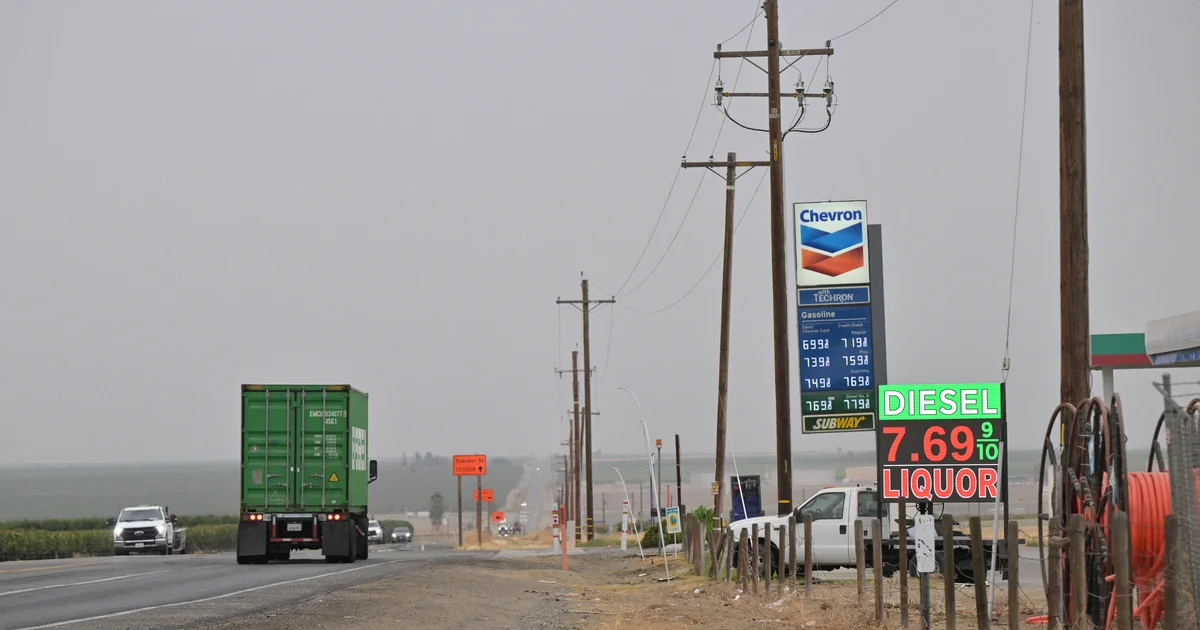

In a move aimed at addressing rising fuel prices, President Trump announced the invocation of the Defense Production Act (DPA) to allocate $150 million for an increase in gasoline and diesel production across the United States. The DPA, a law established in response to the Korean War, grants the president authority to boost the production of essential goods and materials through various means, including financial incentives. This initiative comes as fuel prices hover above $4 per gallon, causing economic unease among Americans concerned about affordability.
| Article Subheadings |
|---|
| 1) Overview of the Defense Production Act |
| 2) Current Fuel Price Trends |
| 3) Expert Opinions on the Effectiveness of the DPA |
| 4) U.S. Refining Capacity and Production Statistics |
| 5) Industry Responses to the Initiative |
Overview of the Defense Production Act
The Defense Production Act, enacted in 1950, was originally designed to ensure that the U.S. could ramp up production levels during situations of national emergency, such as conflicts and natural disasters. This legislation empowers the president to take various actions, including securing loans, entering purchasing agreements, and incentivizing companies to produce critical goods. The recent announcement by President Trump marks a significant extension of this authority, relevant to national fuel supply issues rather than traditional defense contexts. These provisions have been adapted over the years to respond to diverse emergencies, ranging from public health crises to economic downturns.
In this context, the administration’s decision to invoke the DPA indicates a proactive approach aimed at mitigating rising gas prices. With overall fuel costs affecting the economy, the government is responding with financial resources intended to stimulate enhanced output and efficiency in the energy sector. As the economic landscape changes, policymakers are increasingly considering how best to leverage existing laws like the DPA to address pressing consumer concerns.
Current Fuel Price Trends
As of the announcement, the average cost of gasoline in the United States was about $4.29 per gallon, while diesel prices reached approximately $6.32. This marks a staggering increase of 40% for gasoline and 74% for diesel compared to the same time last year. Crude oil prices, which significantly influence fuel prices, have similarly risen, with Brent crude reaching $116 per barrel and West Texas Intermediate noted at about $103 per barrel. Economic analysts attribute various factors to these price hikes, including global supply disruptions resulting from geopolitical tensions, such as the conflicts involving Iran and Ukraine.
These rising prices translate into increased financial strain on American families, many of whom are already dealing with inflation in other segments of daily life, such as food and housing. Given the escalating costs associated with energy, there is growing public discontent reflected in polling data that indicates a majority of citizens feel pessimistic about the nation’s economic stability.
Expert Opinions on the Effectiveness of the DPA
In light of the measures announced, various experts have weighed in regarding the potential effectiveness of invoking the DPA. Some analysts express skepticism about the immediate impact this initiative will have on lowering fuel prices.
“I don’t think that’s really going to have any impact,”
stated Patrick De Haan, a petroleum expert. He underscored the bottlenecks in refining capacity, indicating that merely invoking the DPA does not automatically translate into increased production levels.
Conversely, others suggest that while the benefits may not be felt in the short term, the DPA’s focus on modernizing existing infrastructure and potentially accelerating refining expansions may yield longer-term dividends. Tom Kloza, chief energy adviser for Gulf Oil, noted that the intricacies involved in refining and fuel production mean that significant changes require substantial time to implement, often extending beyond months. Thus, any enhancements to output may not be realized immediately.
U.S. Refining Capacity and Production Statistics
A deeper look into the U.S. refining landscape reveals critical stats and dynamics at play. The nation produces approximately 5.3 million barrels of distillate fuel oil daily while consuming around 3.6 million barrels. Gasoline production is similarly robust, with approximately 9.5 million barrels produced daily against a consumption level of about 8.9 million. This indicates that the U.S. not only retains a significant production surplus but also serves as an exporter, with about 1.4 million barrels of diesel sent abroad each day.
However, U.S. oil prices are influenced by international market conditions, which complicate domestic efforts to stabilize costs. As the administration pursues measures to increase domestic fuel production, it faces the challenge of aligning with external market forces, which remain unpredictable amid ongoing geopolitical tensions that directly impact supply chains and prices globally.
Industry Responses to the Initiative
The petroleum refining industry has responded favorably to the administration’s latest initiative. A spokesperson from the American Fuel & Petrochemical Manufacturers remarked on the essential role of refineries in sustaining both domestic supply and economic movement during turbulent times. The association, representing 128 operating refineries, noted:
“They are running all-out to keep Americans supplied and the global economy moving despite major disruptions and actual fuel shortages in other parts of the world.”
This highlights the critical balance that the industry seeks to maintain in keeping fuel accessible while grappling with increasing costs and demand fluctuations.
As industry stakeholders monitor the implementation of the DPA initiatives, the emphasis remains on identifying viable pathways to maintaining production levels that meet both domestic and international needs. With ongoing disruptions in the global supply chain, the refining sector is positioned at the intersection of national strategy and local consumer interests.
| No. | Key Points |
|---|---|
| 1 | President Trump invokes the Defense Production Act to boost gasoline and diesel production with a $150 million investment. |
| 2 | Current gasoline prices average $4.29 per gallon, while diesel is at $6.32, reflecting substantial annual increases. |
| 3 | Experts are skeptical about the immediate impact of the DPA on lowering fuel prices, citing existing production limitations. |
| 4 | The U.S. shows a significant refining output while facing global market challenges that impact oil pricing. |
| 5 | The refining industry expresses support for the initiative, aiming to sustain supply amid ongoing economic pressures. |
Summary
In conclusion, the invocation of the Defense Production Act by the Trump administration demonstrates a concerted effort to tackle escalating fuel prices impacting the broader economy. This financial injection aims primarily at refining output enhancements, while the challenges posed by international oil markets remain a critical backdrop to these domestic initiatives. With expert opinions expressing caution regarding immediate results, the U.S. will need to balance local production needs with the unpredictable dynamics of global oil supply in the coming months.
Frequently Asked Questions
Question: What is the Defense Production Act?
The Defense Production Act is a law that enables the president to prioritize the production of essential goods and materials during national emergencies, granting the ability to utilize funds for increasing production capacity.
Question: How much will the invocation of the DPA cost?
The recent announcement specified a $150 million investment intended to boost gasoline and diesel production within the United States through the provisions of the DPA.
Question: What current trends are impacting fuel prices in the U.S.?
Fuel prices in the U.S. are influenced by various factors, including geopolitical tensions, global supply disruptions, and the increasing costs of crude oil, which recently hit highs not seen since May of the same year.
