

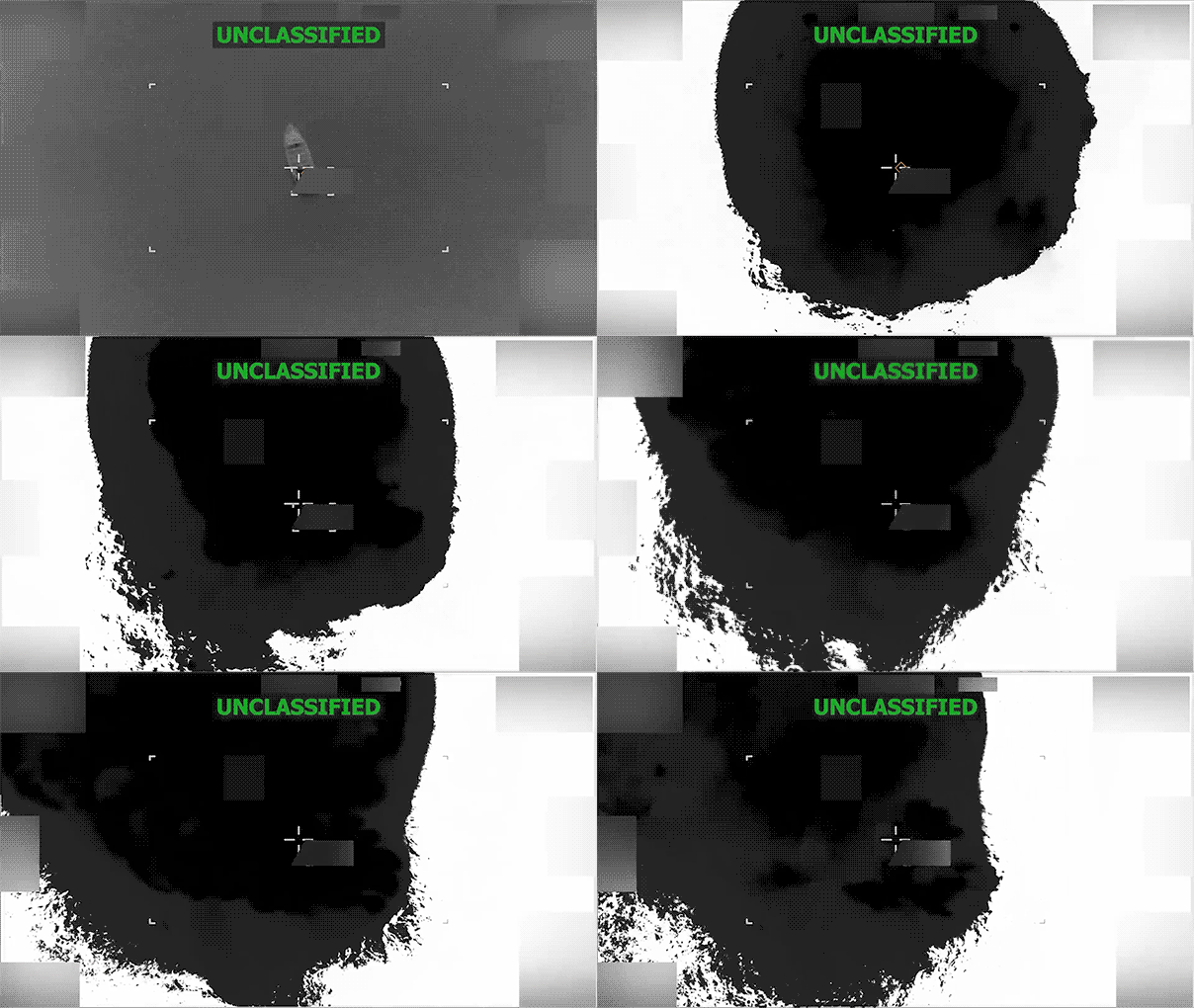

The U.S. military carried out a lethal strike on a suspected drug-trafficking vessel in the eastern Pacific on October 27, killing five people identified by officials as narco-terrorists. U.S. Southern Command said the go-fast vessel was operating along established narco-trafficking routes and that intelligence confirmed its involvement in drug trafficking. The operation is part of a broader campaign against suspected cartel vessels that has drawn scrutiny over its legal basis and the evidence made public.
Officials released video showing the vessel on the water before it erupted into a large fireball. The military did not disclose the precise location of the strike or identify the people who were killed.
| 1) | Details of the eastern Pacific strike |
|---|---|
| 2) | What officials said about the vessel |
| 3) | The wider campaign against suspected traffickers |
| 4) | Legal and evidentiary questions |
| 5) | U.S. cooperation with regional allies |
Details of the eastern Pacific strike
U.S. Southern Command said the strike took place on October 27 under its direction, with Joint Task Force Western Hemisphere carrying out the operation. The target was described as a go-fast vessel operating in the eastern Pacific along routes officials associate with narcotics trafficking. The command said five people aboard the vessel were killed and characterized them as narco-terrorists.
The military released video of the operation, showing the vessel before a sudden explosion and fire. The footage did not establish the exact coordinates of the attack, and officials did not provide additional details about the timing of the strike beyond the date or explain whether any other vessels or personnel were involved.
What officials said about the vessel
SOUTHCOM said intelligence had confirmed the vessel’s active involvement in narco-trafficking. The command presented that intelligence as the basis for the operation, but it did not publicly identify the suspected trafficking organization, describe the cargo or release evidence showing that narcotics were aboard.
“Confirmed intelligence revealed the vessel’s active involvement in narco-trafficking,” SOUTHCOM said.
The statement also used the term narco-terrorists for those killed. During the broader campaign, officials have alleged that people aboard targeted vessels were connected to drug-trafficking networks or designated terrorist organizations, while generally withholding the identities of those killed.
The wider campaign against suspected traffickers
The operation is the latest in the Trump administration’s months-long campaign against suspected cartel vessels. According to figures cited in the original reporting, the campaign had produced at least 240 deaths through more than 70 strikes by the time of this operation.
SOUTHCOM has also released videos of military personnel intercepting and boarding vessels it said were involved in narco-trafficking. In those cases, crews were removed and the boats were sunk. The varied operations show that the campaign has included both lethal strikes and maritime interdictions, depending on the circumstances of each encounter.
Legal and evidentiary questions
The continued strikes have prompted criticism from lawmakers, legal experts and human rights groups. Their concerns have focused on whether lethal military force is lawful against suspected traffickers operating outside a traditional battlefield and on the limited public evidence supporting individual strikes.
Officials have not generally identified those killed or disclosed evidence that targeted vessels were carrying narcotics. As a result, public assessments of the operation rely largely on military statements and released video, which shows the strike but does not independently establish the vessel’s cargo or the identities of those aboard.
U.S. cooperation with regional allies
The operations come as the United States says it wants greater cooperation with governments in Latin America and the Caribbean. Secretary of State Marco Rubio said the United States has the capacity to act unilaterally but prefers to work with regional allies, describing cooperation as the most effective approach.
Marco Rubio also said the military would still destroy vessels if necessary, with decisions made on a strike-by-strike or operation-by-operation basis. His comments indicate that the United States intends to combine partner-led or coordinated counter-narcotics activity with the ability to conduct unilateral operations when officials determine that action is required.
| Number | Key Point |
|---|---|
| 1 | Five people were killed in the October 27 strike, according to SOUTHCOM. |
| 2 | The targeted go-fast vessel was operating on an established eastern Pacific trafficking route. |
| 3 | Officials did not disclose the exact location, identities of those killed or evidence of narcotics aboard. |
| 4 | The broader campaign has resulted in at least 240 deaths across more than 70 strikes, according to cited figures. |
| 5 | Legal experts and human rights groups have questioned the use of lethal force outside a traditional battlefield. |
Summary
The eastern Pacific strike demonstrates the U.S. military’s continued use of lethal force against vessels it says are linked to narcotics trafficking. While officials provided a date, general location and intelligence-based justification, they did not release the precise location, identify the victims or publicly document the vessel’s cargo. The operation therefore remains part of a wider and contested campaign whose effectiveness and legal foundation continue to face scrutiny.
Frequently Asked Questions
When did the strike occur?
The strike occurred on October 27, 2026, according to U.S. Southern Command.
Where did the operation take place?
Officials said it took place in the eastern Pacific but did not provide a more precise location.
What evidence did officials release?
SOUTHCOM released video showing the vessel before it was hit and said intelligence confirmed its involvement in narco-trafficking. Officials did not publicly release evidence that narcotics were aboard.
