

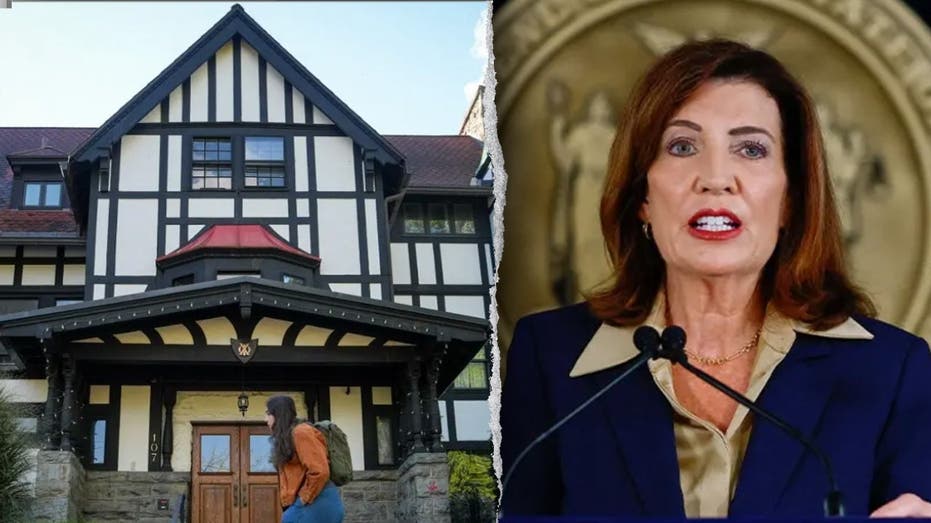

New York Gov. Kathy Hochul is facing criticism over comments she made in a documentary about allegations of sexual assault involving seven men connected to Cornell University. The men have not been criminally charged, while a renewed state investigation is being led by Attorney General Letitia James under an executive order signed by Hochul. Defense attorney Donna Rotunno said the governor’s appearance and the timing of her intervention could raise concerns about the fairness of the process.
The allegations became widely known after a woman, identified in court filings as Jane Doe, filed a civil lawsuit alleging that she was drugged and sexually assaulted by members of the Chi Phi fraternity in 2024. Local prosecutors previously said multiple investigators and prosecutors reviewed her account and determined that the facts described did not constitute a crime under applicable law.
| 1) | Hochul’s appearance in the documentary |
|---|---|
| 2) | The allegations and prior law enforcement review |
| 3) | The state’s renewed investigation |
| 4) | Defense concerns about impartiality |
| 5) | The governor’s response and next steps |
Hochul’s appearance in the documentary
Hochul appears early in a newly released streaming documentary examining the Cornell case. Speaking about the allegations, she described her initial reaction as disgust and referred to her own experiences as a college student in the late 1970s. She also said she believed the culture surrounding sexual violence had not changed sufficiently.
“My first reaction was how disgusting, not again. You feel like, not again.”
The governor said the number of people allegedly involved and the seriousness of the accusations would ordinarily prompt contact with local police. Her participation has drawn scrutiny because she later took formal action connected to the investigation.
The allegations and prior law enforcement review
The case concerns allegations arising from an incident at a Cornell fraternity house in Ithaca, New York, in 2024. Jane Doe later filed a civil lawsuit naming seven fraternity members, Cornell University, her sorority and other parties. Her lawsuit alleges that she was drugged and sexually assaulted by multiple men.
The woman initially reported the allegations to local law enforcement but filed the civil action nearly two years later. Tompkins County District Attorney Matthew Van Houten said multiple prosecutors and criminal investigators reviewed her statement and concluded that the alleged facts did not constitute a crime. None of the seven men has been criminally charged.
The state’s renewed investigation
In October 2026, Hochul signed an executive order assigning James, the state attorney general, as special prosecutor. The order followed renewed public attention, protests at Cornell and questions about how the allegations were handled locally.
The state review is intended to examine the circumstances surrounding the allegations and the earlier law enforcement response. Hochul has said that people involved in such cases need confidence in the process, while the investigation remains ongoing and has not resulted in criminal charges against the accused men.
“In a situation like this, you want to make sure that people believe in the process.”
Defense concerns about impartiality
Donna Rotunno, a criminal defense attorney, criticized Hochul’s decision to discuss the matter in a documentary. Rotunno said the governor has the authority to speak about matters of public concern but questioned whether doing so was appropriate while the state was taking an active role in the case.
“The governor can say anything she wants about anything. The question is, should she?”
Rotunno described an existing “air of impropriety” and said Hochul’s timing was suspect. Her criticism centered on whether public comments by a senior state official could affect perceptions of neutrality or create pressure around the investigation.
The governor’s response and next steps
A spokesperson for Hochul said governors routinely speak with news and media organizations about matters of significant public interest. The response did not indicate that the governor planned to withdraw her executive order or alter the special prosecutor’s mandate.
The investigation will proceed under James’s direction, while the civil lawsuit and public debate continue separately. The central issues include how the original report was evaluated, whether additional investigative steps are warranted and how officials can protect due process for both the accuser and the people accused.
| Number | Key Point |
|---|---|
| 1 | Seven men connected to Cornell have been accused but not criminally charged. |
| 2 | Hochul appeared in a documentary and discussed her reaction to the allegations. |
| 3 | An October executive order appointed James as special prosecutor. |
| 4 | Local prosecutors previously said the reported facts did not constitute a crime. |
| 5 | A defense attorney says Hochul’s role and comments raise fairness concerns. |
Summary
Hochul’s documentary appearance has intensified scrutiny of the Cornell sex-assault investigation because she publicly discussed the allegations and later assigned James to lead a renewed state review. The accused men have not been charged, and local authorities previously declined to pursue criminal cases after reviewing the initial report. The investigation must now address public demands for accountability while maintaining impartiality and due process.
Frequently Asked Questions
What is the Cornell case about?
It concerns allegations by Jane Doe that she was drugged and sexually assaulted by multiple men connected to the Chi Phi fraternity at Cornell University in 2024.
Have the seven accused men been charged?
No. None of the seven men has been criminally charged, according to the information available in the case.
Why was a special prosecutor appointed?
Hochul signed an executive order in October 2026 assigning Attorney General Letitia James to conduct a renewed investigation into the allegations and their handling.
Why is Hochul’s documentary appearance controversial?
Critics, including Donna Rotunno, say her public comments and later intervention could create an appearance of impropriety or raise questions about the investigation’s impartiality.
