

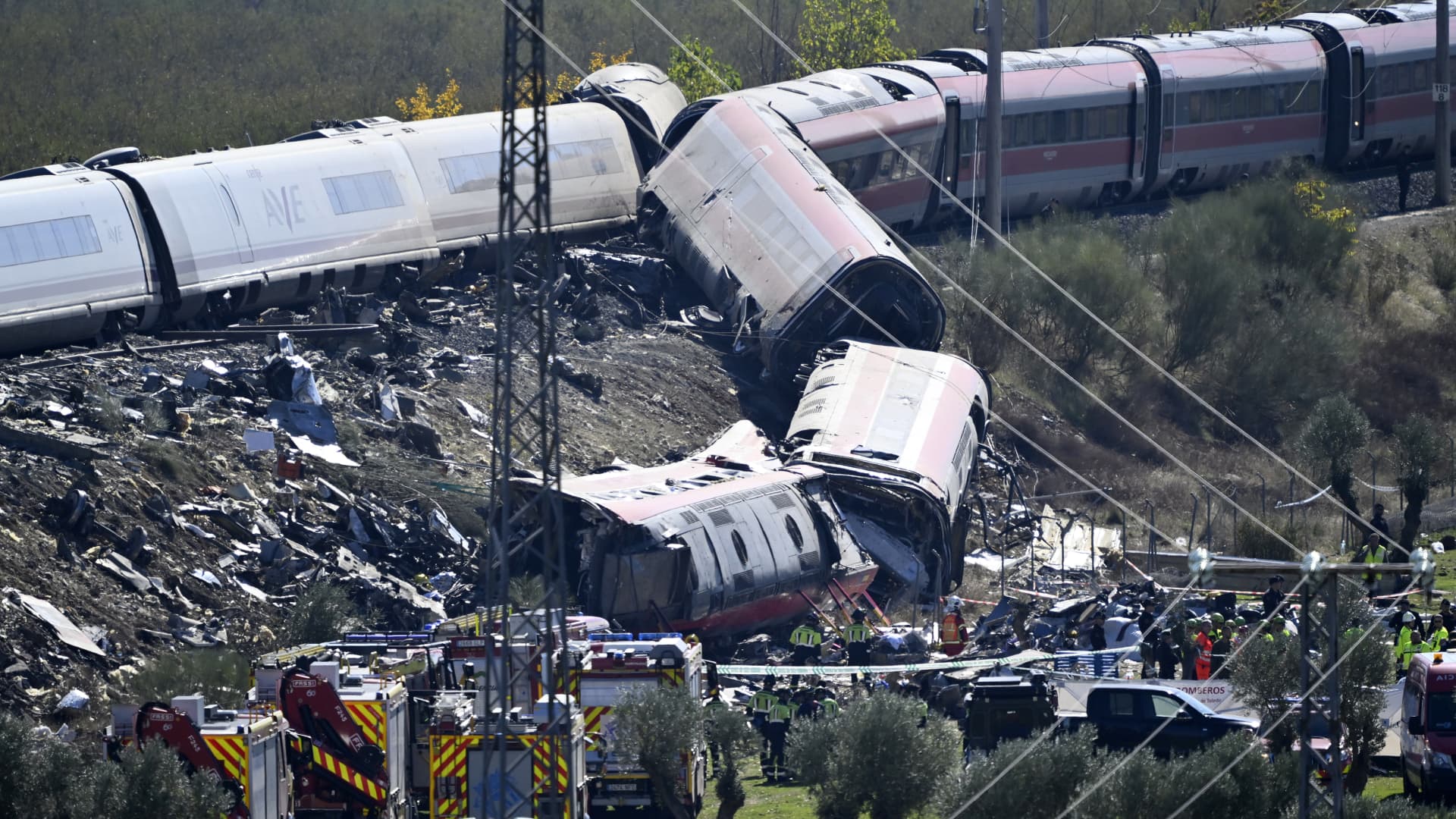

A tragic collision involving two high-speed trains in the Toledo province of Spain has claimed at least 68 lives and left 50 others injured. The incident occurred on October 28, 2026, during the morning rush hour, highlighting critical safety issues in the country’s rail system. As investigations are launched to uncover the cause of the crash, officials express deep concern over the implications for public transportation and accountability.
| Article Subheadings |
|---|
| 1) Overview of the Collision Incident |
| 2) Response from Authorities |
| 3) Details of the Victims |
| 4) Political Reactions and Implications |
| 5) Investigative Measures Underway |
Overview of the Collision Incident
The catastrophic event unfolded shortly before 9:15 a.m. local time on October 28, when two high-speed trains collided on the busy Madrid-Seville line near the town of Urda in the province of Toledo. According to initial reports, the trains, operated by rail companies Renfe and Iryo, were involved in the accident due to a failure in the control systems. As soon as emergency services were alerted, they raced to the scene to assist those involved in the incident, but the extent of the damages was immediate and severe.
Witnesses recounted harrowing moments as the crash sent a shockwave through the area, affecting more than 500 passengers who were onboard at the time. Emergency teams faced a daunting task as they navigated the wreckage, working tirelessly to rescue those trapped and transport the injured to nearby medical facilities. The Spanish Transport Minister, Óscar Puente, noted the extraordinary circumstances surrounding the case, deeming the disaster “inexplicable” given the failed control measures that should have prevented such collisions.
Response from Authorities
In the aftermath of the collision, authorities mobilized a robust response framework, with emergency services and local government officials arriving swiftly to manage the situation. The Castilla-La Mancha government’s immediate remarks confirmed the fatalities and emphasized the ongoing efforts to identify and treat the injured. Emiliano García-Page, the regional president, extended condolences and highlighted the regional emergency protocol activated as a result of the tragedy.
Spanish Prime Minister Pedro Sanchez expressed his shock and sadness over the incident, affirming that investigations would strive to uncover any negligence or failures in safety measures. As reports surfaced regarding one train having struck another that was stationary, officials faced mounting pressure to hold those responsible accountable for the lapses in safety protocols. This tragic event marks one of the deadliest in Spanish rail history and is expected to stir significant unease among the populace regarding train safety.
Details of the Victims
Among the 68 fatalities confirmed, it is reported that more than half were aboard the Renfe-operated train, with specific demographic details still being compiled as families await news. The collision has ignited a wave of sorrow across Spain, as the nation mourns the lives lost and grapples with its implications on transportation safety. Authorities are ensuring that affected families receive necessary support, and efforts to communicate sensitive details with families remain paramount in the wake of such devastating news.
Reports indicate that, in addition to those who lost their lives, approximately 50 individuals sustained injuries of varying degrees. Medical facilities in nearby cities have been placed on alert, prepared to cater to the unexpected influx of patients. Hospitals are working round the clock to provide comprehensive medical measures for the injured and ensure psychological support for witnesses and families in distress.
Political Reactions and Implications
As is often the case following such tragedies, political responses have emerged to grapple with the implications of the incident in various spheres. Prime Minister Pedro Sanchez emphasized accountability, suggesting that any demonstrated negligence will not go unpunished. His declaration reflects a commitment to addressing safety deficiencies while acknowledging the broader issues that may stem from the incident.
Additionally, the political fallout extends to expected critiques from opposition leaders, such as Santiago Abascal, leader of the far-right Vox party, who has focused his rhetoric on perceived governmental failures. With an upcoming snap election scheduled for November 29, the political landscape is rife with uncertainty, as the accident’s repercussions may influence voter sentiment and perceptions of the current governing bodies.
Investigative Measures Underway
As investigations continue into the circumstances surrounding the collision, the Spanish railway infrastructure manager, Adif, has initiated a comprehensive review of the events leading up to the tragedy. Their ongoing assessment focuses on operational protocols, safety equipment function, and the details surrounding the train’s control systems. While the investigations are crucial, scrutiny regarding the effectiveness of the existing legislative framework governing rail safety is likely to intensify.
Experts in rail safety are contributing insights that will aid in determining whether regulations have been adequately enforced or if additional measures must be adopted to prevent similar incidents in the future. As the investigation unfolds, the clarity on the safety landscape of Spain’s railway system remains a central focus for both officials and the public.
| No. | Key Points |
|---|---|
| 1 | At least 68 people died and 50 others were injured in a train collision in Toledo, Spain. |
| 2 | The accident involved two high-speed trains, Renfe and Iryo, that collided on the Madrid-Seville line. |
| 3 | Transport Minister Óscar Puente reported a failure in the control systems preceding the crash. |
| 4 | Political leaders have raised concerns about accountability and safety regulations following the tragedy. |
| 5 | Investigations are underway to determine the cause and examine the safety protocols involved in the incident. |
Summary
The tragic train collision in Toledo serves as a somber reminder of the potential vulnerabilities within modern transportation systems. As investigations take shape, they are expected to uncover clarity and accountability in the wake of significant loss of life. Furthermore, this incident highlights pressing needs for advancements in safety measures in railway operations and will likely have profound effects on political dialogues within the nation.
Frequently Asked Questions
Question: What caused the train collision in Toledo?
Preliminary reports suggest that a failure in the control systems allowed one of the high-speed trains to collide with another train that was stationary, leading to the tragic accident.
Question: How many people were aboard the trains involved in the accident?
More than 500 passengers were on board the two trains when the collision occurred, resulting in numerous casualties and injuries.
Question: What actions are being taken in response to the collision?
Investigations have been launched by the Spanish railway infrastructure manager, Adif, to assess safety protocols and determine accountability for the incident.
