

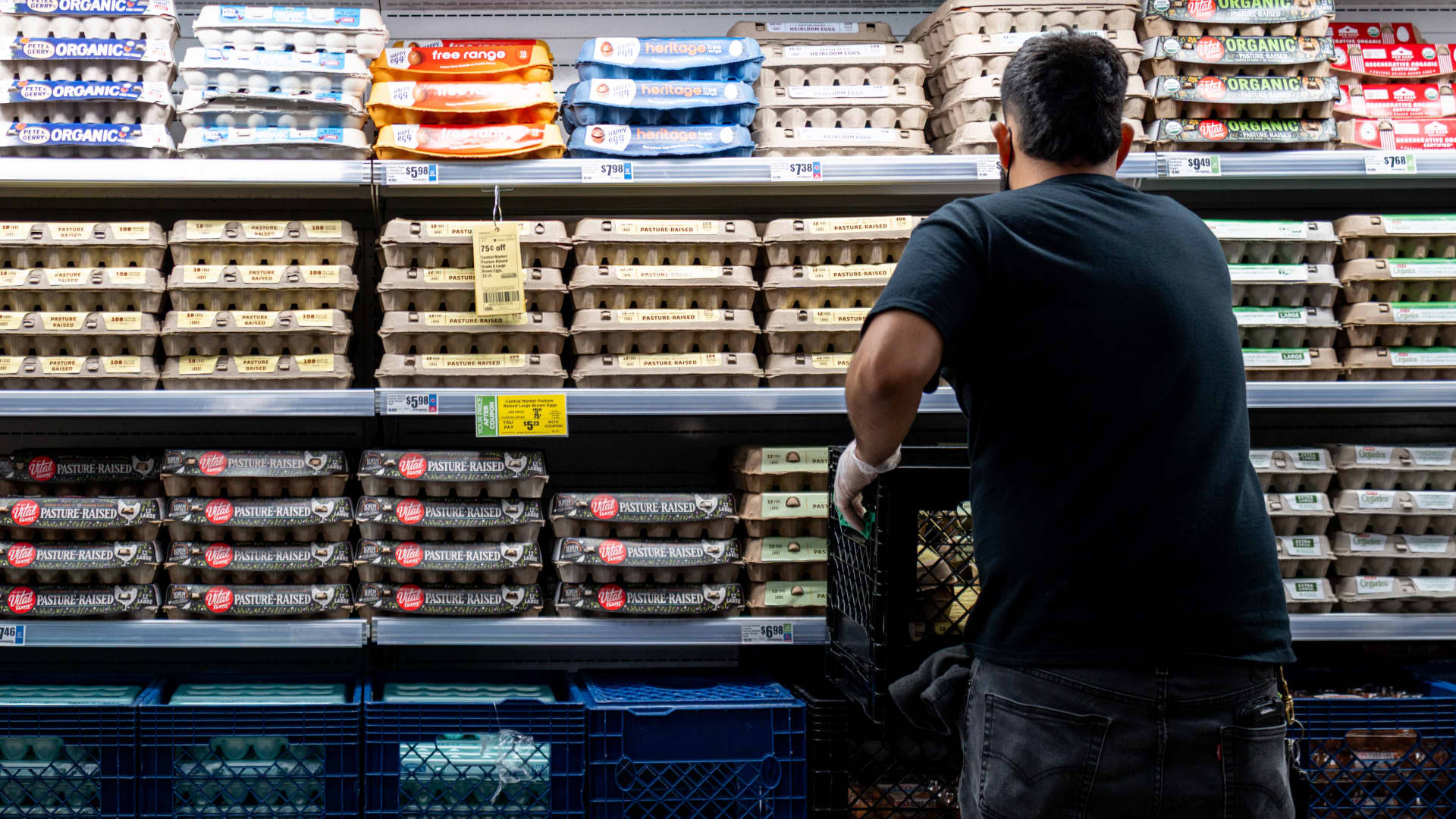

In October, the inflation landscape in the United States revealed troubling signs, as costs for goods and services surged more than anticipated. The latest report from the Bureau of Labor Statistics indicated a seasonally adjusted increase in the consumer price index (CPI) of 0.4%, surpassing the 0.3% that economists had predicted. This unexpected inflationary pressure intensifies challenges for the Federal Reserve as it evaluates its upcoming interest rate decisions, potentially hinting at significant implications for both consumers and the broader economy.
| Article Subheadings |
|---|
| 1) Overview of Recent Inflation Data |
| 2) Implications for the Federal Reserve |
| 3) Sector-Specific Trends in Prices |
| 4) Consumer Response and Business Sentiment |
| 5) Future Economic Outlook and Expectations |
Overview of Recent Inflation Data
The Bureau of Labor Statistics released a report on inflation that showcased a notable increase in October. Specifically, the consumer price index, a vital measure of inflationary trends, rose 0.4% on a seasonally adjusted basis. This marked a higher increase than the 0.3% that analysts had anticipated, causing concern across economic sectors. Additionally, the core CPI, which excludes volatile elements like food and energy, also exceeded expectations by rising 0.3% instead of the projected 0.2% increase. This uptick came after a 0.6% increase in the headline CPI recorded in September, signaling that inflation remains a persistent challenge.
Implications for the Federal Reserve
The inflation report arrived at a crucial moment as the Federal Reserve deliberates its next steps regarding interest rates. Fed Governor Christopher Waller hinted earlier that a robust inflation report could sway his decision towards recommending a substantial half-point rate hike in December if core CPI data reflected an increase around 0.3%. Following the release of the October data, markets reacted by actively pricing in a likely quarter percentage-point rate increase during the upcoming Federal Open Market Committee meeting on December 8-9. The odds for a more aggressive half-point hike initially stood at 13.6%, a significant shift from being nearly non-existent before the report.
Sector-Specific Trends in Prices
Within the consumer price index, various sectors exhibited distinct trends. Despite a general decline in gasoline prices over recent weeks, the energy index rose by 0.7%, with gasoline prices increasing by 1%. Conversely, the natural gas index saw a reduction of 0.8%. Food costs also added to inflationary pressures, with an overall rise of 0.5% driven primarily by a 1% increase in snack prices, and a 0.9% uptick in beef costs. Shelter costs accounted for over 30% of the overall increase, climbing by 0.3%, while used vehicle prices dropped by 1.2%. This juxtaposition of rising and falling prices across sectors illustrates the complexity of inflation dynamics, even as the economy grapples with rising costs.
Consumer Response and Business Sentiment
Despite challenges posed by inflation, consumer spending remains resilient as indicated by a 0.8% rise in retail sales in September. Nevertheless, business sentiment regarding pricing strategies appears to be shifting. According to a recent survey from the National Federation of Independent Business, a net 37% of small businesses indicated plans to increase prices over the next three months, marking the highest level of anticipated price hikes since July 2022. This trend reflects heightened uncertainty and the impacts of rising costs on operational strategies.
Future Economic Outlook and Expectations
Looking ahead, there is apprehension regarding the persistence of inflationary pressures. Officials from the Federal Reserve, including Lorie Logan, the president of the Dallas Fed, have indicated a need for two additional quarter-point rate increases in the near future, citing the unexpected strength of the latest CPI report. While the central bank awaits further economic data, the interplay between tariffs, energy prices, and other forces like spending on artificial intelligence will play a crucial role in shaping the Fed’s policy path. This evolving landscape necessitates careful monitoring of economic indicators as inflationary pressures appear resistant to mitigation attempts.
| No. | Key Points |
|---|---|
| 1 | The consumer price index rose 0.4% in October, exceeding economist expectations. |
| 2 | Core CPI also surpassed forecasts, increasing by 0.3% instead of 0.2%. |
| 3 | The Federal Reserve is considering potential interest rate increases in light of recent inflation data. |
| 4 | Consumer spending remains strong, with retail sales up by 0.8% in September. |
| 5 | Businesses’ plans to raise prices signal ongoing confidence in inflation pressures. |
Summary
The recent inflation report presents a complex picture for the U.S. economy, highlighting significant challenges ahead for policymakers. With rising inflation, consumer price dynamics, and shifting business sentiments, the Federal Reserve faces a critical juncture in balancing growth with controlling inflation. As markets adjust to these new realities, the monitoring of economic indicators will be crucial for navigating the evolving financial landscape.
Frequently Asked Questions
Question: What is the consumer price index (CPI)?
The consumer price index (CPI) is a measure that examines the average change over time in the prices paid by consumers for a basket of goods and services, providing a key gauge of inflation.
Question: Why is rising inflation a concern for the Federal Reserve?
Rising inflation can erode purchasing power, disrupt economic stability, and complicate monetary policy, prompting the Federal Reserve to consider interest rate adjustments to curb inflationary pressures.
Question: How can sector-specific price changes impact the overall economy?
Changes in prices across specific sectors can influence inflation rates and consumer spending patterns, affecting economic growth and the cost of living for individuals and families.
