

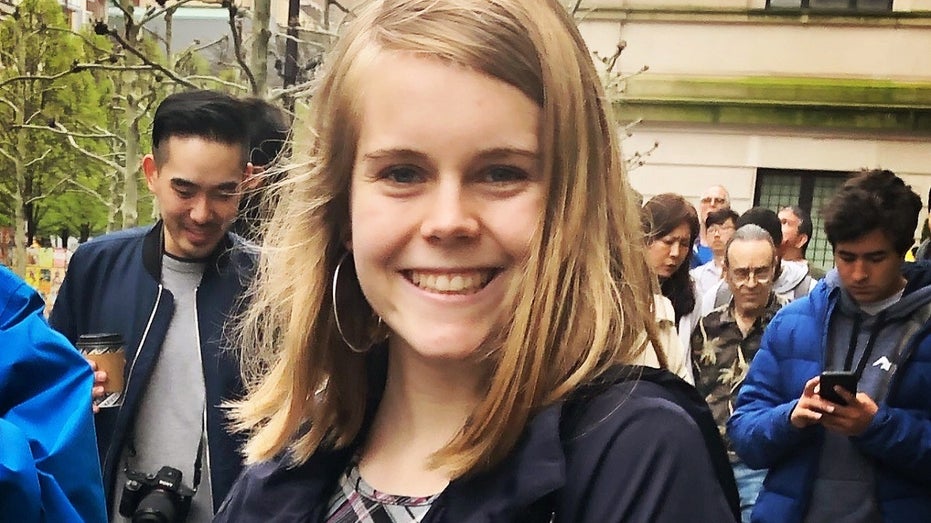

Luchiano Lewis, one of three teenagers convicted in the 2019 killing of Barnard College freshman Tessa Majors, was released under conditional supervision on October 14. Lewis, now 21, served fewer than seven years for his role in the robbery and fatal attack in Manhattan’s Morningside Park. His release occurred under New York’s conditional-release rules and did not require a hearing before the State Board of Parole.
Majors, 18, was attacked on December 11, 2019, after prosecutors said a group of teenagers confronted her during an attempted robbery. She was stabbed multiple times and later died at a hospital.
| 1) | Lewis is released under conditional supervision |
| 2) | The 2019 attack in Morningside Park |
| 3) | Lewis’s conviction and sentence |
| 4) | The status of the other defendants |
| 5) | The lasting impact on Majors’s family and New York |
Lewis is released under conditional supervision
Luchiano Lewis was released from Franklin Correctional Facility on October 14, according to New York State correctional records. He was placed under community supervision after serving fewer than seven years for his involvement in the robbery and killing. Lewis had received a sentence of nine years to life after pleading guilty in 2021 to second-degree murder and first-degree robbery.
Under New York law, eligible incarcerated people may receive conditional release after serving two-thirds of their minimum sentence, subject to legal requirements and applicable good-time allowances. Because the release followed that process, Lewis was not required to appear before the State Board of Parole.
The 2019 attack in Morningside Park
Tessa Majors, an 18-year-old Barnard College freshman, was attacked on December 11, 2019, near a staircase in Morningside Park in Manhattan. Prosecutors said a group of teenagers confronted her during an attempted robbery.
According to the prosecution, Majors was stabbed multiple times. She managed to climb the stairs to reach the street before collapsing and was taken to a hospital, where she died from her injuries. Lewis was accused of holding Majors in a headlock while another teenager stabbed her. Prosecutors said Lewis did not hold the knife but played a significant role in the robbery that led to her death.
Lewis’s conviction and sentence
Lewis and another teenager, both 14 at the time, were prosecuted as adults in connection with the attack. Lewis pleaded guilty in 2021 to the murder and robbery charges and was later sentenced to nine years to life in prison.
During sentencing, Manhattan Supreme Court Justice Robert Mandelbaum acknowledged Lewis’s young age while emphasizing the consequences of the crime.
“The defendant was and is extremely young. He has his whole life ahead of him, but Tessa Majors does not.”
Mandelbaum also said the killing “tore at the fabric of the entire city.” Lewis’s conditional release means he remains subject to community supervision under the terms established by New York authorities.
The status of the other defendants
The two other teenagers convicted in connection with Majors’s killing have different legal outcomes. Rashaun Weaver, who was 14 when the crime occurred, remains incarcerated after receiving a sentence of 14 years to life for murder and robbery.
Zyairr Davis, who was 13 at the time, pleaded guilty to robbery and was sentenced to 18 months in juvenile detention. He completed that sentence but is now being held in an unrelated attempted murder case. The available records do not indicate that either defendant has been released in connection with the Majors case.
The lasting impact on Majors’s family and New York
Majors’s death drew widespread attention because she was a first-year college student killed in a public Manhattan park. Her parents described her during Lewis’s sentencing as a talented student, musician and writer whose future was cut short.
A memorial was established in Morningside Park after the killing. The case continued to affect Majors’s family and the wider city as the defendants’ prosecutions and sentences moved forward. Lewis’s release brings renewed attention to the distinction between a conditional release under state sentencing rules and a discretionary parole decision.
| Number | Key Point |
|---|---|
| 1 | Lewis was released on October 14 under conditional community supervision. |
| 2 | He pleaded guilty to second-degree murder and first-degree robbery in 2021. |
| 3 | Majors was killed during an attempted robbery in Morningside Park on December 11, 2019. |
| 4 | Weaver remains imprisoned, while Davis is being held in an unrelated case. |
| 5 | New York’s conditional-release process did not require a parole-board hearing. |
Summary
The release of Luchiano Lewis follows New York’s conditional-release rules after he served fewer than seven years of a nine-years-to-life sentence. The case remains significant because of the age of the defendants, the public nature of Tessa Majors‘s killing and the continuing consequences for her family and the other convicted teenagers.
Frequently Asked Questions
When was Lewis released?
Lewis was released on October 14 under conditional release and placed under community supervision.
Why did Lewis not appear before the State Board of Parole?
New York law permits eligible inmates to receive conditional release after serving two-thirds of their minimum sentence, subject to applicable requirements and good-time allowances.
What happened to the other teenagers convicted in the case?
Rashaun Weaver remains imprisoned under a 14-years-to-life sentence. Zyairr Davis completed his juvenile sentence but is being held in an unrelated attempted murder case.
