

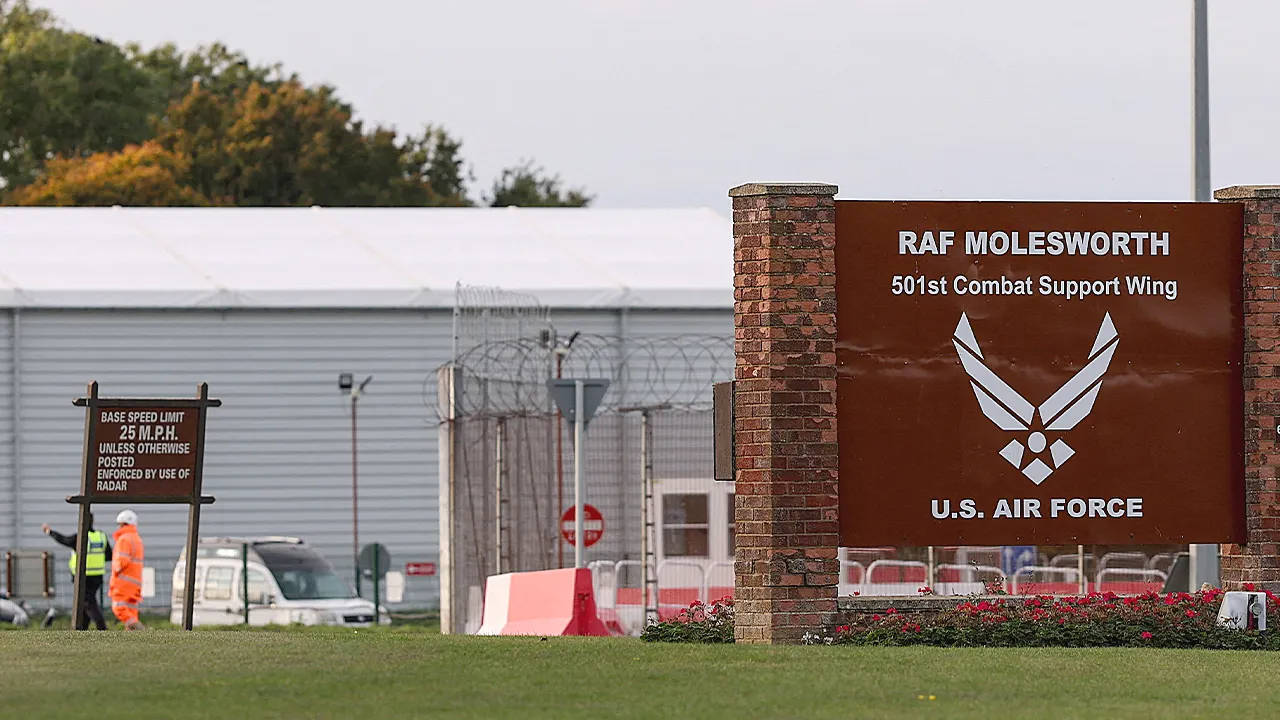

Two Latvian nationals were arrested on Thursday at RAF Molesworth, a British military base critical to U.S. and NATO intelligence operations. The arrests followed an alleged breach of security at the base, prompting a swift counterterrorism investigation. While the implications of the incident are serious, British officials have urged caution in drawing early conclusions regarding the motives behind the breach.
| Article Subheadings |
|---|
| 1) Background of RAF Molesworth and its significance |
| 2) Details of the arrest and initial findings |
| 3) Authorities’ response and investigation updates |
| 4) U.S. security measures and implications |
| 5) Expert analysis on potential threats |
Background of RAF Molesworth and its significance
RAF Molesworth is a significant British military base that houses critical U.S. intelligence operations. Managed by the U.S. Air Force’s 423rd Air Base Group, the base focuses on joint intelligence and command operations vital for U.S. European Command, U.S. Africa Command, and the NATO Intelligence Fusion Centre. The facility’s importance has only increased with its ongoing $556.5 million expansion, which includes the construction of the Joint Intelligence Analysis Complex (JIAC), designed to house over 1,000 personnel and consolidate 20 intelligence facilities.
Since its deactivation as an airfield in 1973, RAF Molesworth has evolved into a state-of-the-art intelligence hub. It played a significant role during World War II and has since transitioned to leverage modern intelligence methodologies. The ongoing expansion aims to enhance collaboration across various military branches, addressing contemporary threats faced by the U.S. and its allies. Construction of the JIAC began on April 12, 2024, with completion scheduled for the summer of 2028.
Details of the arrest and initial findings
The two Latvian nationals, aged 32 and 36, were arrested under Section 4 of Britain’s National Security Act, ostensibly for breaching a perimeter fence at the highly secure base. The incident unfolded around 2 a.m. on Thursday, following an extensive security sweep initiated by Ministry of Defense Police officers, who had noticed an abandoned vehicle near the perimeter around 10 p.m. the night before.
Initially detained on suspicion of trespassing and criminal damage, the men were arrested again under the National Security Act for allegedly entering a prohibited place for purposes prejudicial to the UK. They currently remain in custody as counterterrorism detectives explore their residential properties in nearby Peterborough, seeking evidence that may clarify the motivations behind their entry into the base.
Bomb disposal specialists conducted a thorough check of the abandoned vehicle before police confirmation of a security breach revealed the location of the two men. This led to the initiation of a counterterrorism investigation immediately following their arrest, with heightened concerns about the implications of unauthorized access to such a critical military installation.
Authorities’ response and investigation updates
Following the arrests, British counterterrorism officials launched a comprehensive investigation to ascertain the nature and extent of the security breach. U.S. European Command commended the British authorities’ swift response, emphasizing the strong partnership between U.S. and UK forces regarding security matters. Their statement highlighted that U.S. forces maintain a high state of readiness while assessing the global security landscape.
Counterterrorism leaders, including Commander Helen Flanagan of Counterterrorism Policing London, stressed the importance of caution and thoroughness in the ongoing investigations. “We are keeping an open mind at this stage,” she stated, underscoring that no direct connections had yet been established between this incident and any broader security concerns related to other military sites, such as RAF Fairford—another base used by U.S. strategic bombers. Analysis of potential espionage or terrorism motives remains ongoing as investigators collect evidence.
U.S. security measures and implications
The recent breach at RAF Molesworth has prompted discussions about strengthening security protocols at U.S. military installations in the UK and abroad. The incidents highlight the challenges faced by security agencies in safeguarding sensitive military sites from potential threats. Following the infiltration, military officials indicated that all bombers had been temporarily relocated from the UK base while security measures were reassessed.
U.S. forces remain active in Europe, highlighting the importance of international collaboration in response to security threats. The Department of Defense has emphasized the need for an adaptive and responsive security posture in light of evolving geopolitical landscapes and ongoing intelligence operations. Officials have also commended the UK’s ongoing commitment to counterterrorism efforts and protecting crucial military installations.
Expert analysis on potential threats
Security experts have expressed concerns regarding the implications of the incident at RAF Molesworth not only for the site but also for U.S. military installations globally. The breach signals a potential escalation in threats facing military bases, necessitating an expert evaluation of current protocols and responses to unauthorized entries.
Analysts underscore the importance of scrutinizing the geopolitical landscape, particularly in relation to Iran, as the motivations behind such incidents may be tied to broader strategic tensions in the region. There remains a cautionary tone among officials regarding premature conclusions; the case is still in a sensitive phase as investigations continue. Experts like Robert Harward, a retired Vice Admiral, emphasize the need for vigilance given the global security dynamics affecting military organizations.
The potential ramifications of this breach extend beyond the immediate incident. They inform future strategic decisions regarding military presence in areas of heightened risk and encourage proactive measures to ensure the safety of personnel and operations.
| No. | Key Points |
|---|---|
| 1 | Two Latvian nationals were arrested at RAF Molesworth on suspicion of breaching security. |
| 2 | The incident has triggered a counterterrorism investigation. |
| 3 | RAF Molesworth is a critical U.S. and NATO intelligence hub undergoing a major expansion. |
| 4 | British authorities urged caution in assessing motives behind the breach. |
| 5 | The U.S. military is reviewing its security measures following the incident. |
Summary
The recent arrest of two Latvian nationals for breaching security at RAF Molesworth underscores the evolving challenges of safeguarding military installations amid geopolitical tensions. The situation continues to unfold as investigations are conducted, yet the incident has sparked significant concerns regarding potential threats to U.S. and NATO operations. Analysts emphasize the importance of vigilance and adaptation in military security protocols to mitigate risks associated with unauthorized access to sensitive sites.
Frequently Asked Questions
Question: What is RAF Molesworth used for?
RAF Molesworth functions as a critical intelligence hub for U.S. and NATO operations, consolidating multiple intelligence facilities and supporting military commanders across Europe and Africa.
Question: What was the nature of the breach at RAF Molesworth?
The breach involved two Latvian nationals who allegedly entered a restricted area after bypassing perimeter security, prompting a counterterrorism investigation into their motives.
Question: How has the U.S. responded to the security breach?
Following the breach, the U.S. has reassessed security measures at military installations, expressing gratitude for the British response while maintaining a state of high readiness among security forces.
