

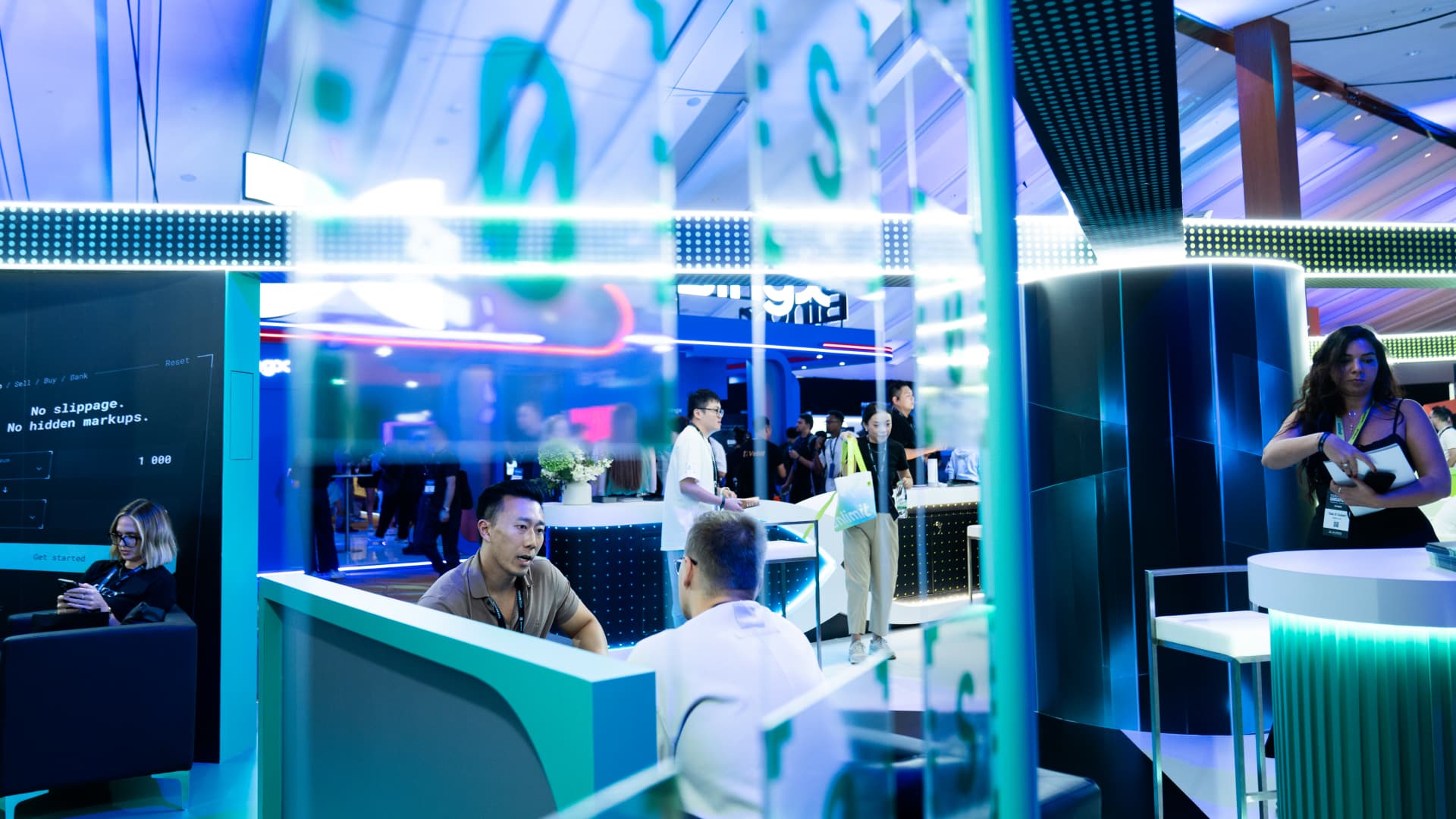

The Token2049 conference in Singapore recently highlighted the potential of asset tokenization to unlock significant sums of capital within the global financial landscape. Nasdaq CEO Adena Friedman emphasized that tokenizing various financial instruments could enhance the liquidity of collateral and revolutionize trading dynamics. The evolving interest from institutional investors and the push for 24/7 trading policies indicates a shift toward a more integrated financial ecosystem, as cryptocurrency companies explore expanding access to traditional capital markets.
| Article Subheadings |
|---|
| 1) The Concept of Tokenization |
| 2) The Push Toward 24/7 Trading |
| 3) Bridging Cryptocurrency and Traditional Finance |
| 4) The Role of Artificial Intelligence |
| 5) Future Implications for Investors |
The Concept of Tokenization
Tokenization refers to the process of converting physical and financial assets into digital tokens that reside on a blockchain. This innovation allows for the secure and efficient transfer of ownership, enabling assets like Treasurys, equities, and money market funds to be traded in a manner reminiscent of cryptocurrencies. At the Token2049 conference, Adena Friedman discussed these developments, noting that tokenization can enhance liquidity across various markets. By making collateral more accessible, institutions can convert capital tied up in physical assets into more dynamic financial instruments.
Friedman pointed out that the rising institutional interest in tokenization correlates with recent regulatory developments, including the passage of the Genius Act in the United States. This act is seen as a significant advance in creating a structured framework for stablecoins, which are vital for facilitating the flow of digital money. The convergence of institutional and retail investor interest highlights an increasing recognition of the benefits of this new transaction model, which ultimately aims to create a more fluid market environment.
This transformation has broader implications, as it could democratize access to financial markets for a larger population of investors. As tokenized assets become mainstream, individuals who previously lacked access to various investment options will find new opportunities to engage with the markets directly.
The Push Toward 24/7 Trading
The movement toward establishing 24/7 trading can radically reshape trading practices in the financial industry. Adena Friedman explained that current market operations typically close at specified times to facilitate system updates and manage operational risks. Transitioning to a continuous trading environment poses significant challenges, particularly in maintaining real-time risk management and operational integrity. All functions, from trading execution to collateral management, would need to be conducted without interruption.
Friedman emphasized that artificial intelligence (AI) could enhance this transition by providing digital agents capable of aiding risk management. These agents could initially offer recommendations and, as they evolve, assist banks in making critical trading decisions. This shift towards a fully connected and automated trading environment acknowledges the unrealistic nature of expecting humans to manage around-the-clock trading without technological support.
“AI is critical for 24/7,” Friedman stated, underlining the importance of technology in enabling financial institutions to adapt their operational protocols.
Bridging Cryptocurrency and Traditional Finance
Interest in tokenization and broader access to U.S. capital markets is not limited to domestic entities. Arjun Sethi, co-CEO of the cryptocurrency exchange Kraken, noted during the conference that international companies are recognizing the potential benefits of accessing U.S. financial avenues through tokenization. He provided an example of a company generating significant revenue exploring ways to tap into these markets, reflecting a broader trend where tokenization can facilitate global access to capital.
Friedman added a note of caution, indicating that not every asset may have the liquidity necessary to thrive in a 24/7 trading setting. This nuance denotes that while the ambition for continuous trading exists, practical considerations regarding asset volatility and liquidity must be accounted for. Nevertheless, the strategic alignment of traditional finance with blockchain technology presents opportunities for broader investment accessibility and collaborative growth.
The Role of Artificial Intelligence
The integration of artificial intelligence in financial services represents a paradigm shift in how institutions approach risk management and operational efficiency. Friedman highlighted that AI-driven insights could streamline processes, making the transition to a 24/7 trading environment not only feasible but also more effective. For instance, Nasdaq has initiated the deployment of digital agents within its risk management platform, allowing for real-time assessment and decision-making.
The overarching goal is to refine how financial institutions respond to market fluctuations and manage collateral in a fast-paced trading environment. AI technologies can analyze vast datasets quickly, leading to informed strategies that mitigate risks while seizing market opportunities. This ability to function efficiently in a 24/7 world can result in a significant competitive edge for institutions that embrace these innovations early.
Future Implications for Investors
The prospects of a more interconnected financial system, driven by both tokenization and AI technology, hold diverse implications for various investor classes. Traditional investors may find new asset classes available through tokenized platforms, extending their portfolio horizons. Furthermore, as the demand for accessibility grows, investors could benefit from reduced transaction times and lower fees typically associated with international trading.
As institutions adapt to these changes, the landscape may evolve to better suit retail investors who aspire to trade anytime. The convergence of retail demands and institutional capabilities signifies a shifting market dynamic that is likely to enhance engagement and investment in financial markets. By bridging the gap between crypto and traditional finance, the potential for innovation expands beyond the current boundaries.
| No. | Key Points |
|---|---|
| 1 | Tokenization has the potential to unlock billions in capital by making assets more liquid. |
| 2 | Transitioning to 24/7 trading presents operational challenges requiring advanced risk management. |
| 3 | Artificial intelligence offers essential support for institutions to manage continuous trading. |
| 4 | International companies are engaging with tokenization to access U.S. capital markets. |
| 5 | Future investment landscapes may provide broader access to various asset classes through tokenization. |
Summary
The developments discussed during the Token2049 conference indicate a significant transformative phase for the financial sector, compelling institutions to reconsider traditional operational paradigms. The intersection of asset tokenization, continuous trading, and artificial intelligence holds substantial implications for both institutional and retail investors alike. As financial markets evolve, the integration of technology and innovative frameworks promises more accessible trading environments and enhanced investment opportunities.
Frequently Asked Questions
Question: What is tokenization?
Tokenization is the process of converting physical and financial assets into digital tokens on a blockchain, enhancing the liquidity and transferability of those assets.
Question: How does AI support the financial industry’s move to 24/7 trading?
AI supports continuous trading by providing real-time risk management and insights, allowing institutions to make informed decisions throughout the trading day without interruptions.
Question: What are the benefits of tokenization for retail investors?
Tokenization allows retail investors to access a wider range of assets, potentially reducing transaction times and costs while enabling more dynamic trading opportunities.
