

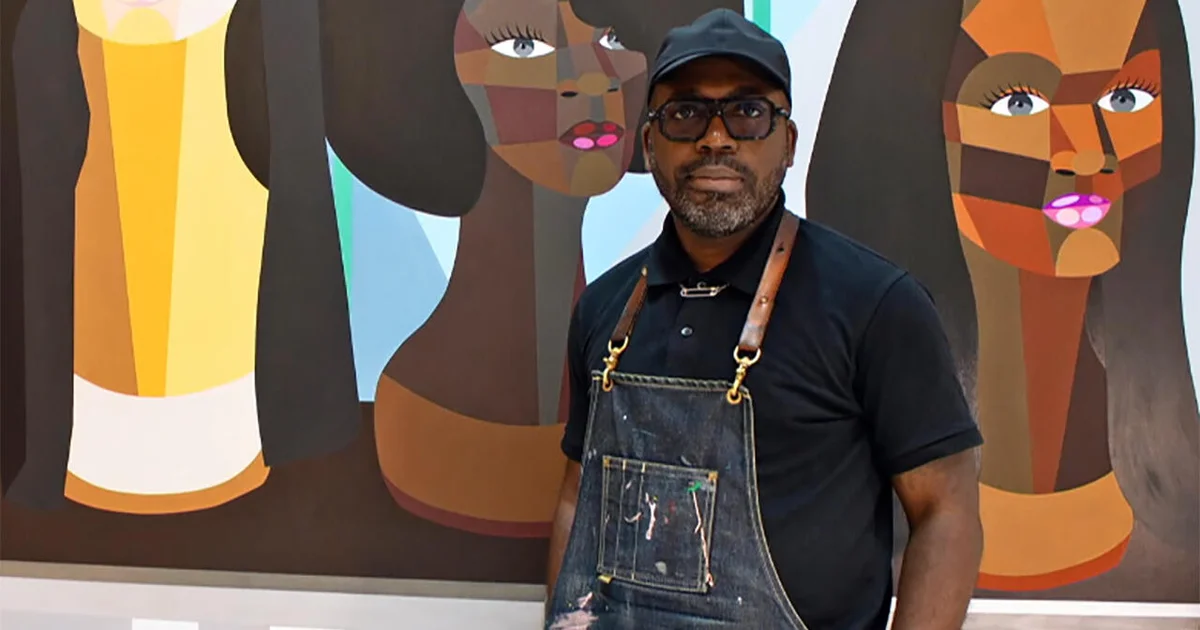

Renowned artist Derrick Adams is captivating audiences with his mid-career retrospective at the Institute of Contemporary Art in Boston. At 56, Adams has established himself as a pivotal figure in contemporary art, particularly for his vibrant portrayals of Black life in America. His work not only explores complex themes but also celebrates the joy found in everyday experiences, making his latest exhibition a powerful reflection on identity and culture.
| Article Subheadings |
|---|
| 1) Exploring Derrick Adams’ Artistic Journey |
| 2) A Retrospective at the Institute of Contemporary Art |
| 3) Thematic Elements in Adams’ Work |
| 4) The Concept of Black Joy |
| 5) Legacy and Impact in Contemporary Art |
Exploring Derrick Adams’ Artistic Journey
Born and raised in Baltimore, Maryland, Derrick Adams made his way to New York to pursue his passion for art. His journey began in college, where he cultivated his distinctive style, which garnered attention not just locally but globally. Adams’s work is characterized by an intricate use of color and symbolism that speaks volumes of his experiences as a Black man in America. This cultural lens shapes his artistic narrative, enabling him to address social issues through the lens of identity and heritage.
Adams often reflects on his childhood experiences and how they have influenced his artistic endeavors. He has consistently sought to portray Black life in a multifaceted manner, showcasing not only struggles but also triumphs and joys. Participating in exhibitions worldwide, he has solidified his status as a leading figure in contemporary art. Today, he stands regarded by critics and audiences alike as one of the foremost artists of his generation.
A Retrospective at the Institute of Contemporary Art
At the Institute of Contemporary Art in Boston, the exhibition “Derrick Adams: View Master” showcases an expansive display of his artistic journey. Open to the public, this retrospective features a mix of paintings, collages, and multimedia works that cover various stages of Adams’s career. The vibrant colors and imaginative compositions captivate visitors throughout the museum, effectively conveying the energy and dynamism of his vision.
The exhibition traces Adams’s evolution as an artist, allowing attendees to witness how his style has matured over time. Many works, including pieces from Adams’s “Floater” series, highlight joyous depictions of Black life, inviting viewers to engage in a celebration of culture and community. This exhibition serves not only as a showcase of Adams’s talent but also as a platform for dialogue around representation in contemporary art.
Thematic Elements in Adams’ Work
Adams employs a diverse range of themes in his art, profoundly reflecting on daily life and leisure among the Black community. Inspired by historical depictions such as those from the Renaissance, he captures moments of relaxation and joy, transformed into an American pop style that resonates with contemporary audiences. In various works displayed at the retrospective, Adams draws parallels between past artistic themes and modern experiences, creating a dialogue that bridges time and culture.
In his words, “We study the chaise lounge and the figures in Renaissance laying on the chaise lounge. It would be more fun to do it in American pop style.” This approach reveals not only his artistic methodology but also his desire to challenge traditional representations of Black culture. By infusing modern elements into historical contexts, Adams speaks to the complexities and multifarious experiences of Black life today.
The Concept of Black Joy
An integral aspect of Adams’s work is the notion of Black joy—a theme he explores deeply. He highlights the contrast in the experience of joy between different communities, poignantly stating, “The difference between the idea of Black joy and joy is that… a person who has the most to lose will still put on their headphones and jog.” Such reflections offer insight into the nuances of Black existence, grappling not just with the burdens but also with the resilience and happiness found in day-to-day life.
Adams believes it’s vital to create art that doesn’t merely dwell on the hardships faced by the Black community but offers a holistic portrayal that includes joy and peace. This perspective invites viewers to appreciate the richness of Black culture while recognizing the various layers that construct it. For him, showcasing joyful experiences serves to affirm that everyone deserves to celebrate their humanity.
Legacy and Impact in Contemporary Art
As a prominent figure in contemporary art, Derrick Adams is credited with expanding the boundaries of what American art can convey. Critics often highlight his significance as one of the leading painters of Black contemporary life, noting his commitment to portraying diverse aspects of the Black experience. Yet, Adams himself maintains that his focus lies not on legacy, but on the quality and impact of his work during his lifetime.
He remarks on the inevitability of legacy, expressing, “Everyone is gonna go at some point. I’m either gonna end up in a museum collection or on ‘[Antique] Roadshow.'” This perspective demonstrates his grounded approach to art, focusing on creating meaningful pieces that resonate with audiences rather than on the pursuit of historical significance. Adams’s dedication to ensuring that his art radiates joy reflects a profound understanding of its role in shaping societal narratives.
| No. | Key Points |
|---|---|
| 1 | Derrick Adams is a pivotal figure in contemporary art, recognized for his vibrant depictions of Black life. |
| 2 | His current retrospective at the Institute of Contemporary Art in Boston showcases his artistic journey and evolution. |
| 3 | Adams’s work embodies themes of joy and complexity in Black life, challenging conventional narratives. |
| 4 | He emphasizes the significance of Black joy as a profound aspect of his artistic expression. |
| 5 | Adams’s art aims to contribute to societal dialogues while ensuring that it remains joyful and humanizing. |
Summary
In conclusion, Derrick Adams stands as a transformative figure in contemporary art, utilizing his creative voice to explore the rich tapestry of Black life. His current retrospective at the Institute of Contemporary Art not only highlights his artistic innovations but also invites broader reflections on identity, culture, and joy. By showcasing diverse experiences, particularly the concept of Black joy, Adams challenges viewers to rethink their perceptions while celebrating the vibrancy and complexity of Black existence.
Frequently Asked Questions
Question: What are the main themes in Derrick Adams’ work?
Adams’s work centers around themes of Black life, joy, and the complexities of identity. He seeks to present a multifaceted view that goes beyond struggles, focusing on the celebratory aspects of everyday life.
Question: Where is the Derrick Adams retrospective currently being held?
The retrospective titled “Derrick Adams: View Master” is currently on display at the Institute of Contemporary Art in Boston, featuring a range of his artistic works.
Question: How does Derrick Adams define Black joy in his art?
Adams defines Black joy as the ability to experience happiness and freedom despite the unique struggles faced by the Black community. He emphasizes that this joy exists alongside historical realities, showcasing resilience in everyday life.
