

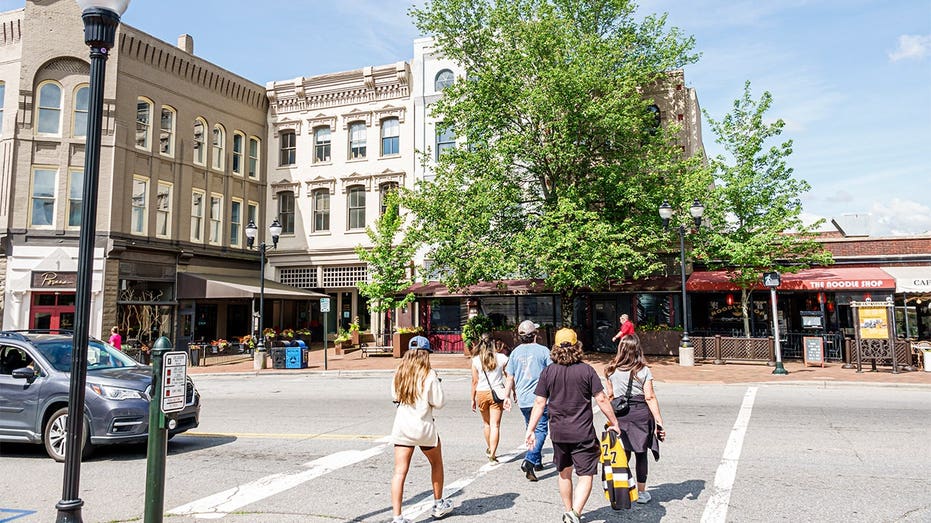

Two people were killed and seven others were hospitalized after early-morning gunfire in downtown Asheville, North Carolina, on July 19. Police said the shooting was a direct retaliatory act connected to an earlier July 5 incident, but officials have avoided describing it as traditional gang activity. Investigators are pursuing several persons of interest while coordinating with local, state and federal partners. City officials are also reviewing violence-prevention strategies as concerns about public safety continue in the Blue Ridge tourist town.
| 1) | Deadly gunfire near downtown nightlife |
| 2) | Police link shooting to earlier violence |
| 3) | Officials avoid traditional gang classification |
| 4) | Investigation and community response continue |
| 5) | Gun policy and prevention efforts debated |
Deadly gunfire near downtown nightlife
The shooting occurred at about 2:20 a.m. on July 19 near Biltmore Avenue and Short Coxe Avenue, an area close to downtown businesses and nightlife. Asheville Police Department officers arriving at the scene found multiple people suffering from gunshot wounds and encountered what investigators described as a large crime scene, with numerous shell casings recovered.
Two people died at the scene despite life-saving efforts. Seven additional victims were transported to Mission Hospital for treatment. The incident occurred in Asheville, a tourist destination in Buncombe County nestled in the Blue Ridge Mountains, where public safety concerns have increasingly focused on downtown activity and violent crime.
Police link shooting to earlier violence
Police initially said evidence suggested the July 19 shooting could be connected to an earlier act of gun violence. At a July 24 community briefing, Interim Police Chief Jackie Stepp said detectives had concluded that the downtown attack was a direct retaliatory act tied to a July 5 shooting at an apartment complex.
One person was shot in the July 5 incident, and police made an arrest in that case. Stepp described the deadly downtown shooting as the “latest chapter” in an ongoing pattern of retaliatory violence across the city. Investigators have not publicly detailed the precise relationship between the two incidents or said whether those killed and wounded were intended targets.
“These are two groups of individuals,” Stepp said, describing the people involved as connected because they knew one another and had engaged in ongoing retaliatory acts.
Officials avoid traditional gang classification
Although reporters asked whether the people involved belonged to rival gangs or families, Stepp declined to label the recent violence as gang-related. She said the groups were connected through personal relationships and continuing retaliation rather than describing them as traditional gangs.
Stepp later reportedly told a local television station that gang activity does exist in Asheville, while maintaining that the recent shootings did not fit the traditional definition. The distinction has become part of the public discussion as residents and community advocates debate how best to identify and prevent recurring violence.
Investigation and community response continue
Police have identified several persons of interest in the Biltmore Avenue case but were still working to locate and interview them. The department has not released additional information about potential targets or the evidence connecting the July shootings, citing the active investigation.
The Asheville Police Department is coordinating with local, state and federal partners while reviewing evidence and monitoring upcoming events and large gatherings. Police also confirmed that investigators recovered a Glock switch, though Stepp did not specify whether it came from the shooting scene, a vehicle, a suspect or another piece of evidence.
Anyone with information can contact the department at 828-252-1110, submit an anonymous tip through the TIP2APD app or text TIP2APD to 847411.
Gun policy and prevention efforts debated
At the community briefing, a local pastor who identified himself as a gang-prevention facilitator asked Mayor Esther Manheimer why a prevention program he had offered since 2016 had not been considered. Manheimer said she had recently seen his email and was interested in learning more, while pointing to Buncombe County’s community safety and violence-prevention plan and existing city partnerships.
Manheimer said the city remained open to additional ideas and was seeking ways to expand and improve its response to community violence. She also argued that North Carolina’s loosening gun laws and limits on local gun regulations had made it more difficult for cities to address the problem.
The mayor said businesses have an increasing responsibility to prevent firearms from entering their establishments. She added that some disputes escalate after a person retrieves a weapon from a vehicle. Asheville has recorded a 31% increase in violent crime from 2016 to 2020, according to the report, adding to pressure for coordinated prevention and enforcement efforts.
| No. | Key Point |
|---|---|
| 1 | Two people died and seven were hospitalized after the July 19 shooting. |
| 2 | Police linked the attack to a July 5 shooting and called it retaliatory. |
| 3 | Officials declined to classify the violence as traditional gang activity. |
| 4 | Several persons of interest have been identified, but the investigation remains active. |
Summary
The Asheville shooting exposed an ongoing cycle of retaliation that has affected the city while leaving key questions about motive, intended targets and the identities of those involved unresolved. Police are continuing the investigation, and city officials are weighing prevention partnerships, business responsibilities and broader policy concerns as they respond to public safety pressures.
Frequently Asked Questions
When did the Asheville shooting occur?
The shooting occurred at about 2:20 a.m. on July 19 near Biltmore Avenue and Short Coxe Avenue in downtown Asheville.
How many people were affected?
Two people died at the scene and seven others were hospitalized after suffering gunshot wounds.
Did police classify the incident as gang-related?
No. Police described the shooting as a direct retaliatory act involving two connected groups, but officials declined to call it traditional gang activity.
How can witnesses provide information?
Information can be provided to police at 828-252-1110, through the TIP2APD app or by texting TIP2APD to 847411.
