

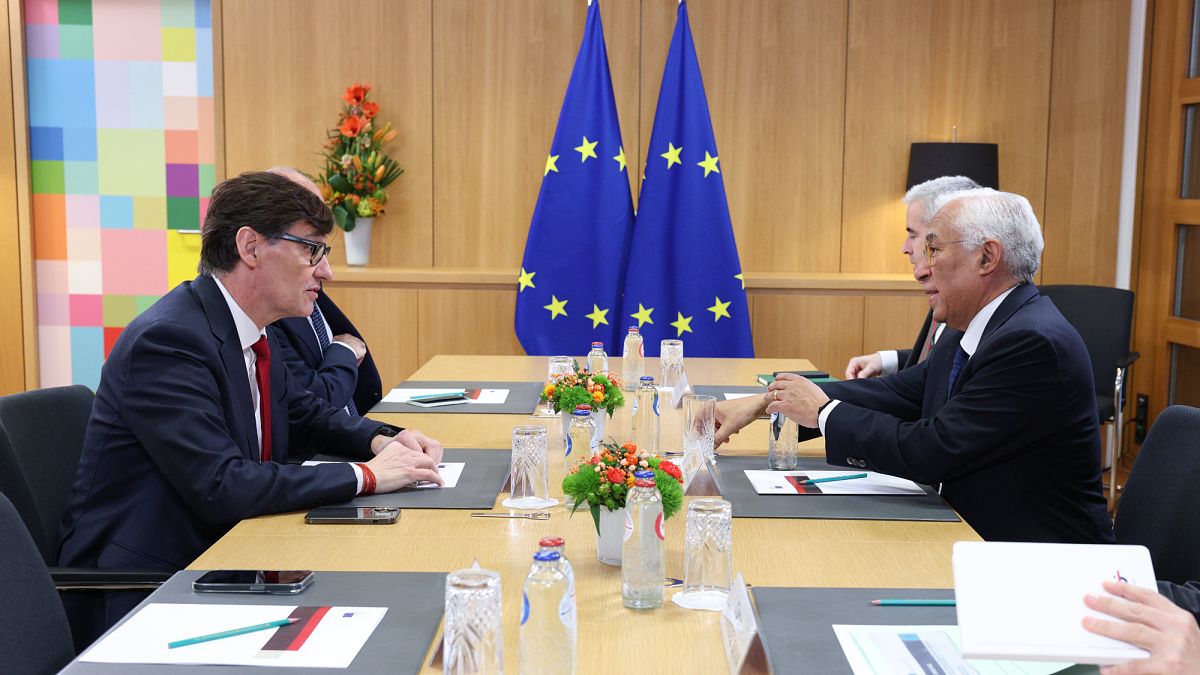

Catalan President Salvador Illa is advocating for the recognition of Catalan, Basque, and Galician as official languages of the European Union. This push aligns with his broader goal of strengthening the relationship between Catalonia and the EU, which he considers essential for the identity and representation of millions of citizens. With critical discussions ongoing among EU member states, the proposal has sparked political debate regarding its feasibility and implications for European unity.
| Article Subheadings |
|---|
| 1) The Push for Official Status |
| 2) The Financial Implications |
| 3) Political Challenges Ahead |
| 4) A New Political Direction |
| 5) Conclusion and Future Prospects |
The Push for Official Status
During his recent engagement in Brussels, Catalan President Salvador Illa articulated a strong commitment to making Catalan, Basque, and Galician official languages of the European Union. Spoken by approximately 10 million people across regions in Spain, Andorra, and parts of France and Italy, these languages represent a cultural legacy that Illa argues should be recognized at the EU level. He asserts that elevating these languages to official status sends a powerful message to citizens, affirming their place within the European mosaic. “Giving the official status to these languages means saying to the citizens of Catalonia, Galicia, and the Basque Country that they are part of Europe,” Illa expressed.
Currently, the EU recognizes 24 official languages, ensuring all of its legal documents are translated into each language. This existing framework, according to Illa, reinforces the respects for the diverse linguistic identities of European citizens. It is not merely a matter of translation but one of identity and cultural recognition. Illa stressed this point when he declared that “this is not about translating more or less documents; it is about respecting the identity of European citizens.” However, the proposal to add three new official languages requires unanimous support from all 27 EU member states, a challenge that Illa understands might complicate the process.
The Financial Implications
The European Commission has delivered a preliminary cost analysis indicating that implementing the proposal would incur an annual expense of approximately 132 million euros. This budget estimate, which breaks down to about 44 million euros for each language, would cover the necessary adaptations for documents, as well as the hiring of professional interpreters and translators. The financial aspect of this initiative has raised eyebrows among member states, especially considering ongoing economic pressures within the EU.
The Spanish government, under Pedro Sánchez, has assured EU officials that Spain is willing to bear these costs if their proposal is accepted. The current regulatory framework allows for the use of Catalan, provided prior arrangements are made; this was exemplified recently when Spain’s Industry Minister Jordi Hereu spoke Catalan in an EU Council meeting for the first time in two decades. The potential recognition of these languages would not only enhance their visibility but could also influence the way EU institutions manage linguistic diversity, potentially simplifying processes tied to translation and interpretation.
Political Challenges Ahead
Despite a strong case for linguistic recognition, Illa is acutely aware of the political challenges that may arise as discussions continue among EU nations. The proposal to elevate these languages’ status is interlaced with Spain’s domestic politics, particularly in the context of negotiations with pro-independence parties. The inclusion of Catalan, Basque, and Galician in discussions has been viewed skeptically in some quarters as a strategy to garner support amidst ongoing tensions regarding independence and regional autonomy.
Illa emphasized that this language initiative is not solely a political maneuver but rather a broad demand from a diverse population. “This is a shared demand not just from those in Catalonia but also in the Basque Country and Galicia,” he stated. The varying perceptions across EU nations—some seeing the request as a political tactic rather than a cultural necessity—could complicate how member states weigh the proposal and its reception within their own political climates.
A New Political Direction
Since assuming the presidency of Catalonia approximately six months ago, Illa has made his presence felt in Brussels. His new direction focuses on reinvigorating Catalonia’s relationship with the European Union, aiming to restart dialogues after years of political friction stemming from independence movements. With the appointment of Jaume Duch, a former European Parliament spokesperson, as his Minister of European Union and Foreign Affairs, Illa is intentionally signaling a shift towards collaboration and participation in European matters.
Illa’s ambitious agenda is centered around being actively involved in European construction, believing that cooperation is essential in facing the global challenges that the EU confronts today. His recent discussions with key leaders like António Costa, the President of the European Council, during his latest visit highlight his commitment to bridging any divides felt during Spain’s turbulent negotiations concerning regional autonomy. Illa’s leadership presents a departure from the previous administrations that often focused on independence and separation, underscoring a desire for integration and unity.
Conclusion and Future Prospects
In summary, the movement led by Salvador Illa to achieve official language status for Catalan, Basque, and Galician sparks significant discourse on identity, culture, and politics within the European Union. While the procedural complexities present an uphill battle requiring unanimous approval, the implications of such recognition extend beyond language. It marks an acknowledgment of the rich linguistic tapestry that makes up Europe, reinforcing the idea of unity in diversity. The road ahead, laden with political intricacies and financial considerations, will undoubtedly challenge advocates, yet the potential rewards in terms of cultural recognition and regional cohesion hold promising prospects for millions of EU citizens.
| No. | Key Points |
|---|---|
| 1 | Catalan, Basque, and Galician are proposed for recognition as official EU languages. |
| 2 | The proposal requires unanimous support from all 27 EU member states. |
| 3 | Estimated cost for implementation is around 132 million euros annually. |
| 4 | Political dynamics complicate the push for official status amid concerns of autonomy. |
| 5 | Illa emphasizes the importance of cultural identity and European unity in his advocacy. |
Summary
The campaign led by Catalan President Salvador Illa to elevate the status of Catalan, Basque, and Galician languages reflects a complex interplay of culture, politics, and economics within the European Union. This initiative not only aims to enhance the representation of regional languages but also emphasizes the importance of cultural cohesion in a rapidly changing world. As discussions progress, the ultimate decision will have far-reaching implications for identity politics within the EU and the ongoing dialogue about regional autonomy and unity.
Frequently Asked Questions
Question: What are the official languages being proposed for EU status?
The proposed languages for EU official status are Catalan, Basque, and Galician, which are spoken in various regions of Spain and in parts of other countries.
Question: How much will it cost to implement the new language status?
The estimated cost for implementing the recognition of these three languages as official EU languages is approximately 132 million euros annually, covering translation, interpretation, and documentation adaptation.
Question: What challenges does the proposal face?
The proposal faces challenges due to the requirement of unanimous support from all EU member states, alongside potential political implications tied to Spain’s regional autonomy issues.
