

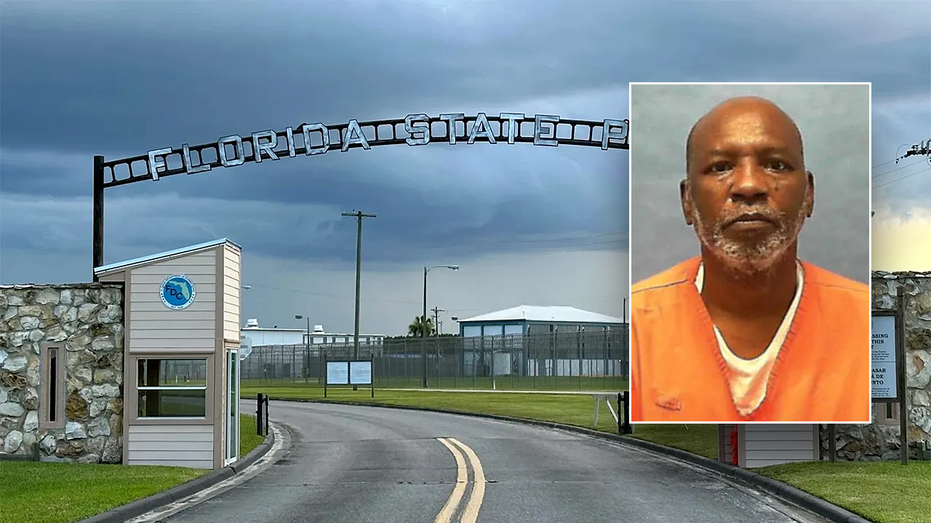

Florida executed 77-year-old William Reaves on October 20 for the 1986 killing of Indian River County sheriff’s deputy Richard Raczkoski. Reaves was pronounced dead at 6:12 p.m. at Florida State Prison near Starke following a three-drug lethal injection. The execution was Florida’s 18th of the year, putting the state close to last year’s record pace. Appeals from Reaves’ lawyers and more than 100 military veterans failed to halt the punishment.
| 1) | Execution follows decades-old deputy murder |
| 2) | Shooting began after a 911 call |
| 3) | Courts reject final appeals |
| 4) | Veterans challenge the execution |
| 5) | Florida approaches annual execution record |
Execution follows decades-old deputy murder
Reaves was put to death at Florida State Prison near Starke on Tuesday, October 20, after being convicted of first-degree murder. The case involved the September 1986 shooting of Raczkoski, an Indian River County sheriff’s deputy. Reaves did not make a final statement. About 30 seconds after the injection began, he took several deep breaths and stopped moving. Prison staff later checked for signs of life, and he was pronounced dead at 6:12 p.m.
The execution was carried out using Florida’s three-drug protocol, consisting of a sedative, a paralytic and a drug intended to stop the heart. The punishment ended a case that had remained active through multiple appeals and two separate trials.
Shooting began after a 911 call
According to court records, Reaves called 911 from a payphone at a convenience store in Vero Beach on September 23, 1986. Raczkoski responded to the call and spoke with Reaves at the scene. During the encounter, a gun fell from Reaves’ pants, leading to a struggle over the weapon.
Investigators said Reaves regained control of the gun and shot Raczkoski four times as the deputy attempted to flee. Raczkoski died from his wounds later that day. Reaves was convicted and sentenced to death about a year later, but the Florida Supreme Court overturned that conviction because of a conflict involving the prosecutor. A second trial produced another murder conviction and death sentence.
Courts reject final appeals
Reaves’ attorneys challenged the execution in state and federal courts, including arguments against Florida’s three-drug injection procedure. The Florida Supreme Court rejected his latest appeals the previous week. The U.S. Supreme Court denied both a request to stay the execution and a petition seeking review of the case on Tuesday, without providing an explanation.
Florida courts have previously upheld the state’s lethal injection protocol against similar legal challenges. The state’s method differs from the single-drug procedure used in Tennessee, where death row prisoner Christa Pike survived two doses of pentobarbital during a failed execution attempt the previous month before being hospitalized and later returned to prison.
Veterans challenge the execution
Defense lawyers also argued that jurors who recommended the death penalty were not told that the U.S. Department of Veterans Affairs had rated Reaves as 100% disabled because of post-traumatic stress disorder connected to his Army service during the Vietnam War.
More than 100 military veterans wrote to Florida Gov. Ron DeSantis on Monday asking him to halt the execution. Their appeal cited Reaves’ age, military service and disability rating. The governor did not stop the punishment. After witnessing the execution, Raczkoski’s brother, Marc Raczkoski, said his brother had finally received justice. Indian River County Sheriff Eric Flowers described the execution as closure rather than justice.
“Would we all be so lucky to be 77 years old and to die so peacefully? That’s not justice in any way, in my opinion,” Eric Flowers said.
Florida approaches annual execution record
Reaves became the eighth Florida prisoner over age 70 executed this year and the 18th person executed by the state in 2026. Florida has accelerated executions since 2025, when DeSantis signed a large number of death warrants and the state carried out 19 executions, a record for Florida since the death penalty was reinstated in 1976.
The state’s 2025 total represented approximately 40% of the 47 executions carried out across the United States that year. Florida has conducted more than half of the 32 executions nationwide so far in 2026. The state would match its 2025 record if Jesse Guardado, 64, is executed as scheduled on November 5 for a 2004 killing during a robbery.
| Number | Key Point |
|---|---|
| 1 | William Reaves was executed at age 77 for the 1986 murder of Deputy Richard Raczkoski. |
| 2 | The execution occurred at Florida State Prison near Starke on October 20. |
| 3 | State and federal courts declined to stop the lethal injection. |
| 4 | More than 100 veterans urged Gov. Ron DeSantis to grant a reprieve. |
| 5 | Florida is one execution away from matching its annual record of 19. |
Summary
Florida’s execution of William Reaves concludes a case that began with the killing of a sheriff’s deputy more than four decades ago. The punishment proceeded after courts rejected challenges involving the lethal injection protocol and Reaves’ military-related disability. It also underscored Florida’s unusually rapid use of the death penalty, with the state nearing its record annual total.
Frequently Asked Questions
Who was executed in Florida?
William Reaves, 77, was executed for the first-degree murder of Indian River County sheriff’s deputy Richard Raczkoski.
When and where did the execution occur?
Reaves was executed on October 20 at Florida State Prison near Starke and was pronounced dead at 6:12 p.m.
Why did veterans oppose the execution?
More than 100 veterans cited Reaves’ Army service, a 100% disability rating for service-related post-traumatic stress disorder and his age in asking Gov. Ron DeSantis to halt the execution.
