

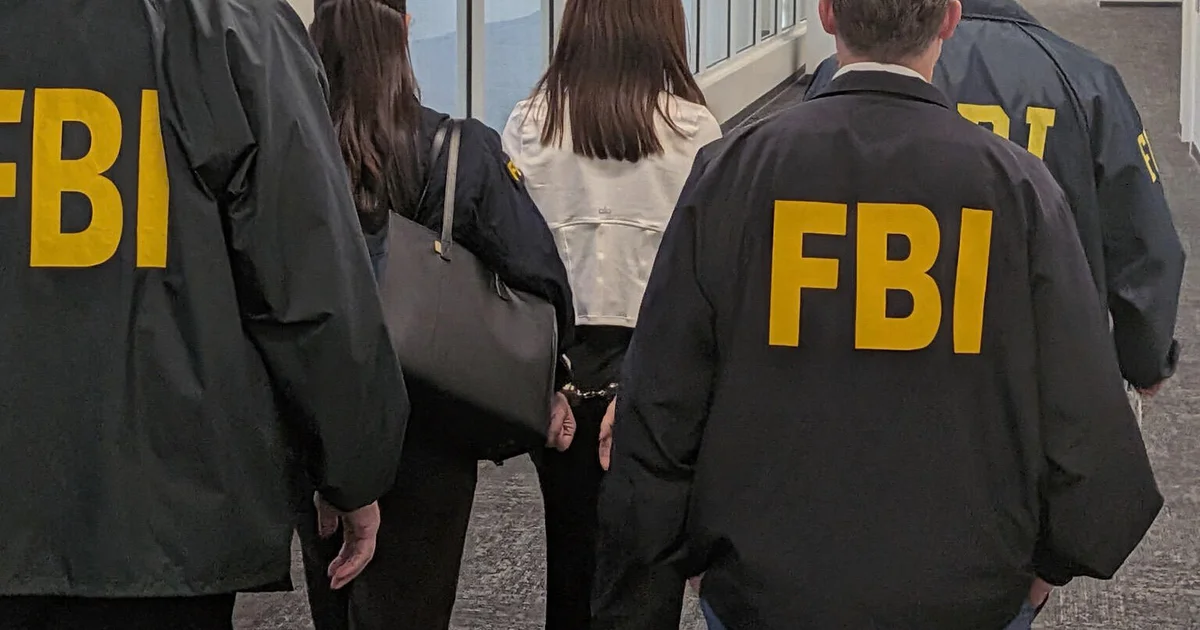

A suspected Chinese agent was brought before a federal court in Los Angeles on Monday, following her alleged surveillance activities targeting a Taiwanese official’s family last year. Wanying “Heather” Zhang, 34, an Orange County realtor, was arrested at Los Angeles International Airport as she attempted to board a flight to Shanghai, China. The FBI’s investigation revealed her involvement in an extensive operation that allegedly involved photographing the son of Taiwan’s president. Zhang now faces charges for acting as an unregistered agent of the Chinese government.
| Article Subheadings |
|---|
| 1) Background of the Arrest |
| 2) Details of the Surveillance Operation |
| 3) Legal Proceedings and Court Appearance |
| 4) The Role of Law Enforcement |
| 5) Implications of the Case |
Background of the Arrest
The events leading to the arrest of Wanying “Heather” Zhang unfolded when the FBI located her through intelligence regarding suspicious activities prior to her flight from Los Angeles to Shanghai on October 1, 2023. The agency’s investigation revealed that Zhang was allegedly involved in a mission to surveil Ting-Yu Lai, the son of Taiwanese President Ching-Te Lai. Ting-Yu Lai, who has deep connections in the United States, was deemed a significant target due to his close familial relations with Taiwan’s leadership.
The FBI’s interest in Zhang intensified when they believed she was working in concert with Beijing’s interests. Allegations emerged regarding a covert operation designed to monitor individuals connected to the Taiwanese government, raising alarm over the extent of foreign interference on U.S. soil.
Details of the Surveillance Operation
According to a criminal complaint filed by a member of the FBI’s counterintelligence unit in Los Angeles, Zhang and an accomplice reportedly traveled to the Seattle area in September 2022. Their covert mission focused on gathering intelligence at the suburban residence of Ting-Yu Lai, who reportedly attended college in the U.S. and now works for the multinational electronics firm Philips. Records from Taiwanese media indicate that he has a son with his wife Hsiao Chen.
The FBI claim includes details of text exchanges between Zhang and her alleged handlers within the Chinese government, indicating a well-coordinated surveillance attempt. In one specific incident, Zhang allegedly communicated through text, stating, “Saw him. Young male. It’s that young one,” and “I am videorecording,” while footage corroborated her presence at the Lai residence through video surveillance from a neighbor’s security camera.
These exchanges reveal not only Zhang’s intentions but also provide a framework that depicts the Chinese government’s systematic efforts to extend influence and conduct espionage operations. Additionally, evidence surfaced from a search of Zhang’s home in Irvine, California, where FBI agents were seen executing a search warrant, further amplifying the case.
Legal Proceedings and Court Appearance
Zhang’s initial court appearance came on October 2, 2023, where she was visibly calm, donning a tailored, white outfit. During her arraignment, she confirmed her name and acknowledged the charge of being an unregistered agent of the Chinese government. Legal representation was initially provided by public defender Chad Pennington, who conveyed to the court that Zhang was exploring options to obtain private legal counsel, leading to a rescheduled detention hearing on October 4, 2023.
At the hearing, Zhang was remanded to custody, and U.S. District Judge Steve Kim permitted her a delay to secure private representation, a move which signals the potential complexity of the legal battle ahead. The presence of her husband, Edric Ding, alongside attorney Elaine Lori, during proceedings indicated familial support, although both refrained from publicly commenting on the case as they navigated the media swarm outside the courthouse.
The Role of Law Enforcement
The apprehension of Zhang by the FBI was part of a concerted effort to safeguard national security and uphold the principles of justice against foreign adversaries. The prosecution team consisted of three federal prosecutors from the Justice Department, including Scott Lara, leading the charge and representing national interests against foreign espionage activities in this case. Following Zhang’s arrest, U.S. Attorney for the Central District of California, Bill Essayli, publicly denounced the surveillance attempt, elucidating the brazen tactics employed by foreign agents.
During the search of Zhang’s residence, local neighbors observed extensive FBI activity, noting that multiple agents were engaged in the investigation, further reflecting the seriousness of the claims. One witness described watching federal agents search her home, underscoring the meticulous approach the FBI takes in addressing national security threats posed by foreign operatives.
Implications of the Case
Zhang’s case poses significant implications not just for her personally but also for U.S.-China relations and the ongoing concerns over foreign influence in American political affairs. This incident sits atop a growing number of similar cases where individuals are implicated in espionage, echoing broader geopolitical tensions between the United States and China, particularly regarding Taiwan.
Assistant Director Roman Rozhavsky of the FBI’s Counterintelligence and Espionage Division articulated the dire need for vigilance against transnational repression, asserting that the arrest signified a commitment to defending democratic values and sovereignty. He emphasized that the case is a reflection of the ongoing struggle against foreign efforts to undermine U.S. interests and the necessity of a robust response from law enforcement to counter these threats.
| No. | Key Points |
|---|---|
| 1 | Wanying “Heather” Zhang was arrested for allegedly acting as an unregistered agent for the Chinese government. |
| 2 | Zhang’s activities included surveilling Taiwanese President Ching-Te Lai’s son in Seattle. |
| 3 | The FBI’s affidavit included evidence of text messages exchanged between Zhang and Chinese government officials. |
| 4 | Local law enforcement conducted a search at Zhang’s residence in Irvine, California, highlighting the severity of the charges. |
| 5 | The case raises concerns over foreign espionage activities in the United States amid growing U.S.-China tensions. |
Summary
The arrest of Wanying “Heather” Zhang for allegedly acting as an unregistered foreign agent underscores the ongoing threats posed by espionage and foreign influence operations in the United States. With serious ramifications for U.S.-China relations and the delicate nature of Taiwan’s political landscape, the case exemplifies the challenges facing national security and highlights the commitment of U.S. law enforcement to safeguard democratic values. As the legal proceedings unfold, they will undoubtedly draw attention to broader concerns regarding the nation’s ability to protect itself from foreign threats and maintain its sovereignty.
Frequently Asked Questions
Question: What were the specific charges against Wanying “Heather” Zhang?
Zhang faces charges for allegedly acting as an unregistered agent of the Chinese government, having participated in a covert surveillance operation targeting a Taiwanese official’s family.
Question: How did the FBI become aware of Zhang’s activities?
The FBI’s investigation was triggered by intelligence suggesting Zhang was involved in espionage activities, particularly related to surveilling relatives of Taiwanese government officials.
Question: What implications does this case have for U.S.-China relations?
This case adds to the growing tensions between the United States and China regarding espionage, as it highlights fears of foreign interference in political matters, particularly in relation to Taiwan and its leadership.
