

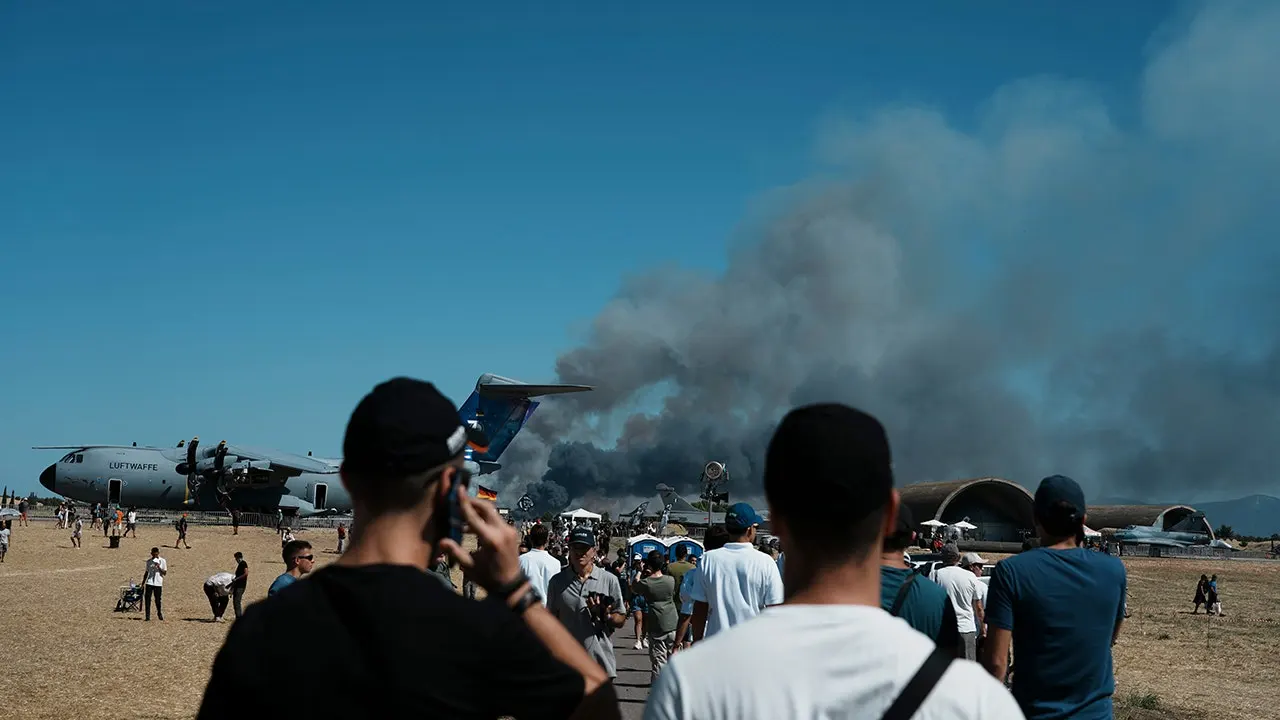

A tragic event unfolded during the Athens Flying Week air show on Saturday, as a Hellenic Air Force F-4 Phantom jet crashed at Tanagra Air Force Base, killing both pilots on board. The incident occurred during a low-altitude maneuver while thousands of spectators watched from the ground. Fortunately, no injuries to civilians were reported, but the crash has raised concerns about the safety of aerial performances.
| Article Subheadings |
|---|
| 1) Details of the Crash Incident |
| 2) Eyewitness Accounts and Initial Reactions |
| 3) Responses from Officials and the Air Force |
| 4) A Historic Context of Air Shows in Greece |
| 5) Immediate Aftermath and Safety Measures |
Details of the Crash Incident
The F-4 Phantom jet was conducting a low-altitude maneuver when it suddenly crashed into the ground, resulting in a significant explosion and subsequent fire. Officials reported that the aircraft hit the ground only a few minutes after takeoff, tragically killing both pilots, who were later identified by the Hellenic Air Force. The aircraft was known for its agility and speed but, like all military jets, it came with inherent risks during high-performance displays.
Witnesses reported seeing the jet burst into flames upon impact, creating a large plume of black smoke that rose into the sky. The quick response of emergency crews included 11 water-dropping planes and helicopters, alongside 85 firefighters who worked tirelessly to contain the blaze that followed the crash. Fortunately, the quick deployment of these teams ensured that no onlookers in the vicinity were injured, despite the proximity of the incident to thousands of air show attendees.
Eyewitness Accounts and Initial Reactions
Eyewitnesses described the scene as surreal and shocking. One attendee recalled that the jet had not been airborne for more than three minutes when they witnessed it go into a rapid descent.
“We were all stunned. It hadn’t been airborne for more than three minutes,”
an eyewitness stated to a local broadcaster. This sentiment reflects the disbelief felt by many who were present at the event, as anticipation filled the air before the tragic turn of events.
The atmosphere that day had been festive, with crowds gathered to watch advanced aerial maneuvers and showcase the capabilities of the Hellenic Air Force. The abrupt end to such an anticipated event left many in shock and mourning, particularly for the two families of the deceased pilots.
Responses from Officials and the Air Force
In the aftermath of the crash, the Greek Prime Minister, Kyriakos Mitsotakis, expressed condolences, highlighting the risks taken by aviators daily as they protect the skies of Greece.
“The sense of grief is widespread, and our thoughts are with the families of the two pilots we lost,”
he stated. The Prime Minister’s remarks underscore the sacrifices and dangers military pilots routinely face, often overlooked during peacetime.
Additionally, the Hellenic Air Force announced a period of mourning lasting three days in honor of the pilots. The incident has prompted discussions about enhancing safety measures during air shows, especially concerning military aircraft, which are often observed performing complex aerial stunts.
A Historic Context of Air Shows in Greece
Air shows have been a significant part of Greece’s aviation heritage, showcasing the skill and technology of military and civilian aviation. They help promote public interest in aerospace and demonstrate the advanced capabilities of the Hellenic Air Force. However, incidents like this tragic crash remind us of the risks associated with air performances, especially involving high-speed military jets like the F-4 Phantom.
Historically, airshows both raise excitement and awareness about the military while giving aviation enthusiasts and the general public a chance to appreciate the art and science of flying. However, the balance between spectacle and safety is a critical concern that needs continuous evaluation and stringent safety protocols to prevent future tragedies.
Immediate Aftermath and Safety Measures
Following the crash, the organizers of the Athens Flying Week decided to cancel the remaining events of the day and evacuate the area immediately to ensure the safety of all attendees. Evacuation procedures were swiftly implemented, with security forces assisting attendees to leave the venue calmly and safely.
In light of this unfortunate incident, discussions about regulatory safety measures are expected to take center stage. Enhanced protocols for future air shows, especially involving military aircraft, may include limits on specific maneuvers during demonstrations, comprehensive pilot training focused on performance safety, and immediate emergency response reviews to enhance preparedness.
| No. | Key Points |
|---|---|
| 1 | A Hellenic Air Force F-4 Phantom crashed during Athens Flying Week, killing both pilots. |
| 2 | Emergency services responded quickly, and no spectators were harmed. |
| 3 | Eyewitnesses expressed shock as the accident unfolded shortly after takeoff. |
| 4 | Officials, including Prime Minister Kyriakos Mitsotakis, expressed condolences and highlighted flight safety. |
| 5 | The air force declared a three-day mourning period, reflecting the community’s grief. |
Summary
The tragic crash of the Hellenic Air Force F-4 Phantom during the Athens Flying Week illustrates both the risks involved in military aviation and the significance of rigorous safety standards in air shows. As the nation mourns the loss of two dedicated aviators, there is an opportunity for reflection and improvement in ensuring the safety of not only the pilots but also the audience attending these spectacular yet perilous events. The community’s response, combined with calls for a thorough investigation into the crash, indicates a potential shift toward enhanced safety measures in the future.
Frequently Asked Questions
Question: What caused the plane crash during the Athens air show?
The crash occurred during a low-altitude maneuver shortly after takeoff, resulting in the pilots losing control of the aircraft.
Question: Were there any injuries to civilians during the incident?
No civilians were injured as a result of the crash, thanks to rapid emergency response and evacuation procedures.
Question: What steps are being taken to ensure safety at future air shows?
In light of the crash, there will likely be a review of safety protocols, including restrictions on maneuvers and improved emergency response measures.
