

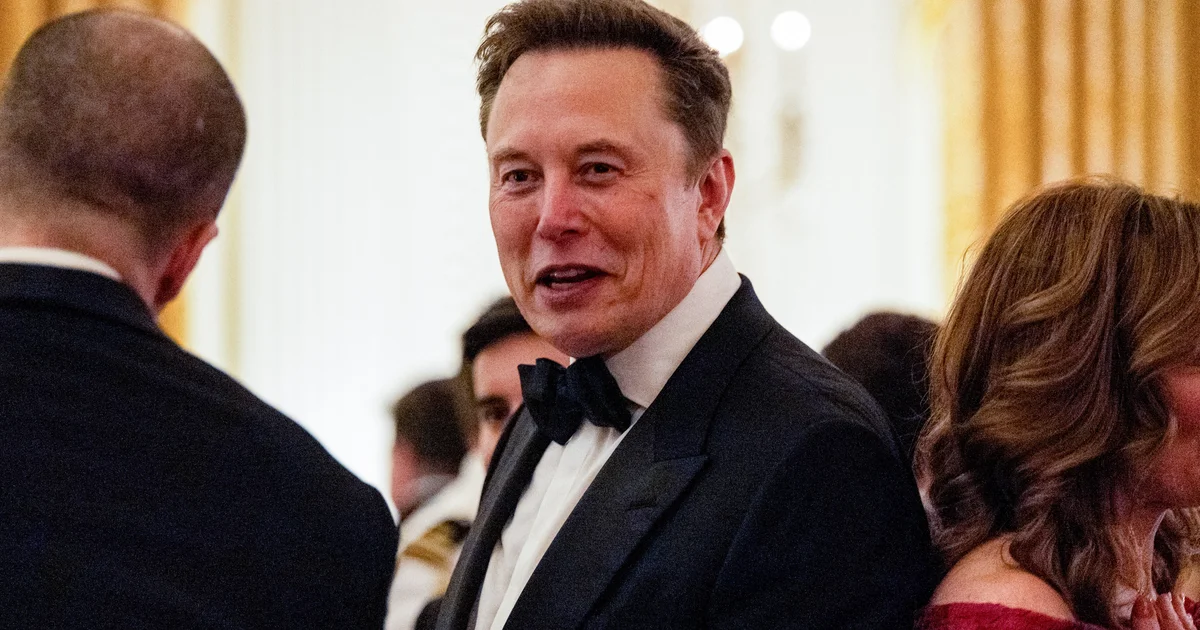

In a notable development for both the automotive and aerospace industries, Elon Musk announced that SpaceX and Tesla are exploring a potential merger. This significant proposal could result in a business combination valued at approximately $5 trillion, making it one of the largest deals in corporate history. During a recent earnings call, Musk highlighted the strategic benefits of such a merger, noting the need for both companies to collaborate more closely on technology and innovation.
| Article Subheadings |
|---|
| 1) Potential Valuation of the Merger |
| 2) Strategic Rationale Behind the Merger |
| 3) Potential Hurdles to the Merger |
| 4) Market Reaction to the Merger Announcement |
| 5) Future Projections for the Combined Entity |
Potential Valuation of the Merger
The proposed merger between SpaceX and Tesla is projected to reach a staggering valuation of nearly $5 trillion, according to analysis from industry experts. Dan Ives, a partner and senior managing director at an investment firm, indicated that this merger could surpass any previous corporate deals in history. Currently, SpaceX is valued at around $1.98 trillion, while Tesla holds a market capitalization of approximately $1.5 trillion. This potential merger is expected to reshape the market landscape significantly, requiring not just unification of assets, but also the alignment of strategic interests to ensure the viability of the combined entity.
To facilitate an agreement, Tesla shareholders would likely demand a premium for their shares, which could further inflate the proposed valuation. Ives noted that for shareholders to approve the merger, Tesla’s share price may need to increase to the range of $500 to $550 per share. This price adjustment would not only reflect the potential contributions from both companies but would also provide a safety net for shareholders wary of the merger’s implications. This valuation scenario positions the combined entity to rival major corporations like Nvidia and Apple, solidifying its place among the most valuable businesses globally.
Strategic Rationale Behind the Merger
The strategic justification for merging SpaceX with Tesla lies in the increasingly interconnected future of technology, particularly with regard to advancements in artificial intelligence (AI). Musk has emphasized the importance of preparing for a future where AI, or as he refers to it, “super intelligence,” plays a critical role in everyday life. A merger could pave the way for collaboration on significant technological fronts, such as software development, chip design, robotics, and more.
During the earnings call, Musk pointed out,
“There’s a lot to be gained from cooperating on developing super intelligence software, chip design, the Terafab obviously, robotics, mass to orbit with the Starmind constellation.”
While Tesla remains dedicated to electric vehicle manufacturing, the company is also transitioning to focus more on the production of advanced autonomous products like self-driving vehicles and humanoid robots. Musk envisions that in the near future, Tesla could produce up to a million humanoid robots annually as part of this transition.
This shift in focus ties in with SpaceX’s AI unit, known as xAI, which has developed Grok, an AI-based chatbot. The planned Terafab chip factory will serve as a vital link between both companies, ultimately manufacturing semiconductors essential for their operations. The merger aims to harness the collective strengths of both companies to build a vertically integrated technology powerhouse.
Potential Hurdles to the Merger
Despite the ambitious plans for a merger, various challenges may prevent it from materializing. On the earnings call, Musk clarified that the merger is not a certainty. He specified that a significant majority of Tesla shareholders would need to approve the merger for it to proceed. Acknowledging the high stakes involved, Musk cautioned that “the shareholders have to be supportive of this, and particularly on the Tesla side, we will need a 50% vote of all shares, not just those who vote, but of all shareholders.” This stringent requirement establishes a major hurdle for achieving consensus among shareholders, many of whom may have differing opinions regarding the merger’s merits.
Industry analysts remain cautiously optimistic, with Ives estimating an 80% to 90% chance that the merger will materialize by the end of 2027. However, this optimism hinges on the successful navigation of potential challenges, including aligning both companies’ interests, addressing shareholder concerns, and ensuring mutual benefit from the proposed integration.
Market Reaction to the Merger Announcement
Upon the announcement of the merger exploration, market reactions were notably positive. Tesla’s stock price saw an increase of $14.01, or 3.8%, bringing its price to $387.72. Similarly, SpaceX shares jumped by $14.62, equating to a 9.9% rise, increasing their market value to $162.41 in trading that afternoon. These boosts in stock prices indicate robust investor confidence in the perceived advantages of the merger.
Market analysts speculate that the optimistic reaction reflects a belief in the potential synergies from combining the innovative faculties of both companies. Investors are also likely responding to Musk’s track record of successful ventures and his ability to steer companies towards previously unimagined heights.
While immediate stock price movements signal strong investor enthusiasm, a deeper analysis of long-term potential remains essential. Experts will be closely examining how the merger could redefine both companies’ future trajectories and their competitive positions within their respective industries.
Future Projections for the Combined Entity
If the merger proceeds, the combined SpaceX and Tesla entity is projected to emerge as a formidable player across multiple sectors, particularly in automotive and aerospace. The integrated capabilities in AI, electric vehicle technology, and space exploration are set to create a powerful synergy that could redefine industry standards.
Musk’s ambition for creating an “autonomous future” may take on new dimensions within a merged entity that leverages resources from both companies. By aligning their technological expertise, the merger could facilitate the rapid development and scaling of groundbreaking technologies, including AI-driven vehicles and sophisticated space exploration technologies.
Such advancements could position the merged company as a leader in the race toward innovation, enhancing its competitive edge against other major players in the field. Moreover, combined resources could pave the way for enhanced investment into research and development, fostering a more robust ecosystem for continued technological advancement.
| No. | Key Points |
|---|---|
| 1 | Elon Musk announced that SpaceX and Tesla are exploring a potential merger valued at nearly $5 trillion. |
| 2 | The proposed merger could yield significant advancements in AI and robotics technologies. |
| 3 | Shareholder approval is critical, requiring at least 50% support from Tesla shareholders. |
| 4 | Market reaction was positive, with significant stock price increases for both SpaceX and Tesla. |
| 5 | Future projections indicate the merged entity could redefine competitive landscapes in automotive and aerospace industries. |
Summary
The exploration of a merger between SpaceX and Tesla represents a pivotal moment in the intersection of technology, space exploration, and automotive innovation. With a potential valuation of $5 trillion, this merger could not only redefine market expectations but also set a new standard in technological collaboration. While not without hurdles, the prospects of combined expertise in AI and automation signal an exciting future for both companies. Investors and industry analysts will be closely monitoring developments as stakeholders weigh the strategic advantages against the challenges of navigating shareholder consensus.
Frequently Asked Questions
Question: What are the primary benefits of a SpaceX-Tesla merger?
The primary benefits include enhanced collaboration on AI and robotic technologies, as well as potential cost savings through combined operations and resources. This merger positions both companies to innovate in their respective fields more efficiently.
Question: How would Tesla shareholders be impacted by the merger?
Tesla shareholders may see a premium on their shares if the merger is approved, as the value could reflect the strategic advantages of merging with SpaceX. However, they will need to vote for the merger to take effect.
Question: What challenges might impede the merger process?
The main challenges include securing the necessary shareholder approval from Tesla, addressing potential concerns from investors, and aligning the strategic interests of both companies to ensure mutual benefits.
