

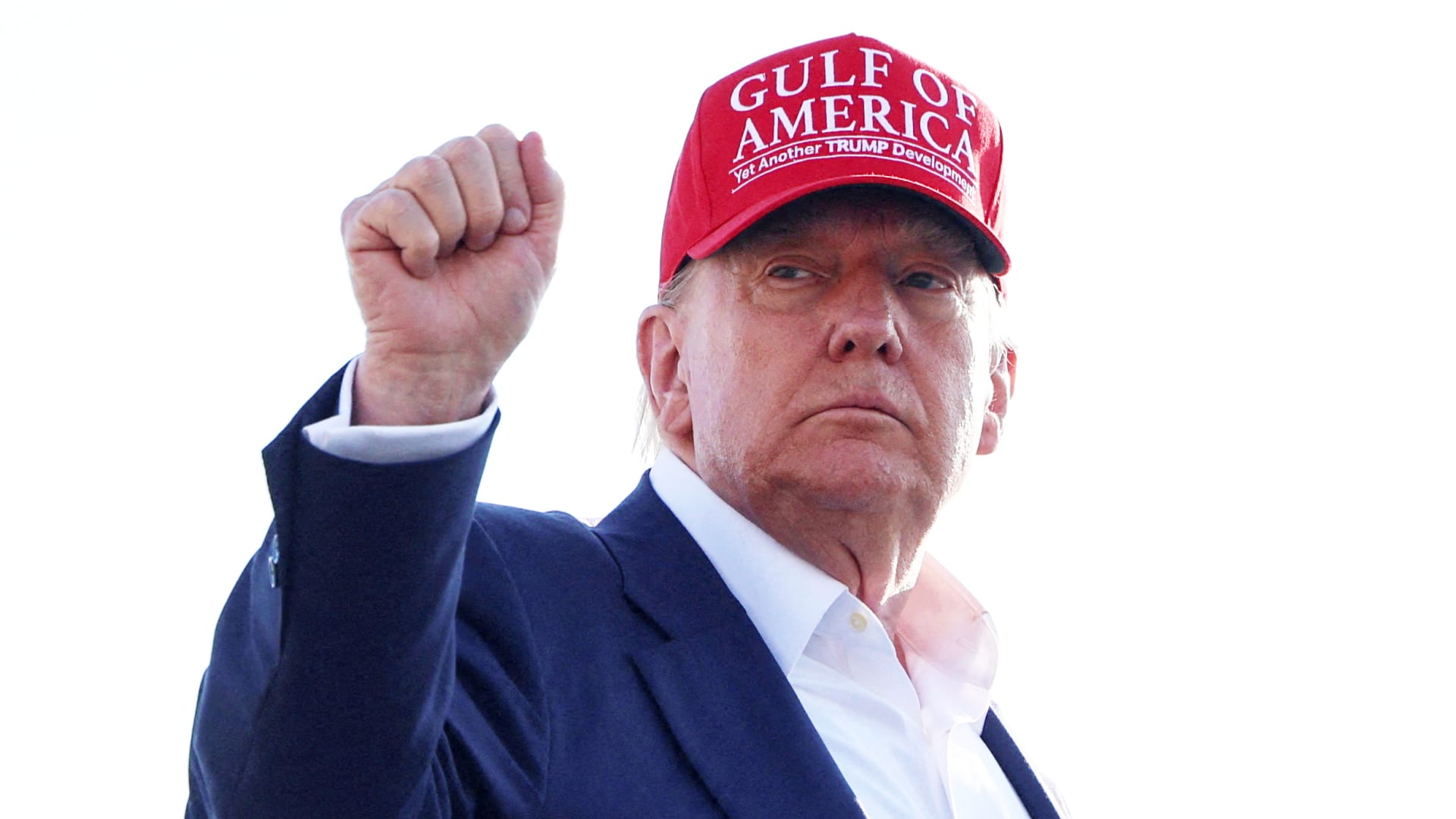

Early Thursday morning, the U.S. House of Representatives engaged in a final debate regarding a significant spending package proposed by President Trump. After Republican lawmakers initially resisted, a breakthrough came as they eventually supported the bill, with House Speaker Mike Johnson playing a key role in unifying dissenters. The motion to start the final debate passed as a result of intense negotiations, marking a pivotal moment for Republican leadership. If the bill successfully clears the House vote later today, it will be sent to Trump for signing into law.
| Article Subheadings |
|---|
| 1) The Path to Debate |
| 2) Breakdown of Voting Dynamics |
| 3) Opposition from the Democrats |
| 4) Economic Implications of the Bill |
| 5) Future of Trade Policies |
The Path to Debate
The U.S. House of Representatives commenced a pivotal final debate early Thursday morning, marking a significant step forward for the proposed megabill introduced by President Trump. This session followed a night of intense discussions led by Republican Speaker Mike Johnson, who worked diligently to unite a faction of House lawmakers that had previously opposed the spending package. The initial push for a motion to debate passed around 3:30 a.m. ET after hours of negotiations and persuasion, aimed at resolving a deadlock that had stalled progress.
Lawmakers were eager to reach an agreement as they recognized the bill’s importance not only for quickening federal operations but also for maintaining party unity. Some Republican members had strong objections to certain elements of the legislation, but Johnson’s efforts played a crucial part in persuading them to align with the leadership. This demonstrated both the challenges and strategies involved in handling intra-party disagreements as lawmakers strove for an overall consensus.
Breakdown of Voting Dynamics
When the motion for final debate was put to a vote, it narrowly passed with a count of 219 to 213. The sharp political divisions were evident as only one moderate Republican, Rep. Brian Fitzpatrick of Pennsylvania, joined Democrats in opposing the motion. This reflected a fragmented Republican party grappling with internal ideological conflicts over the proposed spending bill. Speaker Johnson’s role was seen as essential in rallying disparate factions within the party, cementing his leadership position as negotiations churned on during the night.
While many Republicans welcomed the opportunity to proceed with debate, frustration lingered among others, including President Trump, who expressed impatience over the slow progress. His public statements emphasized the urgency of moving forward, noting that Republicans should have found common ground with relative ease. “FOR REPUBLICANS, THIS SHOULD BE AN EASY YES VOTE. RIDICULOUS!!!” he tweeted after 1 a.m. ET.
Opposition from the Democrats
Within the walls of Congress, Democrats unified against the bill, condemning its potential impacts and rallying behind constituent stories that exemplified the risks posed by cutting essential programs. Rep. Gabe Amo of Rhode Island countered the reforms, arguing that the wealthy would disproportionately benefit from the proposed tax cuts while working-class Americans might suffer dire consequences. Reacting to the bill during the debate, he remarked, “The top 1% are salivating over getting an extra $300,000 per year because of this dangerous bill. Billionaires win. 17 million Americans will lose their health insurance.”
House Minority Leader Hakeem Jeffries extended his remarks over substantive periods, showcasing poignant tales of individuals whose access to health coverage relies heavily on programs targeted for deep cuts. Jeffries’ testimonies brought a human dimension to the debate, illustrating how legislative decisions direct consequences for Americans across the country. The Democratic critiques highlight the stark contrasts between party ideologies, particularly concerning welfare and economic disparities.
Economic Implications of the Bill
As the momentum grew around the proposed legislation, concerns mounted over its implications for the economy. The Congressional Budget Office provided unsettling forecasts that the new measure could add $3.4 trillion to the national debt over the next decade, a significant escalation from the current $36.2 trillion debt. The gravity of these projections instigated considerable concern among fiscal conservatives, some of whom were willing to approve the measure while voicing apprehension over national spending habits.
The bill seeks to not only extend tax cuts reminiscent of former President Trump’s initial administration but also proposes substantial reforms in how the renewable energy industry accesses tax credits. This carries potential long-term consequences for sustainable development initiatives while reshaping the economic landscape. Detractors argue this is a step backward, fostering inequalities within states and communities, leading to a wider gap between affluent and marginalized populations.
Future of Trade Policies
In a broader context, the backdrop of this legislative struggle underscores President Trump’s ongoing emphasis on protectionist trade policies. With a commitment to implement reciprocal tariffs on important U.S. trade partners projected for July 9, the economic dialogue within the House speaks volumes about conflicting national priorities. The push for sweeping tax measures coincides with these trade ambitions, posing further questions about the crisscrossing impacts on domestic economic stability.
As legislators grapple with monumental financial packages, trade dynamics shape the considerations of economic maneuvering across various sectors. Critics fear these approaches may only deepen division between economic layers and amplify tensions in international trade relations crucial for the country’s global standing. These complex interdependencies thus play a significant role in framing future discussions on national policy approaches.
| No. | Key Points |
|---|---|
| 1 | The U.S. House began a pivotal debate on President Trump’s spending package early Thursday. |
| 2 | House Speaker Mike Johnson played a significant role in bringing together dissenting Republicans. |
| 3 | Democrats uniformly opposed the bill, fearing it would exacerbate economic inequalities. |
| 4 | The Congressional Budget Office warned the bill could significantly increase national debt. |
| 5 | Protectionist trade policies introduced by Trump further complicate economic discussions. |
Summary
The ongoing debate in the House of Representatives surrounding President Trump’s proposed spending bill exemplifies significant political maneuvering amid stark ideological divides. The implications of this measure could redefine fiscal responsibility and fundamentally reshape social safety nets across the country. As congressional leaders grapple with these issues, the approaching votes will likely illuminate pathways forward, establishing first steps in policy alterations expected to resonate throughout the economy for years to come.
Frequently Asked Questions
Question: What are the main components of the proposed spending bill?
The proposed bill seeks to extend tax cuts from Trump’s previous presidency, cut social safety nets, and change how the renewable energy sector accesses tax credits.
Question: Why are Democrats opposing the bill?
Democrats oppose the bill primarily because they believe it disproportionately benefits the wealthy while risking health insurance for millions of Americans.
Question: What impact could this bill have on the national debt?
The Congressional Budget Office estimates the bill could add $3.4 trillion to the national debt over the next decade.
