

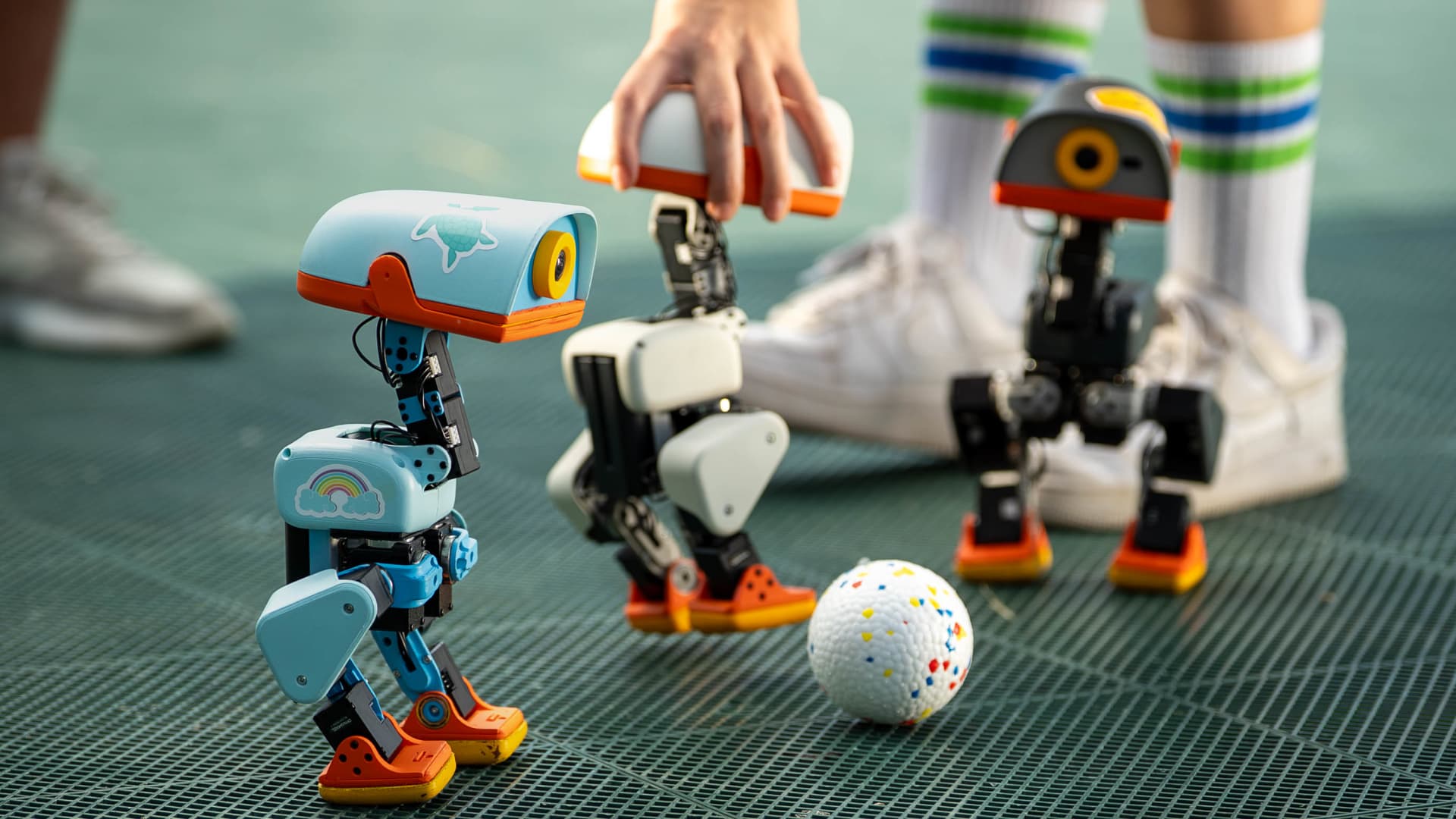

A new wave of excitement surrounds the launch of the Microduck personal robot, a collaboration between Hugging Face and its French subsidiary Pollen Robotics. With over 10,000 units sold within a week of its release and sales exceeding $5 million, the demand for this innovative product has significantly impacted its delivery timeline, pushing it beyond the initial promise of a Christmas 2026 arrival. Featuring advanced technology powered by Shanghai-based Rockchip, the Microduck represents a fresh blend of consumer appeal and developmental capabilities in the realm of robotics.
| Article Subheadings |
|---|
| 1) Overview of the Microduck Technology |
| 2) Sales Surge and Market Impact |
| 3) Features and Capabilities of Microduck |
| 4) Competitive Landscape in Robotics |
| 5) Future Prospects and Innovations |
Overview of the Microduck Technology
The Microduck robot, developed by Hugging Face’s French subsidiary Pollen Robotics, is a state-of-the-art personal robot that combines advanced technology with user-friendly features. It is powered by Rockchip’s RK3566 processor, which utilizes technology licensed from the British company ARM. This partnership illustrates the intricate nature of global technology supply chains, showcasing how interconnected different organizations are within the high-tech industry. The Microduck robot embodies innovation in consumer robotics and serves both entertainment and educational purposes.
Rockchip, a prominent vendor for AI applications running on devices, has ensured that the Microduck is equipped with a powerful chip capable of handling multiple tasks. Chief analyst Lian Jye Su from Omdia noted that Rockchip’s products are typically used for machine vision and object recognition, which are essential capabilities for consumer-friendly robots like the Microduck. The use of ARM technology ensures that performance remains robust while maintaining competitive pricing.
Sales Surge and Market Impact
Since its launch, the Microduck has rapidly gained popularity, with over 10,000 units sold and more than $5 million in revenue reported within a week of its release. This unprecedented demand has caused delivery times for new orders to exceed original estimates, sparking concerns among consumers eager to receive their products by the anticipated release date in Christmas 2026. The sales surge reflects not only consumer interest but also the effectiveness of marketing strategies employed by Hugging Face and Pollen Robotics.
The immediate popularity of the Microduck has significant implications for the robotics market. In a landscape filled with various robotic products, achieving such a high number of sales in a short period reinforces the Microduck’s appeal to consumers looking for innovative technology solutions at accessible prices. However, the rapid sales increase also raises questions about production and supply chain management as the company navigates through heightened consumer expectations.
Features and Capabilities of Microduck
The Microduck isn’t merely a consumer toy; it is a multifunctional device offering various features that appeal to both young and adult audiences. Weighing 1.76 pounds (800g) and shaped like a duck, this interactive robot is designed to be engaging and educational. It works on open-source software that allows it to learn from virtual simulations and goal-driven tasks, positioning it as both a teaching tool and a source of entertainment.
One of the standout specifications of the Microduck is its on-board 1 TOPS NPU (neural processing unit), which signifies its capability to perform AI operations efficiently. Pollen Robotics has leveraged this technological feature, stating that it enables the Microduck to carry out sophisticated tasks that can encourage creativity and learning. The presence of this NPU allows the robot to operate independently, processing information without the need for cloud connectivity, thus enhancing security and performance.
Competitive Landscape in Robotics
The Microduck enters a competitive market for personal robots, where various companies are also developing innovative devices priced at premium consumer rates. Notably, startup Zeroth has recently launched a humanoid robot at a price point of 8,888 yuan (approximately $1,200), aiming to capture a similar market segment with advanced virtual learning capabilities. As the competition heats up, the distinguishing factors could involve technological superiority, price, and added features that cater specifically to consumer needs.
Other companies such as Mondo Robotics are also participating in this burgeoning market, exemplified by their crowdfunding campaign for a camera-equipped robot that has demonstrated an impressive ability to exceed its funding goals significantly. In contrast, the Microduck’s design and function appeal broadly to families and children, making it a prime candidate for gaining market traction amidst rising competition.
Future Prospects and Innovations
As the Microduck robot continues to gain traction, its future prospects appear optimistic. The robotics market is poised for significant expansion, fueled by advancements in AI and user-friendly technologies. The continued integration of robust processing capabilities and advanced machine-learning algorithms suggests that we are only beginning to explore the potential applications of robots like the Microduck.
Hugging Face’s acquisition of Pollen Robotics last year highlights the company’s commitment to driving innovation in the field. The potential for future iterations of Microduck, as well as entirely new robotic products, could lead to further advancements in technology and consumer accessibility. Additionally, as robotics becomes more commonplace in everyday settings, the impact on education, entertainment, and user interaction will be profound.
| No. | Key Points |
|---|---|
| 1 | The Microduck robot has surpassed 10,000 units sold shortly after its launch, indicating strong market demand. |
| 2 | Powered by Rockchip technology, the Microduck offers advanced capabilities, setting it apart from competitors in the market. |
| 3 | Production and supply chain logistics are being challenged due to the overwhelming consumer interest in the Microduck. |
| 4 | Competition in the personal robotics market is intensifying with new entrants offering innovative solutions at premium prices. |
| 5 | The future of robotics appears promising, with a focus on integrating user-friendly technology and enhancing AI capabilities. |
Summary
The launch of the Microduck robot showcases a significant advancement in the consumer robotics landscape, driven by rapid sales and innovative technology. This project underlines the interconnection of global technology supply chains and sets a new precedent for personal robots in the market. As it gains popularity, the Microduck not only offers entertainment but also a platform for exploration and learning, potentially shaping the future of consumer robotics.
Frequently Asked Questions
Question: What is the Microduck robot?
The Microduck robot is a programmable personal robot developed by Hugging Face’s subsidiary Pollen Robotics, designed to provide interactive experiences and learning opportunities using advanced AI technology.
Question: How does the Microduck’s technology work?
The Microduck is powered by the Rockchip RK3566 processor, which incorporates ARM technology, allowing it to perform various AI tasks independently without relying on cloud services, enhancing its security and efficiency.
Question: What are the implications of the growing popularity of products like the Microduck?
The rising demand for the Microduck indicates a growing interest in personal robotics, potentially leading to innovations in technology, improvements in education, and new consumer experiences in the robotics market.
