

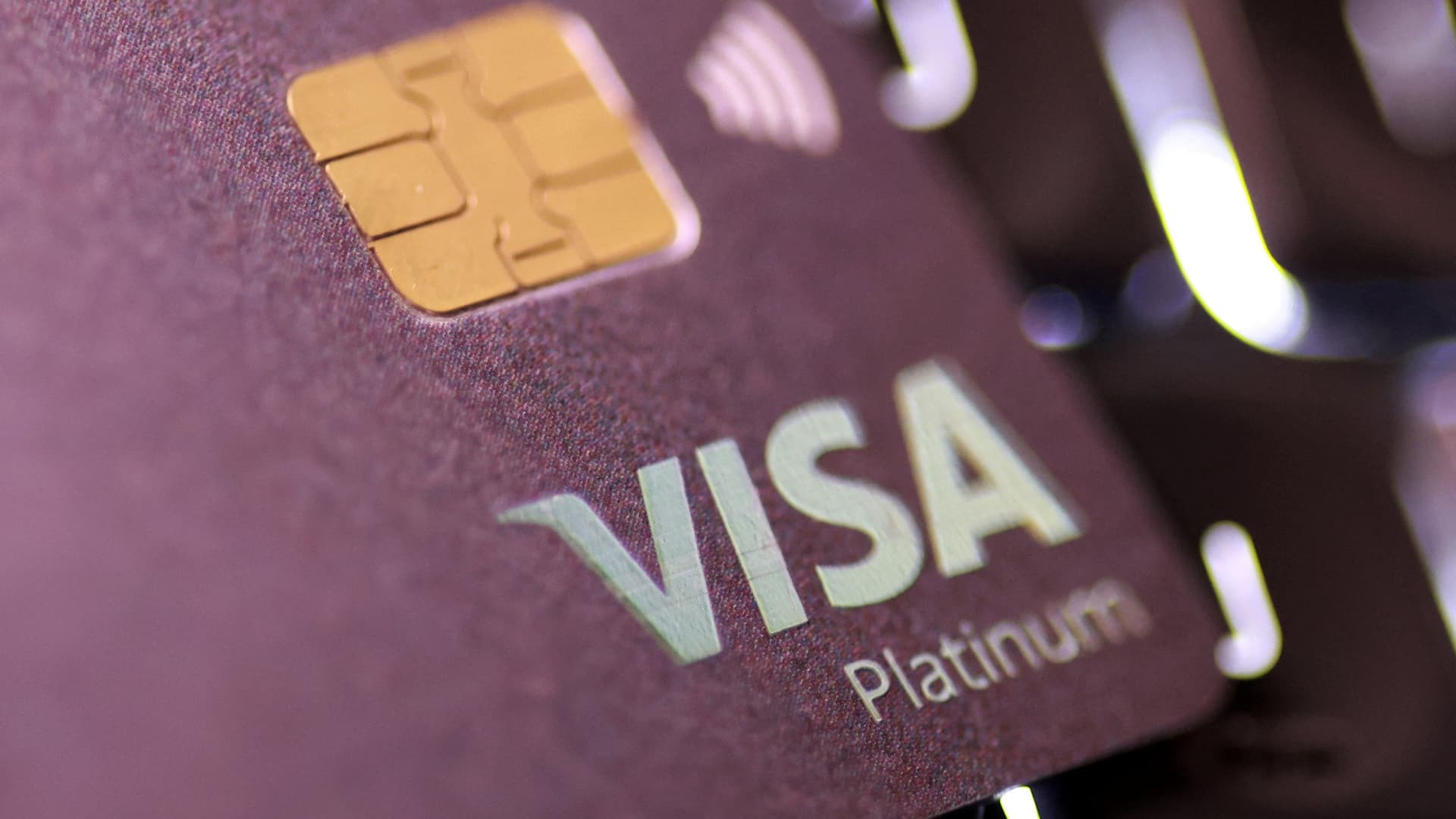

Visa, the American credit card powerhouse, has recently made a significant leap into the Chinese financial market after receiving approval from the People’s Bank of China (PBOC) to establish a bank card clearing business in the country. This development arrives amid ongoing diplomatic conversations between the United States and China, setting the stage for potential new business opportunities in the rapidly evolved financial landscape. Visa’s CEO, Ryan McInerney, expressed optimism about this milestone, highlighting the company’s longstanding commitment to contributing positively to China’s payments ecosystem.
| Article Subheadings |
|---|
| 1) Entering a closed market |
| 2) Strategic timing amid U.S.-China relations |
| 3) The implications of Visa’s approval |
| 4) Competition from other financial giants |
| 5) Future outlook for foreign entities in China |
Entering a closed market
China’s financial sector has historically been one of the most tightly regulated markets globally, resembling a fortress where local players are favored, while foreign companies face stringent barriers. Visa’s journey toward operating in China began with its application to the PBOC in May 2020. Commencing operations as a bank card clearing institution will allow Visa to offer its services to domestic users directly, a substantial move that aligns with the opening of China’s market to foreign financial institutions. This approval marks a pivotal change for Visa as it broadens its reach and solidifies its presence in one of the world’s largest consumer markets.
Despite the initial challenges, Visa had already established partnerships with local banks to offer dual-branded cards. Through these collaborations, Visa managed to create a hybrid payment system wherein domestic transactions are processed by China’s UnionPay while overseas transactions are managed using Visa’s networks. Such arrangements not only provided initial access but also offered valuable insights into local consumer behavior, which is paramount as the company prepares to penetrate deeper into the market.
Strategic timing amid U.S.-China relations
The timing of Visa’s approval is particularly noteworthy as it coincides with diplomatic discussions between the U.S. and China, with both nations attempting to mend ties following previous tensions. The imminent meeting between U.S. President Donald Trump and Chinese President Xi Jinping further adds to the context behind this approval. According to analysts, such licensing before their meeting signals Beijing’s intent to showcase noticeable advancements in U.S.-China business relations.
Officials, including George Chen, a partner at The Asia Group, highlighted that this move could be perceived as a gesture from the Chinese government, demonstrating a commitment to welcoming foreign investment and innovation. During Trump’s past visit, he advocated for easing restrictions on American firms seeking entry into China’s lucrative financial markets, indicating that the stakes of international diplomacy extend beyond politics into corporate boardrooms.
The implications of Visa’s approval
Visa’s gaining of the clearing business license provides not only a competitive edge for the company but also propels it into a significant role within the transformation of China’s payments landscape. As mobile payments continue to dominate, propelled chiefly by major contributors like Tencent’s WeChat and Alibaba’s Alipay, Visa’s entry will broaden the scope of payment options available to Chinese consumers, blending traditional credit card capabilities with modern technological advancements likely to enhance consumer convenience and accessibility.
Moreover, Visa’s operational advancements could lead to improved security measures and innovative solutions tailored to the needs of Chinese consumers, as the firm’s extensive experience in the international payments sector may empower it to introduce cutting-edge technologies in an evolving market.
“This marks an important milestone toward the company serving China’s domestic payments market,”
said McInerney in a statement about the approval.
Competition from other financial giants
Visa’s foray into China means entering a competitive environment where other major players such as Mastercard and American Express have already established their footprint. Mastercard received PBOC approval for its joint venture in early 2020 and has commenced processing payments, while American Express was the first to obtain a processing license in 2020. Through their strategy, these competitors have engaged with local institutions, an approach Visa is likely to adopt to solidify its standing.
Furthermore, the rise of domestic digital wallets and payment platforms poses challenges as these established ecosystems dominate everyday consumer transactions. Visa’s need to navigate product offerings that align with local preferences will be crucial to not only survive but thrive in a market that has thrived on innovation and aggressive competition.
Future outlook for foreign entities in China
Looking ahead, Visa’s approval could signify a change in policy atmospherics that might favor foreign financial entities in China. The ongoing commitment of the Chinese government to open its financial services sector aligns with its broader objectives to modernize its economy and foster greater competition. However, challenges remain as the political climate and regulatory dynamics could still create obstacles that foreign firms need to adeptly manage.
As Visa and other foreign companies begin to establish a more prominent presence in China, it will be critical for them to adapt to the local business environment, understanding consumer preferences while ensuring compliance with Chinese laws and regulations. This new chapter may well usher in a tide of evolving partnerships and collaborations that enrich the dynamics of the financial space.
| No. | Key Points |
|---|---|
| 1 | Visa’s approval from PBOC to set up a bank card clearing business marks a significant step in China’s financial landscape. |
| 2 | The approval coincides with ongoing U.S.-China diplomatic discussions, reflecting potential progress in business relations. |
| 3 | Competition with entrenched local and foreign players like Mastercard and American Express will define Visa’s market entry strategy. |
| 4 | Visa will need to innovate and align with local consumer preferences amidst a fast-evolving payments ecosystem in China. |
| 5 | The broader trend of China opening its financial sector to foreign firms is indicative of changing policies that may offer new avenues for international cooperation. |
Summary
Visa’s arrival into the Chinese financial market via a newly approved bank card clearing operation illustrates a monumental shift not only for the company but potentially for the broader landscape of foreign investments in China’s economy. With ongoing dialogues between the U.S. and China, this decision carries significant implications, highlighting both opportunities and challenges in navigating a tightly regulated environment. As Visa forges ahead, its ability to compete and innovate within this dynamic space will be a decisive factor in shaping the future of cross-border payments.
Frequently Asked Questions
Question: What does Visa’s bank card clearing approval mean for its operations in China?
Visa’s approval allows the company to establish a direct presence in the Chinese payment market, enabling it to operate bank card clearing services domestically for Chinese consumers.
Question: How does this approval impact U.S.-China relations?
The timing of Visa’s approval is strategic, occurring amidst ongoing diplomatic engagements between the U.S. and China, suggesting both countries are working toward progress in business relations and cooperation.
Question: What challenges does Visa face entering the Chinese market?
Visa must navigate a competitive landscape dominated by established players, understand local consumer preferences, and comply with intricate regulatory environments to succeed in China.
