

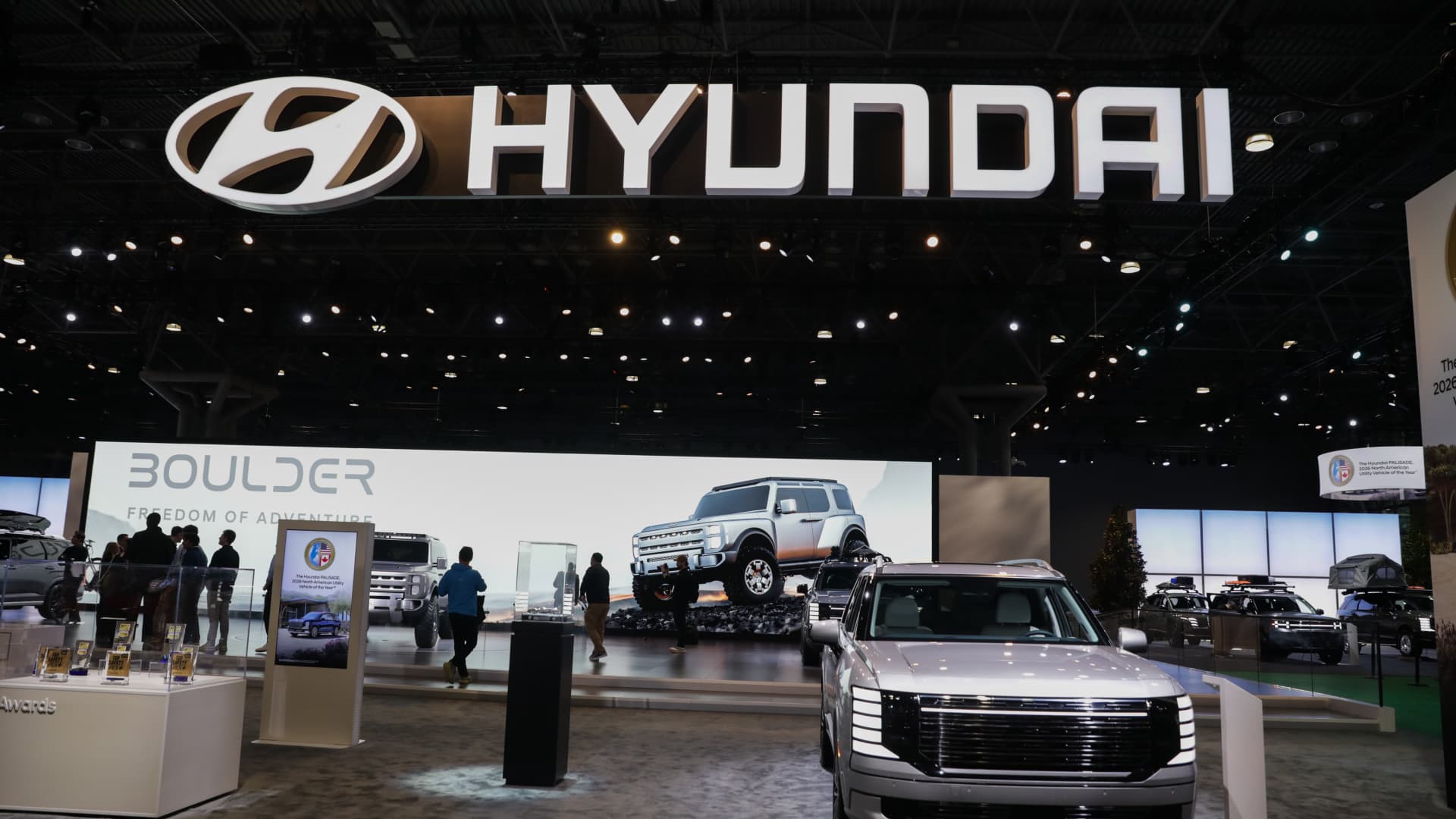

In a historic shift in the American automotive market, Hyundai Motor is poised to outsell Ford Motor in quarterly sales for the first time, according to projections by Cox Automotive. For the July to September period, Hyundai is anticipated to achieve a 6.5% increase in year-over-year sales, reaching 511,421 vehicles, while Ford is predicted to face a 7.1% decline to 504,172 units. This change in sales dominance underscores the growing competitiveness of Hyundai, which is now expected to become the third-largest automaker in the U.S., trailing only General Motors and Toyota.
| Article Subheadings |
|---|
| 1) Hyundai’s Market Surge |
| 2) Ford’s Sales Challenges |
| 3) Competitive Landscape of American Automakers |
| 4) Toyota’s Position in the Market |
| 5) Broader Implications for the Automotive Industry |
Hyundai’s Market Surge
Hyundai Motor, along with its subsidiaries including Genesis and Kia, has seen remarkable growth in the U.S. market in recent months. This upward trajectory is attributed to a combination of strategic product offerings, robust production capabilities, and a focus on quality. Recent forecasts indicate that Hyundai’s sales will exceed those of Ford for the first time, standing at approximately 511,421 vehicles sold between July and September, marking a 6.5% increase compared to the same period last year.
The anticipated sales jump for Hyundai stands in stark contrast to Ford, which is projected to experience a decline in sales by 7.1%, reducing its total to 504,172 vehicles. This shift illustrates a significant change in consumer preferences, as Hyundai has gained traction in an increasingly competitive vehicle market. High-profile models such as the Sonata and the popular SUV lineup, including the Tucson and Palisade, have resonated well with buyers, boosting Hyundai’s market presence significantly in recent months.
Ford’s Sales Challenges
On the other hand, Ford Motor has faced considerable challenges that have hampered its ability to compete effectively in the quarterly sales race. The production of Ford’s renowned F-Series pickup trucks, crucial to its sales strategy, has been disrupted due to two major supplier fires last year that led to a significant setback in production capacity. As a result, Ford has struggled to meet demand in a market where supply constraints are pivotal.
In an official statement, Ford noted that despite the predictions, they have continued to outsell Hyundai through August. However, they acknowledged the trend of rising sales performance from Korean automakers, which includes not only Hyundai but also its sibling company, Kia, and the Korean operations of General Motors. Ford’s discussions emphasized that lingering tariffs and current production costs favor manufacturing in Korea—an issue that’s influencing competitiveness in the U.S. market.
Competitive Landscape of American Automakers
The evolving battle for market share among the top automotive manufacturers in the U.S. reveals a shifting landscape. Hyundai’s projected ascendance is not just a victory for the automaker but also a reflection of the changing dynamics in consumer preferences, production efficiencies, and market strategies among competing firms. Analysts suggest that this shift has necessitated a reevaluation of how American manufacturers like Ford and General Motors are addressing their supply chains and production methodologies.
As the automotive market grapples with inflation and fluctuating fuel prices, coupled with high consumer demand for hybrid vehicles, both Ford and GM have been criticized for their slow responses to these undeniable trends. Ford’s reliance on its traditional combustion engine lineups without sufficient diversification into hybrid or electric vehicles may be risking its long-lasting market position, as buyers increasingly look towards more eco-friendly options in light of gas price inflation.
Toyota’s Position in the Market
While Hyundai and Ford capture the spotlight, Toyota is quietly gaining ground on industry leader General Motors. Recent forecasts suggest that Toyota’s sales are expected to post a modest increase of 2.2%, reaching 642,707 units sold, while GM grapples with a projected decline of 5.2%. With supply chain issues and significant competition for hybrid vehicles on the rise, the gap between GM and Toyota narrows, setting the stage for a potential shift in overall sales leadership within the market.
The historic significant sales performance by Toyota underscores the importance of having an extensive range of hybrid vehicles available to meet consumer demand for fuel-efficient options as fuel prices soar. Indeed, it has been noted that Toyota’s strong foothold as a hybrid leader could play a critical role in its ambition to surpass GM in annual sales, which only occurred previously in 2021 when supply chain disruptions heavily impacted GM’s production capabilities.
Broader Implications for the Automotive Industry
The changes in quarterly sales performance among these manufacturers extend beyond mere numbers; they signal broader implications for the automotive landscape. As the industry continues to evolve, automakers must reassess their product offerings and address the shifting landscape influenced by consumer preferences for efficiency and sustainability. With rising fuel costs driving consumer interest toward hybrids and electric vehicles, manufacturers with robust hybrid lineups are likely to thrive in this environment.
Cox Automotive has also indicated that overall vehicle sales in the U.S. are stronger than anticipated. Their revised forecast suggests an increase of 2% in total annual sales, now estimated at around 16.1 million units. This figure indicates an evolving consumer landscape where resilience is tested in difficult economic times. As automakers navigate supply chain disruptions and consumer demands for more sustainable vehicle options, the need for innovation and adaptability is greater than ever.
| No. | Key Points |
|---|---|
| 1 | Hyundai Motor is set to outsell Ford for the first time in quarterly sales history, reflecting its growing presence in the U.S. market. |
| 2 | Ford faces challenges due to production disruptions affecting its key F-Series pickups, contributing to its projected sales decline. |
| 3 | The competition between Hyundai, Ford, GM, and Toyota highlights a shifting automotive landscape influenced by consumer preferences for hybrids and electric vehicles. |
| 4 | Toyota is narrowing the sales gap with General Motors, with potential for Toyota to reclaim the title of top annual sales leader. |
| 5 | Overall vehicle sales have shown resilience, with forecasts indicating a stronger than expected market performance for the remainder of the year. |
Summary
The anticipated sales dynamics between Hyundai and Ford represent a significant moment in American automotive history, with Hyundai poised to take a podium position behind General Motors and Toyota. This shift illustrates not only changing market conditions but also consumers’ evolving preferences toward manufacturers who innovate and adapt in competitive landscapes. The ongoing trends highlight the necessity for automakers to strengthen their hybrid offerings and rethink production strategies in response to both economic pressures and environmental concerns.
Frequently Asked Questions
Question: Why is Hyundai experiencing increased sales in the U.S.?
Hyundai’s increased sales can be attributed to its strategic focus on delivering high-quality products, an expanded SUV lineup, and a commitment to meeting consumer preferences for efficient and reliable vehicles.
Question: What challenges are affecting Ford’s vehicle sales?
Ford has faced production challenges, particularly with its F-Series pickup trucks, due to supplier disruptions, contributing to a projected decline in sales for the quarter.
Question: How is the competition between automakers evolving?
The competition is evolving, with a noticeable shift towards hybrids and electric vehicles in response to rising fuel prices and consumer demand, prompting traditional automakers to innovate and adapt their product offerings.
