

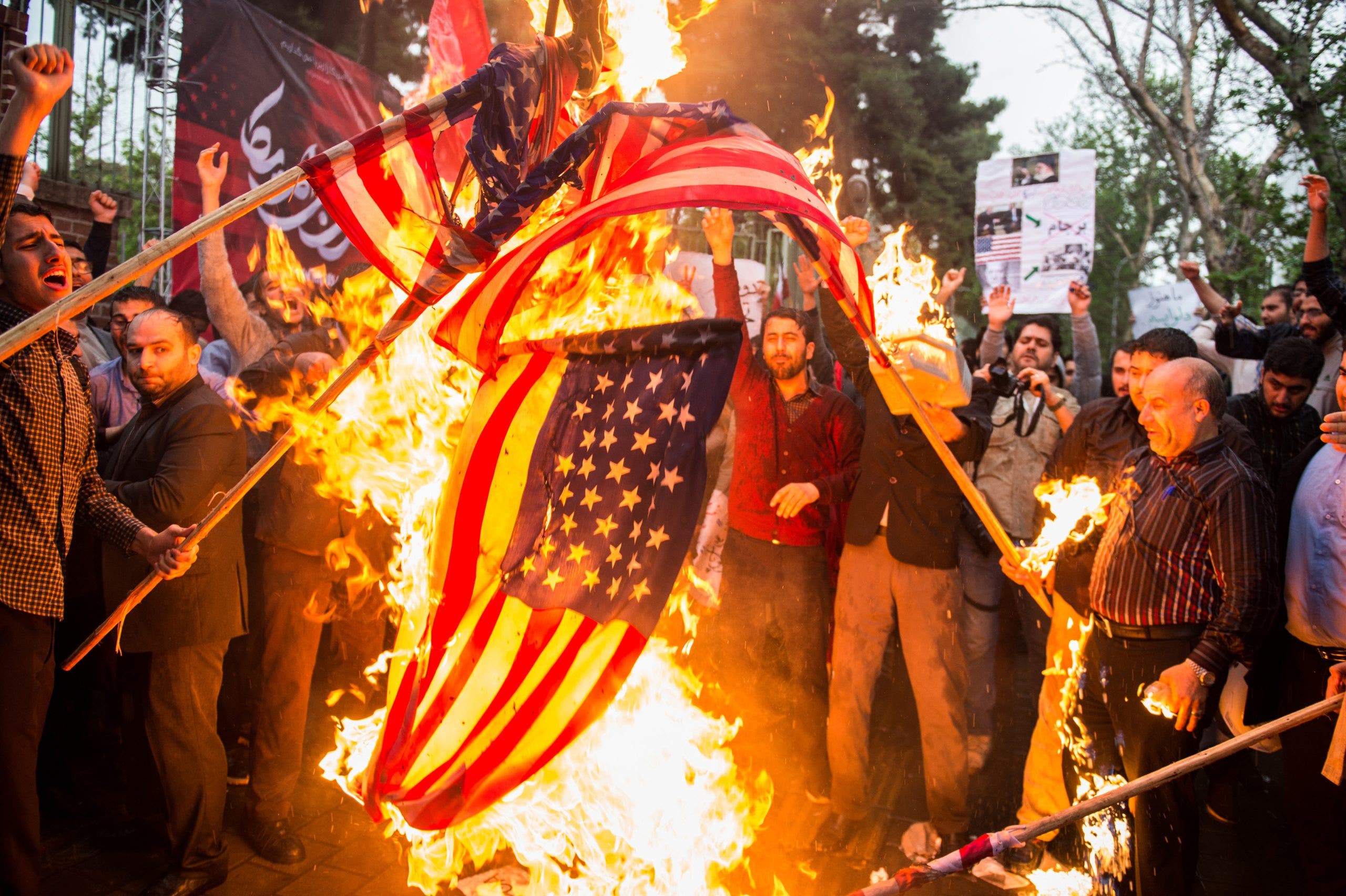

As tensions between the United States and Iran escalate, a comprehensive analysis reveals a complex history of Iran’s involvement in various attacks on Americans spanning over four decades. With significant incidents ranging from the 1979 U.S. Embassy hostage crisis to recent developments involving drone strikes and assassination plots, officials are reassessing Iran’s longstanding conflict with the U.S., Israel, and other nations. In this context, the implications of Iranian actions continue to pose challenges for U.S. national security and diplomatic relations in the region.
| Article Subheadings |
|---|
| 1) Historical Context: The 1979 U.S. Embassy Hostage Crisis |
| 2) The 1983 Beirut Bombings and Their Aftermath |
| 3) The 1996 Khobar Towers Bombing |
| 4) Iranian Influence on Terrorism in Iraq and Afghanistan |
| 5) Patterns of Kidnappings and Assassination Plots |
Historical Context: The 1979 U.S. Embassy Hostage Crisis
In November 1979, following the Islamic revolution in Iran, radical Islamic students stormed the U.S. embassy in Tehran and took hostages. This seizure was a pivotal moment that marked the beginning of a protracted conflict between Iran and the U.S. Revolutionary leader Ayatollah Ruhollah Khomeini’s support for the student militants led to a standoff, and the hostages remained captive for 444 days, enduring physical and psychological torment. This event significantly impacted U.S.-Iran relations, setting the stage for a cycle of violence and confrontation.
The U.S. government responded with economic sanctions and military posturing but faced challenges in formulating an effective strategy. Attempts to initiate a negotiation process were largely rebuffed, emphasizing the complexities of diplomatic engagement with Iranian authorities. The hostage crisis officially ended on January 20, 1981, coinciding with the inauguration of President Ronald Reagan, marking a significant chapter in U.S. foreign policy that continues to influence relations between the two countries today. As a consequence, American perceptions of Iran were irrevocably changed, leading to a long-standing narrative of hostility.
The 1983 Beirut Bombings and Their Aftermath
The year 1983 marked a dark period in U.S. history due to a series of bombings orchestrated by Iranian-backed groups in Lebanon, which resulted in significant American casualties. Specifically, the U.S. Embassy in Beirut was targeted on April 18, killing 63 people, including 17 Americans, while a subsequent attack on the barracks of U.S. Marines on October 23 led to the death of 241 service members. This devastating attack was carried out using two truck bombs, marking one of the deadliest single-day assaults on U.S. forces abroad.
Years later, Sayyed Issa Tabatabai, a representative of Iran’s Supreme Leader in Lebanon, acknowledged Iran’s involvement in these bombings during an interview with the state news agency, indicating a state-sanctioned effort to undermine U.S. influence in the region. Tabatabai’s claim that he received a religious directive from Khomeini signifies a troubling intertwining of state policy with extremist ideology, further complicating U.S.-Iran relations.
The 1996 Khobar Towers Bombing
On June 25, 1996, another tragic chapter unfolded with the bombing of the Khobar Towers in Saudi Arabia, resulting in the death of 19 U.S. Air Force personnel. The attack, attributed to Iranian sponsors, highlighted the shifting focus of Iranian aggression, moving beyond Lebanon to target U.S. military installations in the Arabian Peninsula. A U.S. court in 2006 determined that Iran bore responsibility for the bombing, emphasizing its role in orchestrating violent acts against American forces abroad.
Following the attack, the U.S. government intensified its scrutiny of Iran, implementing a series of sanctions aimed at curtailing its support for international terrorism. However, the impact of the bombing continued to resonate, creating a bitter sense of loss among the victim’s families and frustration among military officials who sought to respond decisively against state-sponsored terrorism. The lingering consequences of these events remain evident in ongoing military operations and defense strategies directed at countering Iranian influence in the region.
Iranian Influence on Terrorism in Iraq and Afghanistan
Over the last two decades, Iran has continued to play a significant role in terrorism in both Iraq and Afghanistan, significantly impacting U.S. military operations. According to a Pentagon report from 2019, Iran was responsible for the deaths of approximately 603 U.S. service members in Iraq from 2003 to 2011, which accounted for 17% of all U.S. casualties in that conflict. The Iranian government provided substantial support, including funding, weapons, and training to various militia groups targeting U.S. forces.
The U.S. judicial system has affirmed Iran’s culpability in many of these terrorist acts, allowing families of victims to seek justice under the Foreign Sovereign Immunities Act. A landmark case in 2022 resulted in a judgment against Iran, holding it accountable for its support of terrorism against American personnel in Afghanistan. This legal framework has been crucial in pursuing justice for victims of Iranian-sponsored violence and has served to underscore the ongoing threat posed by Iranian proxies.
Patterns of Kidnappings and Assassination Plots
The history of kidnapping and assassination attempts linked to Iran stretches back decades. Among the most notable cases is the abduction of former FBI agent Robert Levinson in 2007, who was eventually declared dead while in Iranian custody. His family has consistently blamed the Iranian regime for his disappearance, highlighting the regime’s use of hostage-taking as a tool for leverage in negotiations with the U.S.
In a more recent case, Iranian forces executed a plot against American citizens, allegedly including a former U.S. president. Such assassination attempts underscore the regime’s willingness to engage in extreme measures to both intimidate critics and achieve strategic goals. Officials have warned that these patterns of behavior highlight an unrelenting threat posed by Iran to U.S. national security.
| No. | Key Points |
|---|---|
| 1 | Iran has engaged in a long-standing conflict with the U.S. since the 1979 hostage crisis. |
| 2 | Significant attacks include the Beirut bombings of 1983, resulting in numerous American casualties. |
| 3 | The 1996 Khobar Towers bombing further exemplified Iranian state-sponsored terrorism against the U.S. |
| 4 | Iran’s involvement in terrorist acts significantly contributed to U.S. military casualties in Iraq and Afghanistan. |
| 5 | Patterns of kidnapping and assassination plots reveal the Iranian regime’s persistent threat to U.S. security. |
Summary
Overall, the historical context of Iranian actions against the United States provides a framework for understanding the complexities of current geopolitical dynamics. The ramifications of these attacks, kidnappings, and plots continue to shape U.S. strategies in the Middle East and beyond. As American policymakers face new challenges posed by Iranian hostility, the assessment of Iran’s past actions remains vital for formulating effective responses and strategies moving forward.
Frequently Asked Questions
Question: What triggered the 1979 U.S. Embassy hostage crisis?
The crisis was triggered by the Islamic revolution in Iran, during which radical students seized the U.S. embassy in Tehran, holding hostages for 444 days to protest U.S. support for the ousted Shah of Iran.
Question: How did Iran’s actions contribute to U.S. military casualties in Iraq?
According to a Pentagon report, Iran’s military and financial support for various militia groups was responsible for the deaths of hundreds of U.S. service members during the Iraq War, as they targeted American forces directly.
Question: What is the significance of the Foreign Sovereign Immunities Act in relation to Iran?
The Foreign Sovereign Immunities Act allows victims of state-sponsored terrorism to seek justice against foreign governments, including Iran, holding them accountable for their involvement in attacks against U.S. citizens and military personnel.
