

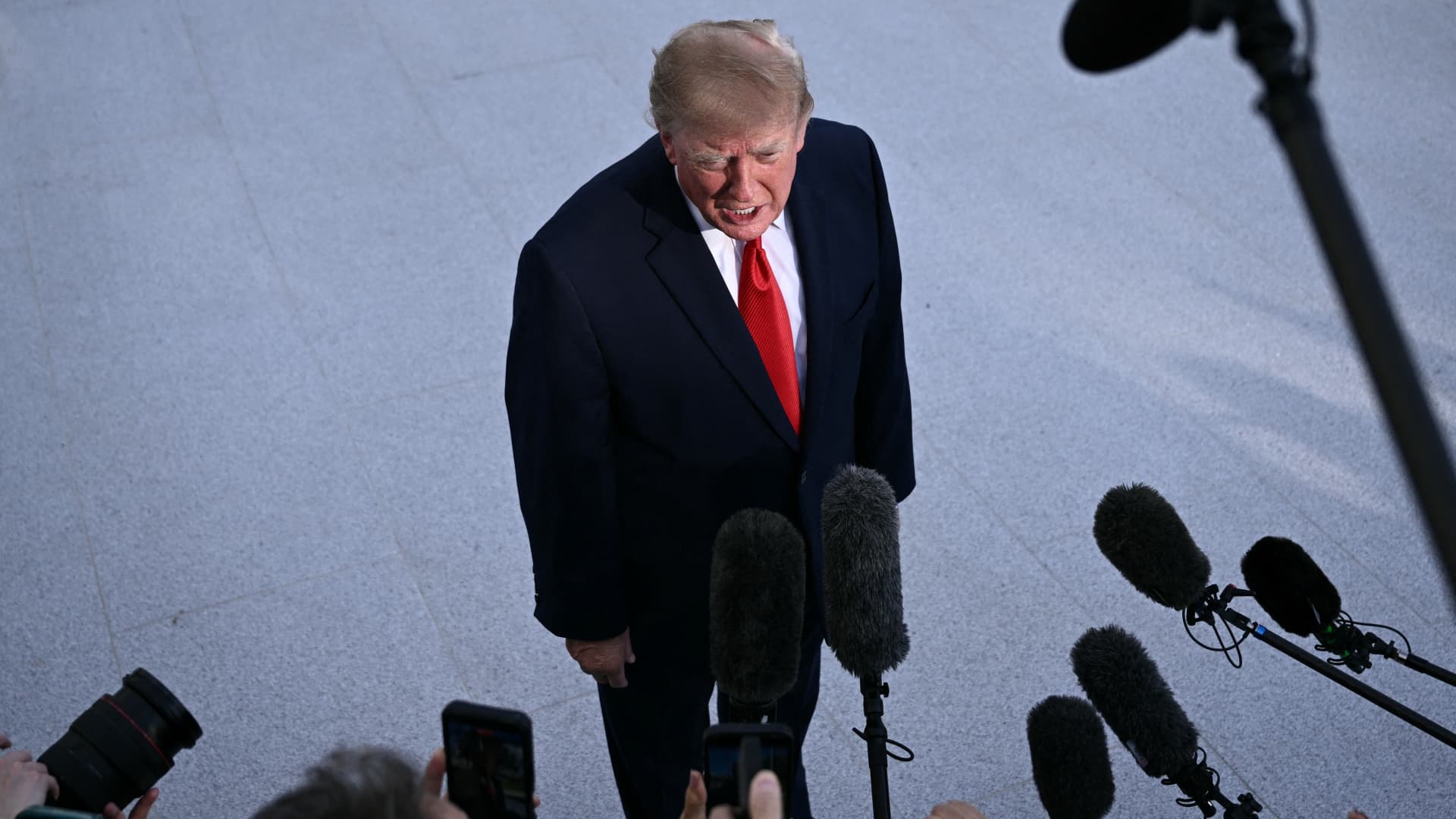

A federal judge recently issued a significant ruling concerning President Donald Trump’s controversial ban on three media outlets from the White House. The preliminary injunction, extended indefinitely by Judge Timothy Kelly, halts the enforcement of the ban against MS NOW, CNN, and Politico as their legal challenge continues. In his decision, Judge Kelly noted that the media outlets are likely to prevail in their argument that the ban violates their First Amendment rights and due process protections.
| Article Subheadings |
|---|
| 1) Judge’s Ruling on Media Access Ban |
| 2) Legal Foundations and Arguments |
| 3) The Implications of the Ban |
| 4) Responses from Media Outlets and Legal Experts |
| 5) Future Trajectory of the Legal Battle |
Judge’s Ruling on Media Access Ban
On October 12, 2026, Judge Timothy Kelly of the U.S. District Court for Washington, D.C., made a decisive legal move concerning the ban imposed by President Trump on certain media outlets. This ruling does not represent a final decision but replaces a temporary restraining order that previously allowed limited access to the White House for MS NOW, CNN, and Politico. Judge Kelly’s extended preliminary injunction indicates a strong likelihood that the plaintiffs will prevail in their claims that they were denied due process in the abrupt revocation of their hard passes.
The judge emphasized that Trump’s past remarks indicated his intentions to alter how the media reported on him, suggesting that the ban was retaliatory in nature. He stated, “President Trump’s own comments suggest that he intended the revocation of Plaintiffs’ hard passes to alter their reporting on him,” highlighting the connection between the ban and First Amendment rights.
Legal Foundations and Arguments
In examining the legality of the ban, Judge Kelly referenced prior rulings from the U.S. Court of Appeals for the District of Columbia Circuit that stipulate a journalist’s right to due process when access is denied. These precedents underline a permissible framework that protects journalists from arbitrary exclusion. The civil suit initiated by the affected media organizations includes claims alleging violations of the First Amendment, particularly regarding retaliation and viewpoint discrimination, as articulated in the decision to uphold their challenge against the ban.
Judge Kelly’s opinion also addresses arguments brought forth by the Department of Justice (DOJ), who contended that the ban was justified on national security grounds. The judge refuted this explanation as appearing to be a mere rationalization post-factum since no explicit evidence supported the claim that national security concerns were initially considered in President Trump’s decision. Kelly referred to existing opinions asserting that no legally acceptable basis for such a drastic action had been provided.
The Implications of the Ban
The stakes surrounding the injunction extend beyond the immediate access of the media outlets to the White House. The implications of the ban resonate through constitutional law, license expectations for a free press, and the dynamics of executive power. Judge Kelly noted that without the injunction, the affected outlets would likely suffer “irreparable harm,” thus framing the decision within broader concerns of constitutional integrity and public access to information.
In his analysis, Kelly acknowledged the potential consequences of maintaining the status quo, reiterating that the integrity of press freedoms is fundamental to the democratic process. He maintained that concerns regarding media bias should not lead to a suppression of freedoms guaranteed under the First Amendment, and any perceived inaccuracies in reporting should be addressed through constructive dialogue rather than punitive measures.
Responses from Media Outlets and Legal Experts
The media organizations involved expressed their satisfaction with the court’s ruling. Attorneys for MS NOW, CNN, and Politico issued statements affirming their belief that the court recognized the serious nature of the constitutional infringements posed by the ban. The attorneys emphasized that Trump’s executive actions sought to undermine the credibility of reporting that was unfavorable to him, constituting an unacceptable assault on journalistic freedoms.
Legal experts have weighed in on the ruling, with many highlighting its significance for the separation of powers and media rights. Theodore Boutrous Jr., a lawyer representing the media outlets, noted that Trump’s infringement on press access was a blatant breach of due process. “The harm this ban did to our clients, the First Amendment, and the public as a whole is profound,” he argued. Boutrous underscored that the court’s decision was pivotal in preserving constitutional freedoms amidst an increasingly contentious political landscape.
Future Trajectory of the Legal Battle
Looking forward, legal analysts anticipate that the court’s decision will influence not only the immediate outcomes for the plaintiffs but also shape the discourse around executive privileges and media relations, primarily as the case progresses. The preliminary injunction does not grant permanent relief, and thus the parties are expected to continue litigating the case as they explore all avenues, including potential appeals.
The outcome of this case may set important legal precedents regarding the treatment of media organizations by public officials, determining the extent to which police power is used to manage access to information that is deemed critical to public interest. With Trump indicating that he intends to appeal any adverse rulings, the landscape remains volatile, with extensive implications for future presidential conduct towards the press.
| No. | Key Points |
|---|---|
| 1 | Judge Timothy Kelly extended a ban on President Trump’s media restrictions, ruling likely to favor the outlets on due process and First Amendment claims. |
| 2 | The ruling highlights the relationship between executive actions and media freedom, emphasizing the significance of keeping the press accessible to the public. |
| 3 | Judge Kelly pointed out flaws in the national security argument presented by the DOJ, asserting it lacks original evidence linking security to the ban. |
| 4 | Media outlets and legal experts applaud the decision, recognizing it as a defense of journalistic integrity and First Amendment rights. |
| 5 | The future legal trajectory is uncertain, with potential appeals from Trump and broader implications for the relationship between the media and the government. |
Summary
The recent ruling by Judge Timothy Kelly represents a critical moment in the ongoing debate over press freedom and executive authority. By extending the preliminary injunction against President Trump’s ban on three media outlets, the court has reinforced the importance of due process and First Amendment protections. As the legal battle unfolds, the implications of this case could reshape the relationship between the media and government, highlighting the necessity for transparency and accountability in a democratic society.
Frequently Asked Questions
Question: What led to the media outlets suing President Trump?
The media outlets filed a lawsuit after their White House access was revoked without prior notice or justification, claiming this action violated their First Amendment rights and due process protections.
Question: What is the significance of Judge Kelly’s ruling?
Judge Kelly’s ruling signifies a strong judicial stance against potential abuses of executive power and emphasizes the importance of upholding constitutional protections for journalists, especially in cases of retaliation or viewpoint discrimination.
Question: What are the possible next steps in this legal battle?
The parties involved may continue to litigate the case, with the possibility of appeals by President Trump, potentially impacting future media access and executive power relations.
