

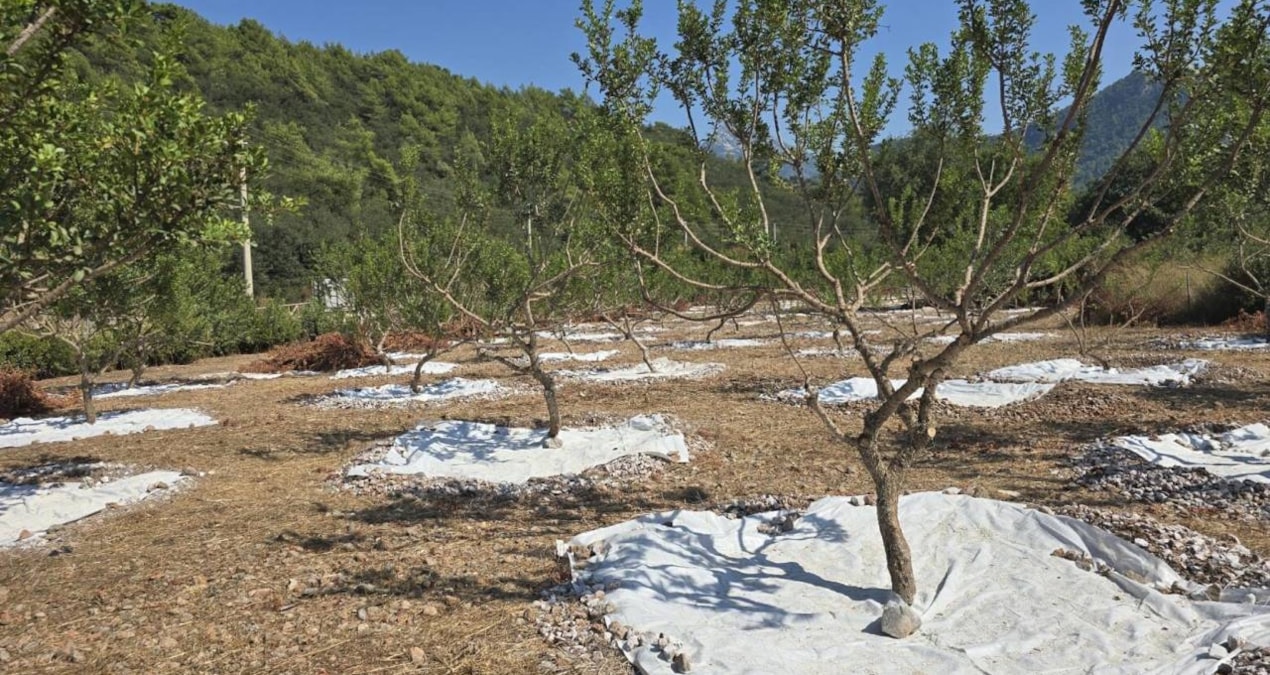

The great grooming and agriculture initiative launched in Muğla, Türkiye, in 2015 has begun to yield impressive results after a decade of patience and dedication. Mastic gum, a strategic product on which Türkiye has often relied on foreign sources, is now thriving in the Aegean region. As the first mastic products are harvested from newly cultivated trees, the area is entering a prosperous phase, often referred to as the “white gold” era, representing both economic potential and local agricultural innovation.
| Article Subheadings |
|---|
| 1) The Mastic Gum Initiative: A Sustainable Agricultural Development |
| 2) The Harvesting Process and Output Statistics |
| 3) Market Dynamics: Price and Demand for Mastic Gum |
| 4) Future Goals: Expanding Mastic Production in Türkiye |
| 5) The Broader Economic Implications for Muğla and Beyond |
The Mastic Gum Initiative: A Sustainable Agricultural Development
Launched in 2015, the mastic gum initiative represents a collaborative effort among several key organizations, including the General Directorate of Crop Production, the Aegean Agricultural Research Institute, and the Regional Directorate of Forestry. These entities aimed to leverage the favorable climatic conditions of Muğla to cultivate this traditionally sought-after product. Given that mastic gum has historically been a significant import for Türkiye, the initiative was seen as crucial for enhancing domestic production capabilities and reducing dependency on foreign sources.
The initiative is tied to a broader vision of promoting sustainable agricultural practices which not only boosts economic growth but also enhances local farming communities’ standard of living. With meticulous planning and execution over the past decade, Muğla has made significant strides toward establishing itself as a leader in mastic production.
The Harvesting Process and Output Statistics
One of the defining features of this project is its high biological yield, with each mastic tree producing between 250 grams and 1 kilogram of pure gum during a single growing season. The ideal climate conditions paired with careful husbandry have resulted in optimal productivity. Since the introduction of mastic saplings into private gardens of approximately 100 decares, many growers have reported satisfactory yields, transforming the outlook for local agriculture.
On average, each decare hosts 50 mastic saplings, thereby contributing to significant collective production. The harvesting process is labor-intensive, as it involves careful extraction of the gum from the trees. However, the effort is justified by the quality and value of the final product, leading to a notable influx in the region’s agricultural output.
Market Dynamics: Price and Demand for Mastic Gum
The economic value of mastic gum has surged due to its unique properties and the sophisticated methods needed for its extraction. Currently, the wholesale price for mastic gum ranges between 30,000 TL and 35,000 TL per kilogram, reflecting its high demand in domestic and international markets. This price point places mastic gum among the most financially rewarding agricultural products in Türkiye, fueling interest in its cultivation.
As consumers become increasingly conscious of natural products, the market for mastic gum, which has applications ranging from culinary uses to cosmetics and medicinal products, is poised for further growth. The increasing demand for sustainably sourced and natural materials positions Muğla as a potential hub for mastic gum production, further enhancing local economies.
Future Goals: Expanding Mastic Production in Türkiye
In an effort to propel mastic gum production further, regional authorities are developing a comprehensive inventory of existing mastic trees in Muğla. Collaborating with organizations like the Southeastern Anatolia Development Agency (GEKA), scientists are currently conducting quality assessments on leaf and gum samples collected from various trees. This thorough analysis aims at determining optimal growing conditions and identifying high-yield varieties of trees for future planting.
Moreover, plans are in place to host workshops that will disseminate knowledge regarding effective cultivation strategies and innovative agricultural techniques. The goal is to not only bolster local production but also prevent future imports of mastic gum, thus re-establishing Muğla as the definitive center of mastic production in Türkiye.
The Broader Economic Implications for Muğla and Beyond
The successful cultivation and commercialization of mastic gum have broader implications for Muğla and the surrounding regions. Beyond the direct economic benefits, the initiative aims to establish a sustainable agricultural model that can serve as a blueprint for similar projects across Türkiye. As the demand for organic and locally sourced products continues to rise, the mastic gum production project stands as a testament to the potential of agriculture in transforming regional economies.
With various stakeholders involved, including farmers, local businesses, and government institutions, this initiative fosters collaborative economic development. By prioritizing sustainability and self-sufficiency, Muğla’s mastic gum project not only safeguards local livelihoods but also contributes positively to the environment and enhances the community’s resilience against external market fluctuations.
| No. | Key Points |
|---|---|
| 1 | Muğla’s mastic gum initiative started in 2015 and has shown promising results after multiple years of effort. |
| 2 | Each mastic tree can produce between 250 grams to 1 kilogram of gum during the growing season. |
| 3 | The market price of mastic gum is currently between 30,000 TL and 35,000 TL per kilogram. |
| 4 | Collaborative projects aim to analyze and expand the inventory of mastic trees in the region. |
| 5 | The initiative is expected to enhance both local economies and the sustainable agricultural model in Türkiye. |
Summary
The mastic gum initiative in Muğla represents a transformative step in agricultural development, showing significant potential for boosting local economies while reducing dependency on imports. With strong prospects for growth in production and market demand, the initiative has not only revived interest in traditional agricultural practices but also promoted sustainable farming in the region. As local stakeholders collaborate to enhance this burgeoning sector, the mastic gum project is poised to play a critical role in the future of Türkiye’s economy.
Frequently Asked Questions
Question: What is mastic gum?
Mastic gum is a resin obtained from the mastic tree, particularly valued for its unique flavor and potential health benefits, making it popular in various food products, cosmetics, and natural remedies.
Question: Why is Muğla significant for mastic gum production?
Muğla’s unique climatic conditions and the introduction of cultivation initiatives have made it an ideal region for mastic gum production in Türkiye, contributing to both local economy and agricultural sustainability.
Question: What are the future goals of the mastic gum initiative in Muğla?
Future goals include expanding production areas, conducting quality analyses of mastic trees, and hosting workshops to educate about effective cultivation practices, ultimately aiming for self-sufficiency in mastic gum production in Türkiye.
