

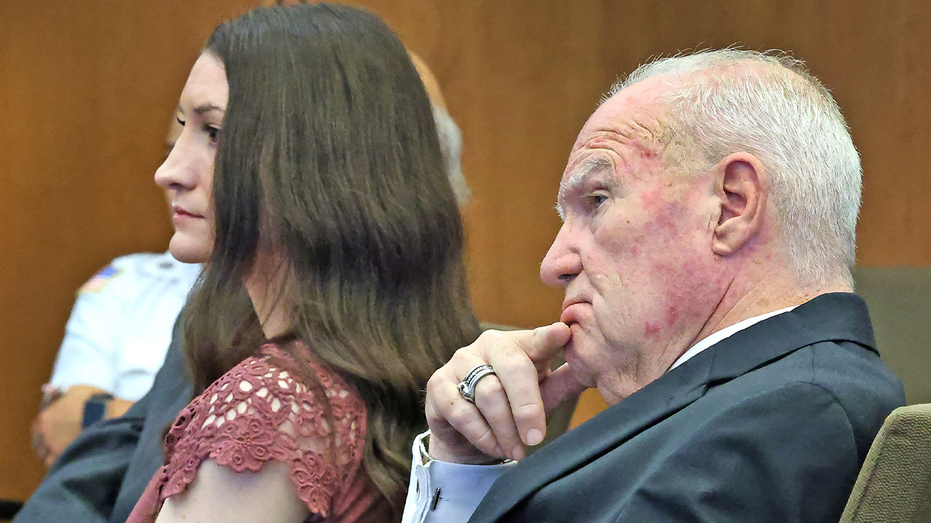

Kevin Reddington, the attorney for Lindsay Clancy, rejected claims that he changed defense strategies after a mistrial in the case involving the deaths of her three children. During a September 29 hearing in Plymouth, Massachusetts, Reddington argued that prosecutors had not presented enough evidence to support a conviction. The judge issued no rulings and scheduled additional arguments for November 2. A potential retrial date has not been set.
Reddington later said he had challenged the strength of the Commonwealth’s case throughout the proceedings, including during closing arguments and earlier motions.
| 1) | The defense challenges the prosecution’s evidence |
|---|---|
| 2) | The post-mistrial hearing produces no immediate ruling |
| 3) | Legal experts explain the Rule 25 motion |
| 4) | The case remains headed toward further litigation |
| 5) | Reddington attracts public attention outside court |
The defense challenges the prosecution’s evidence
At the Plymouth County Superior Court hearing, Kevin Reddington asked Judge William Sullivan to find Lindsay Clancy not guilty under a Rule 25 motion for a required finding of not guilty. The motion argued that the evidence presented at trial was insufficient to prove every element of the charges beyond a reasonable doubt.
Reddington questioned what evidence directly established that Clancy killed her three children, who died at the family’s Duxbury home in January 2023. He also criticized the investigation and search of the home, referring to a requested Bowden instruction that he said was denied.
“I’ve been arguing that from the very beginning. I argued it in a closing argument to the jury. I argued in our motions,” Reddington said.
The post-mistrial hearing produces no immediate ruling
The September 29 proceeding was Clancy’s first court appearance since Judge Sullivan declared a mistrial on September 4. The jury had deliberated for roughly a week but could not reach a unanimous verdict.
Sullivan did not rule on the Rule 25 request or other pending issues during the hearing. Oral arguments on matters including double-jeopardy claims were moved to November 2. Information related to alleged juror misconduct has also been impounded, and juror names remain restricted because of safety concerns and the divisive attention surrounding the case.
Legal experts explain the Rule 25 motion
Carol Erskine, a retired Massachusetts judge and child welfare advocate following the proceedings, described Rule 25 motions as routine but rarely successful. She said the defense was required to argue that prosecutors failed to prove each legal element of the charges, rather than simply asking the judge to reconsider the jury’s factual assessment.
The legal issue is technical because the court must assess whether the evidence, viewed under the applicable standard, could support a conviction. Plymouth County prosecutors opposed the request and characterized the defense position as “a laughable argument,” asking the judge to deny it.
The case remains headed toward further litigation
The next scheduled proceeding is the November 2 motions hearing in Plymouth. The parties are expected to address the unresolved legal arguments, including the defense’s double-jeopardy position and other pending matters. Martin Weinberg, identified as the defense’s double-jeopardy expert, was brought into the proceedings, but the court did not decide that issue on September 29.
The mistrial leaves prosecutors and the defense facing an uncertain next phase. No retrial date has been announced, and the court’s future rulings could affect whether and how the case proceeds.
Reddington attracts public attention outside court
Kevin Reddington has also become a prominent figure among people following the case. Billy Bush, who discussed the hearing after attending to the developments, said Reddington regularly speaks with journalists and others outside Plymouth Superior Court.
Bush said some women following the proceedings have expressed support for Clancy and admiration for Reddington because they view him as the lawyer leading her defense. That public attention has given Reddington a profile separate from the unresolved legal questions before Judge Sullivan.
| Number | Key Point |
|---|---|
| 1 | The defense says the prosecution did not prove the case beyond a reasonable doubt. |
| 2 | Judge William Sullivan issued no rulings at the September 29 hearing. |
| 3 | The next motions hearing is scheduled for November 2. |
| 4 | A possible retrial date has not been announced. |
Summary
The defense maintains that its challenge to the prosecution’s evidence predates the mistrial and was not a newly adopted strategy. With key motions unresolved and juror-related information restricted, the case remains in a procedural phase. The November 2 hearing is expected to provide the next significant opportunity for court action, although the future of any retrial remains unsettled.
Frequently Asked Questions
Why was there a mistrial in the Lindsay Clancy case?
Judge William Sullivan declared a mistrial on September 4 after jurors deliberated for roughly a week without reaching a unanimous verdict.
What is the defense seeking through the Rule 25 motion?
The defense is asking the court to find Clancy not guilty on the ground that prosecutors did not present sufficient evidence to support a conviction beyond a reasonable doubt.
When is Lindsay Clancy due back in court?
Clancy is scheduled to return on November 2 for arguments on pending motions. No potential retrial date has been set.
