

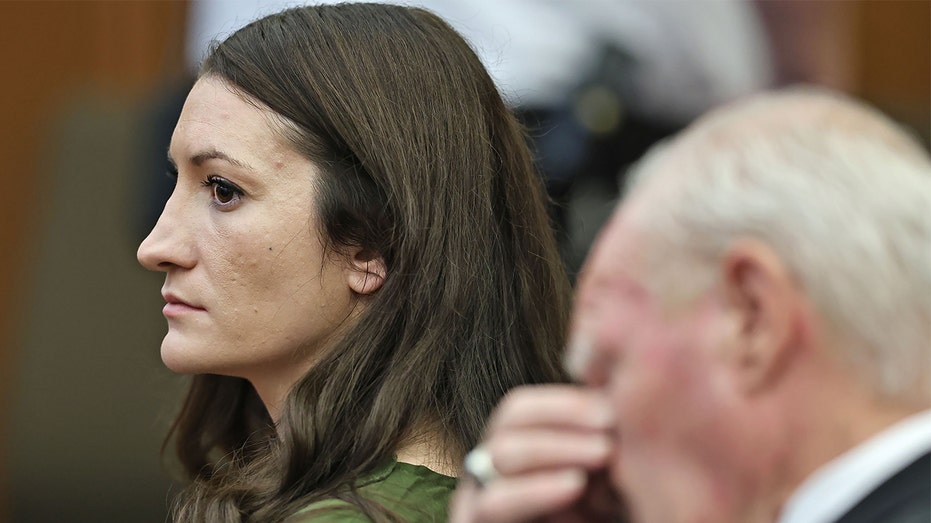

The jury in Lindsay Clancy’s Massachusetts murder trial is set to resume deliberations after spending three days weighing her insanity defense. Clancy faces three counts of first-degree murder in the deaths of her children, who were found strangled at the family’s Duxbury home in January 2023. A retired Massachusetts Superior Court judge said a verdict of not guilty by reason of insanity would not necessarily lead to Clancy’s quick release. He said mental health officials and the courts could maintain her commitment for years if she were considered a danger to herself or others.
| 1) | What the jury is deciding |
| 2) | How an insanity verdict could affect Clancy |
| 3) | The role of mental health officials and courts |
| 4) | Why the case recalls a Maine tragedy |
| 5) | When deliberations will continue |
What the jury is deciding
The nine-woman, three-man jury is considering whether Clancy should be found not guilty by reason of insanity in the deaths of Cora, Dawson and Callan Clancy. The children were all under 6 when they were found strangled at the family’s home in Duxbury, Massachusetts, in January 2023. Clancy, 36, has been charged with three counts of first-degree murder.
The jury, led by a female foreperson, completed its third day of deliberations on Monday without reaching a verdict. Its task includes evaluating the evidence presented during the trial and determining whether the legal standard for an insanity defense has been met.
How an insanity verdict could affect Clancy
Retired Massachusetts Superior Court Judge Jack Lu said an insanity verdict would not be an easy path to freedom. Instead, Clancy could be committed to a mental health facility for a substantial period, with her status subject to periodic review.
“If you are committed on a mental health basis because of a major criminal case in Massachusetts, it is hard to get out,” Lu said. “It is very difficult.”
Lu said Clancy could remain hospitalized “year after year after year” if officials concluded that she continued to pose a danger. The length of confinement would therefore depend on clinical assessments and legal decisions rather than on a fixed sentence tied directly to the murder charges.
The role of mental health officials and courts
Under the process described by Lu, mental health officials would periodically review whether Clancy should remain committed. He argued that these officials frequently work alongside prosecutors or testify for the government, which he said may make them more cautious when evaluating a defendant’s release.
“They’re viewed as an arm of the prosecution,” Lu said. “The people making release decisions have a prosecutorial mindset.”
Lu also identified a separate route through the courts. If the government continued seeking Clancy’s commitment while doctors did not recommend release, the matter could proceed to a contested hearing. A judge would then decide whether she remained a danger to herself or others. A ruling in Clancy’s favor could provide another way for her to leave the institution.
Why the case recalls a Maine tragedy
The Clancy case has been compared with that of Constance Fisher, a 24-year-old Maine woman who drowned her three children in a bathtub in 1954. Fisher was committed to a mental hospital and returned home after several years.
In 1967, Fisher was accused of drowning three more children and was sent back to the hospital. She later escaped and was found dead in the Kennebec River. The historical case has been cited as an example of the difficult questions that can arise when a parent accused of killing children is treated through the mental health system and later considered for release.
When deliberations will continue
The jury asked Judge William Sullivan to be dismissed at about 4 p.m. Monday. Sullivan granted the request, and the jurors are scheduled to return Tuesday morning to continue deliberating.
The jury’s eventual decision will determine whether the case ends with a criminal conviction or proceeds under the legal consequences of an insanity verdict. Regardless of the outcome, Lu’s assessment indicates that a finding of not guilty by reason of insanity could still involve prolonged confinement and additional court proceedings.
| Number | Key Point |
|---|---|
| 1 | Lindsay Clancy faces three first-degree murder charges involving her children. |
| 2 | The jury is evaluating her not guilty by reason of insanity defense. |
| 3 | A retired judge said an insanity verdict could result in prolonged hospitalization. |
| 4 | Release could depend on mental health reviews or a later court hearing. |
| 5 | Deliberations are scheduled to resume Tuesday morning. |
Summary
The jury’s deliberations center on both Clancy’s criminal responsibility and the consequences of an insanity finding. A verdict of not guilty by reason of insanity could lead to commitment in a mental health facility, periodic reviews and possible court hearings before any release. The case remains unresolved as jurors prepare to continue their discussions.
Frequently Asked Questions
What charges does Lindsay Clancy face?
Clancy faces three counts of first-degree murder in the deaths of her children, Cora, Dawson and Callan.
What would an insanity verdict mean?
It could result in Clancy being committed to a mental health facility rather than receiving a conventional criminal sentence. Her confinement could continue as long as officials or a court determined that she remained a danger.
How could Clancy eventually be released?
Mental health officials could recommend release, or Clancy could seek relief through a contested court hearing in which a judge would assess whether she remained dangerous to herself or others.
When will the jury resume deliberations?
The jury is scheduled to return Tuesday morning after asking to be dismissed at about 4 p.m. Monday.
