

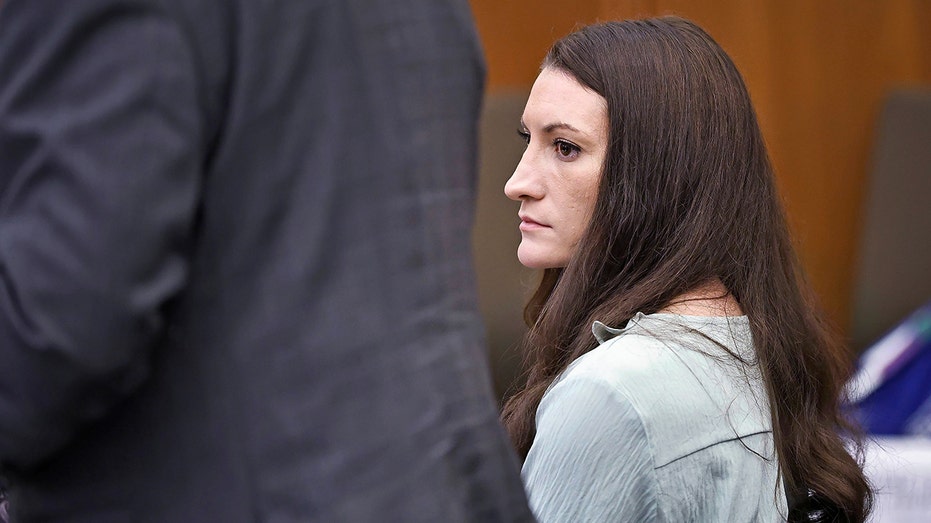

Jurors in the Lindsay Clancy trial were directed to resume deliberations Wednesday after reporting that they could not reach a unanimous decision on Tuesday. Clancy faces three first-degree murder charges in the January 2023 deaths of her three children in Duxbury, Massachusetts. A retired Massachusetts Superior Court judge said the note does not necessarily mean the jury will remain deadlocked or that a mistrial is imminent. The jury is weighing several possible verdicts, including murder, manslaughter, insanity and acquittal.
| 1) | Jury resumes deliberations after deadlock note |
| 2) | Charges and possible verdicts before the panel |
| 3) | Retired judge explains why a verdict remains possible |
| 4) | Why the judge did not issue a stronger deadlock instruction |
| 5) | What happens as deliberations continue |
Jury resumes deliberations after deadlock note
The jury had deliberated for more than 23 hours over four days when it sent a note to Superior Court Judge William Sullivan on Tuesday. The jurors wrote that, after many hours of discussion, they were unable to reach a unanimous decision. Rather than ending the deliberations, Sullivan instructed them to return to their work and continue reviewing the evidence and the legal instructions already provided.
The trial was conducted at Plymouth Superior Court in Plymouth, Massachusetts. It included more than 80 witnesses and over 300 exhibits, creating a substantial record for the jurors to examine. They were scheduled to return at 9 a.m. Wednesday.
Charges and possible verdicts before the panel
Lindsay Clancy, 36, is charged with three counts of first-degree murder in the deaths of her children, Cora Clancy, Dawson Clancy and Callan Clancy. The children, all younger than 6, were found strangled at the family’s Duxbury home in January 2023.
The jurors are considering more than one outcome for each charge. Their options include first-degree murder, second-degree murder, voluntary manslaughter, involuntary manslaughter, not guilty by reason of a lack of criminal responsibility, commonly associated with an insanity defense, and not guilty. The range of choices reflects the central factual and legal disputes presented during the trial.
Retired judge explains why a verdict remains possible
Retired Massachusetts Superior Court Judge Jack Lu said the deadlock note should not be treated as proof that the jury will ultimately be unable to decide the case. He said juries in highly emotional trials can initially report difficulty reaching agreement and later arrive at a unanimous verdict.
“It is common for juries that eventually reach a verdict, especially in highly emotional cases, to initially report that they are deadlocked. So you could see a unanimous verdict later in this case.”
Lu said the panel is confronting an unusually difficult societal question and that the jurors are uniquely positioned to assess the testimony and exhibits presented in court. He cautioned against rushing to conclusions about the likely result while deliberations remain active.
Why the judge did not issue a stronger deadlock instruction
Lu said Sullivan was correct not to issue a Tuey-Rodriguez instruction at that point. In Massachusetts, that instruction is used carefully to encourage continued efforts toward a unanimous verdict while avoiding undue pressure on any individual juror.
According to Lu, the timing made such an instruction premature. The jury had only recently reported its difficulty, and the length of the trial meant that additional deliberation was reasonable. He described the process as still being at an early stage rather than as clear evidence that the panel was headed for a mistrial.
What happens as deliberations continue
The immediate next step is for the jurors to continue examining the evidence and applying Judge Sullivan’s instructions. They may continue discussing the charges and the alternative verdicts before reaching a decision. If they eventually agree unanimously, the court will receive and announce the verdict.
If the jurors remain unable to agree after further deliberations, the court would have to determine the appropriate next procedural step. Lu said the current note alone does not establish that such an outcome is inevitable. The case therefore remains active while the panel continues its work.
| No. | Key Point |
|---|---|
| 1 | Jurors reported difficulty reaching a unanimous decision after more than 23 hours of deliberation. |
| 2 | Judge William Sullivan directed the panel to continue deliberating. |
| 3 | The jury is considering murder, manslaughter, insanity and not-guilty outcomes. |
| 4 | Retired Judge Jack Lu said a later unanimous verdict remains possible. |
Summary
The jury’s deadlock note marks a significant moment in the trial but does not resolve how the case will end. With deliberations continuing, jurors remain responsible for weighing the evidence and the available legal outcomes. A verdict is still possible, and the court has not declared a mistrial.
Frequently Asked Questions
What charges does Lindsay Clancy face?
Lindsay Clancy faces three counts of first-degree murder in the deaths of her three children.
Why did the jury continue deliberating?
Judge William Sullivan directed the jurors to resume discussions after they reported that they could not reach a unanimous decision.
Does the deadlock note mean a mistrial is certain?
No. Retired Judge Jack Lu said juries can report difficulty reaching agreement and later return a unanimous verdict.
